How a Small Pharmacy Interaction Taught Me to Trust Asking for Help in China
The kind of shop I used to hesitate over most in China was not the supermarket or the bank. It was the pharmacy. Not because medicine itself frightened me, but because a pharmacy often asks for more than pointing at an object on a shelf. You may need to describe symptoms, explain how serious they are, answer follow-up questions, and understand the advice that comes back. For someone still adjusting to everyday Chinese, that kind of setting can make you shrink instantly. I often slowed down at the entrance and mentally rehearsed the worst-case scenario first: what if I cannot explain it clearly, what if the staff ask questions too quickly, what if I buy the wrong thing?
What changed my mind was a very small cold-medicine interaction. My throat hurt that day. It was not serious, but speaking felt dry, and I had a light fever by evening. I saw a neighborhood pharmacy on the street, lit by bright white light, with common medicine ads and medical-insurance signs on the glass door. I stood outside for two seconds before going in. I did not say anything complicated. I simply started by saying that my throat hurt and I might have caught a chill. The staff showed no impatience at all. Instead, they slowed their speaking and asked whether the coughing was stronger or whether swallowing hurt more, whether I had a fever, and whether I preferred granules or tablets. None of those questions was especially difficult, but they relaxed me immediately, because for the first time I felt that the other person was helping complete my meaning rather than waiting for me to get everything perfect in one try.

Looking back, the key thing that built trust was not the medicine itself but the style of communication. Pharmacy staff are often good at breaking a vague discomfort into several small answerable questions. You do not need to describe everything like a doctor from the first sentence. You only need to offer the clearest feeling first, and the rest of the information often grows out of the conversation step by step. For foreigners, that is an important discovery: in China, many settings that look specialized and intimidating do not actually require a perfect opening. They care more about whether you are willing to provide the first usable clue. That helped me understand even more clearly why natural help-seeking often works better than standard-perfect phrasing.
I later learned a small strategy too. Before entering a pharmacy, there is no need to prepare every word in advance. It is enough to clarify three core things first: what feels wrong, how long it has been happening, and whether you have an obvious symptom like fever or coughing. If something is hard to understand, you can ask the staff to slow down or show you the packaging. Many neighborhood pharmacies are actually very used to this kind of everyday semi-specialized exchange, and the rhythm is much lighter than in a major hospital. Once you get over the first threshold, later visits for bandages, masks, or stomach medicine become much easier mentally. You realize the place is not there to test you. It is there to help reduce a problem to something manageable.
Later, I went into another pharmacy just to buy ordinary bandages and noticed a foreign visitor hesitating in front of the cold-medicine shelves. A staff member walked over and asked a couple of questions. The visitor stumbled at first, then slowly described the symptoms. The whole process looked almost exactly like my own first experience. It was not solved by one perfect sentence in Chinese. It was solved by both sides building the meaning together. At that moment, I felt sure that the trust I had developed was not a lucky accident. It came from a real kind of cooperation that exists in these small everyday shops. It is not dramatic, but it is steady.
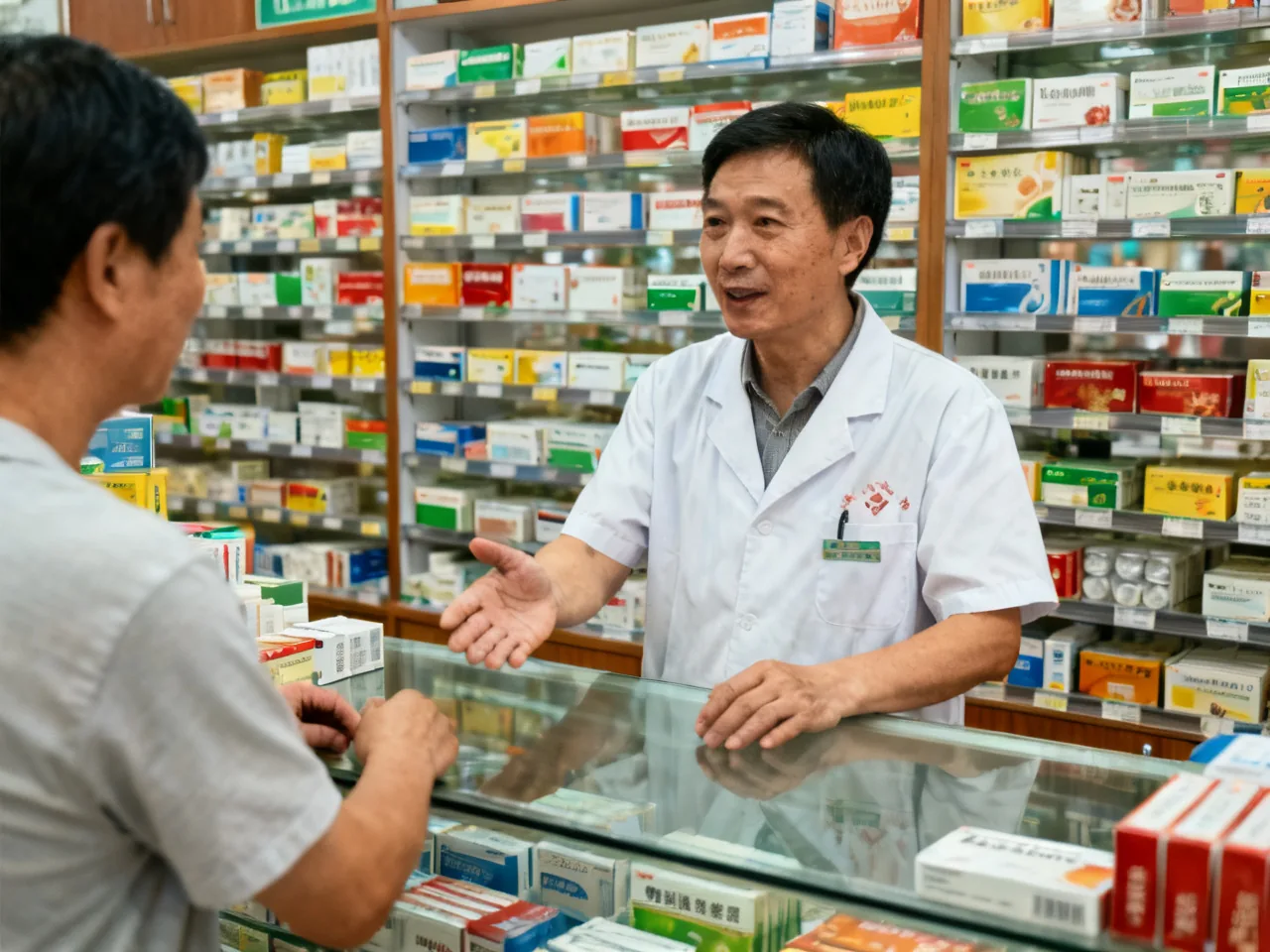
If someone asks me now which kind of small everyday interaction in China can unexpectedly build trust, I think of pharmacies. You go in carrying a bit of discomfort, and often come out carrying the relief of realizing that you actually can ask. That tiny exchange did not change anything grand, but it genuinely lowered my guard toward many unfamiliar situations. What it taught me was not the names of medicines. It taught me a more useful judgment: in everyday life in China, help is often closer than you imagine, as long as you are willing to push the door open first.