The First Thing I Learned in a Chinese Self-Service Fast Food Place Was to Find the Tray Return Area First
The first time I had dinner in a self-service fast food place inside a Chinese mall, it was on a Friday evening. The supermarket downstairs had just started its discount announcements, people kept coming up the escalator with shopping bags, and the air carried a mix of fried chicken, rice, hot soup, and the sharp smell of recently mopped floors. The dining area was almost glaringly bright. Plastic trays were stacked beside the pickup counter, and nearly every table was occupied by students, parents with children, and young office workers just off work. I used to have a very simple idea of places like this: line up, order, find a seat, eat, and then leave, with the rest naturally handled by staff. But in many self-service fast food spots in China, what really determines whether you have understood the rhythm is not how you order. It is whether, after eating, you know where your tray is supposed to go.
That evening I ordered a rice set and a bowl of seaweed egg soup, then carried my tray around until I found a tiny table in the corner. The place was noisy, but not chaotic. It was the compressed liveliness of dinner rush: children tapping spoons, phone payment alerts, chair legs scraping the floor, and the kitchen constantly calling that another order was ready. When I finished eating, I instinctively stood up and prepared to leave, even slipping my jacket onto my arm. But at that exact moment, I saw two middle school students at the next table gather up their tissues, bones, and empty cups, lift their trays, and walk toward a corner. I paused, looked down at my own empty bowls and drink cup, and suddenly was no longer sure whether I should just walk away.
I stood there holding my empty tray for a few seconds, awkwardly looking around. The return area was not in the most obvious spot. It was around a corner behind a pillar, with the words “tray return” above a stainless-steel counter. One of the boys, noticing that I had frozen in place, casually pointed in that direction and said, “Return it there.” His tone was completely natural. He was not mocking me, and he did not sound impatient. But I understood at once the mistake I had nearly made. In a place like this, simply walking away after eating may not always be treated as rude, but it does show that you have not yet understood the default form of cooperation the space depends on.
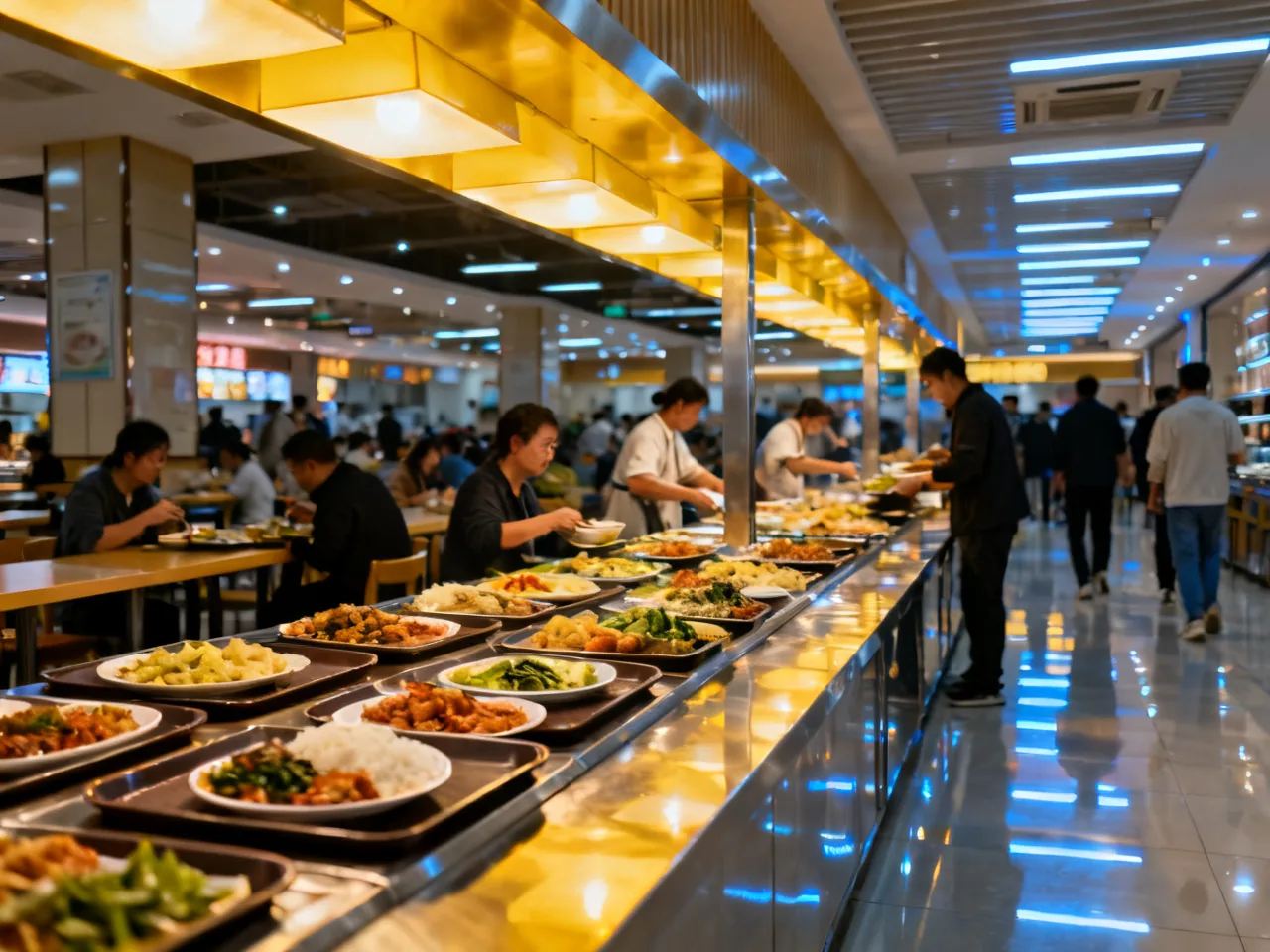
Later I began paying attention to the flow inside these fast food places and realized that they rely much more than I had imagined on customers completing the final step themselves. The ordering area, pickup area, seating search, and post-meal return corner are really one connected process. People familiar with the space often seem to know, from the moment they pick up their tray, roughly where they will head after eating. Some press wrappers neatly into the cardboard box and put the lid back on the cup so nothing spills on the way over. Some gather leftovers into one bowl to make cleanup easier. Others gently push the chair back in before leaving so the next person does not have to make room first. Nobody loudly announces these rules, but they are exactly what keep a dinner rush from turning into a jam.
This also slowly corrected a very typical outsider misunderstanding in me: the idea that if there are staff cleaning, then I do not need to handle anything at all. In many semi-self-service, fast-paced dining spaces in China, workers absolutely do the deeper cleaning in the end, but customers are also assumed to carry a small part of the organizing work. Not because anyone is trying to offload labor onto you, but because the volume of people is genuinely so high. On a weekend evening especially, one wave of diners has barely finished before the next wave is already standing there with trays looking for seats. If everyone leaves bowls, bones, and drink cups spread across the table exactly as they were, turnover slows immediately, and the people behind them wait longer. Once I understood that, my view of returning a tray changed completely. It was not extra labor. It was part of how the whole system keeps moving smoothly.
I later noticed that the tray return area itself functions like a tiny test of public courtesy. Some people pause for half a second to see clearly where the tray goes, where leftover soup should be poured, and where paper cups belong. Even when in a hurry, many do not slam the tray down and rush off, but place it steadily so liquid does not splash onto someone else’s shoes. If someone is already using the return counter, the next person usually leaves just enough passage space instead of blocking the whole corner. These are all small actions, easy to miss. But I have increasingly felt that much of everyday order in China is supported by exactly these understated details. They are rarely written as long formal rules, yet repetition turns them into a sense of proportion that everybody quietly understands.
Following the same way of reading a scene, [中国午饭高峰的节奏] and 在中国公共空间里学会合作 also reinforce this habit from other angles.
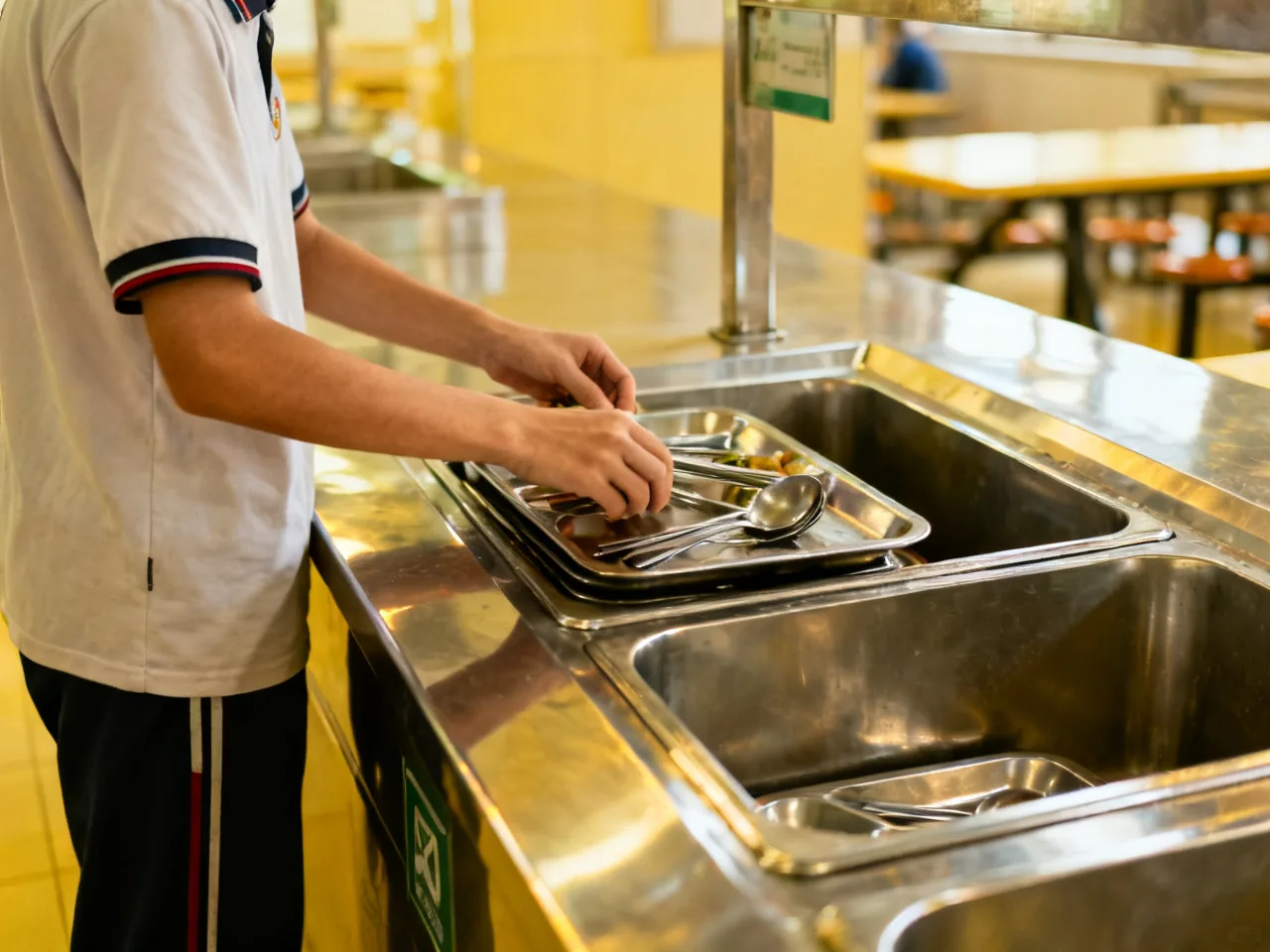
Now, if a friend newly arrived in China asks me what is easiest to overlook the first time they enter one of these mall fast food places, I would say it is not the payment code and not where the utensils are. It is looking once, with your own eyes, for the tray return area first. Once you know how the meal is meant to end, the entire experience feels different. You handle the packaging more naturally, choose your seat more intelligently, and do not suddenly feel lost at the moment you stand up. For me, that student’s casual gesture toward the corner was almost like a miniature lesson in Chinese public life. Many spaces appear to be asking only for your consumption, but what allows them to run smoothly is that each person is willing to do the final small step. Finding the tray return area first sounds minor, yet it was what made me truly understand the cooperative logic of the dinner rush here.