In a Hangzhou Eatery, I Finally Understood “A Little Lighter”
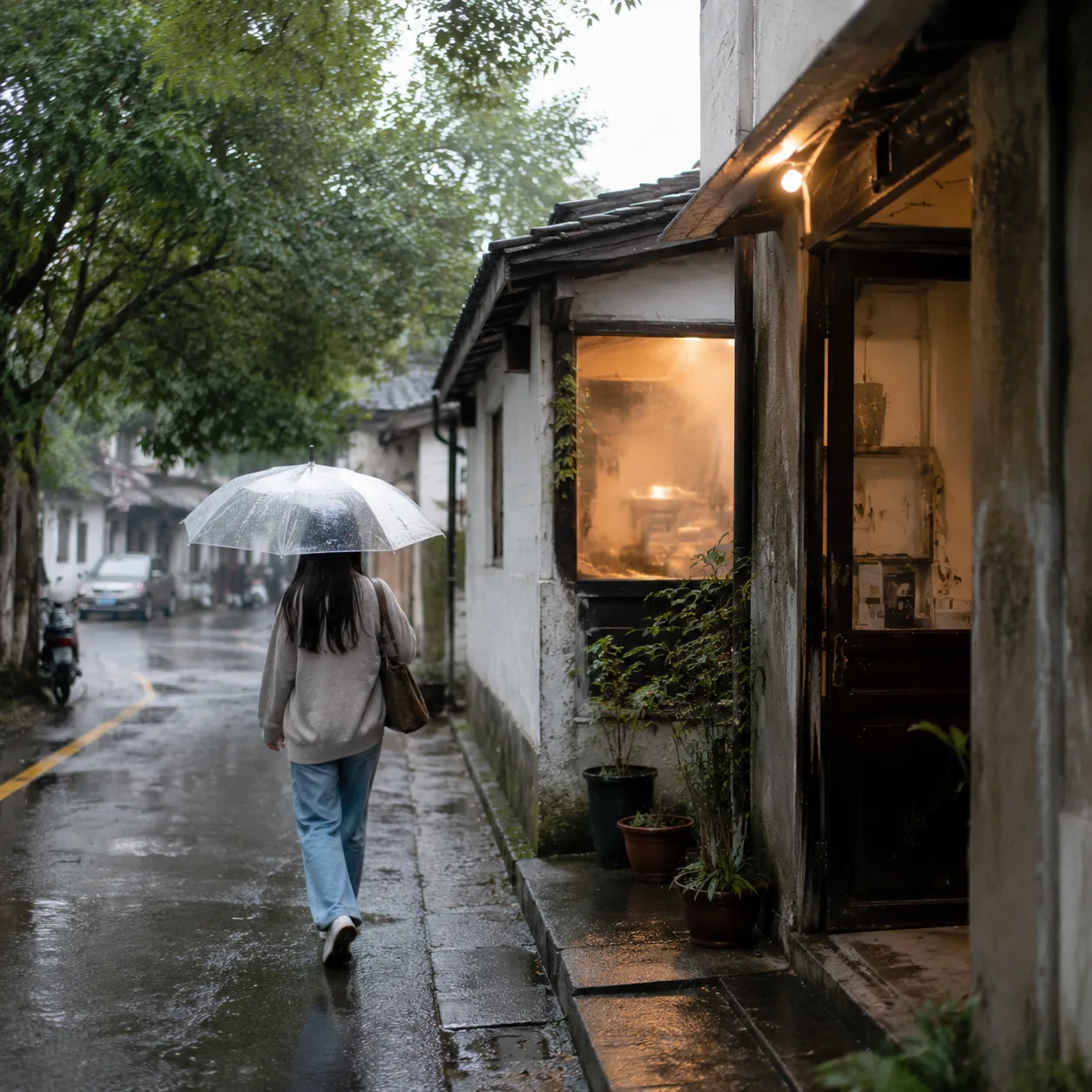
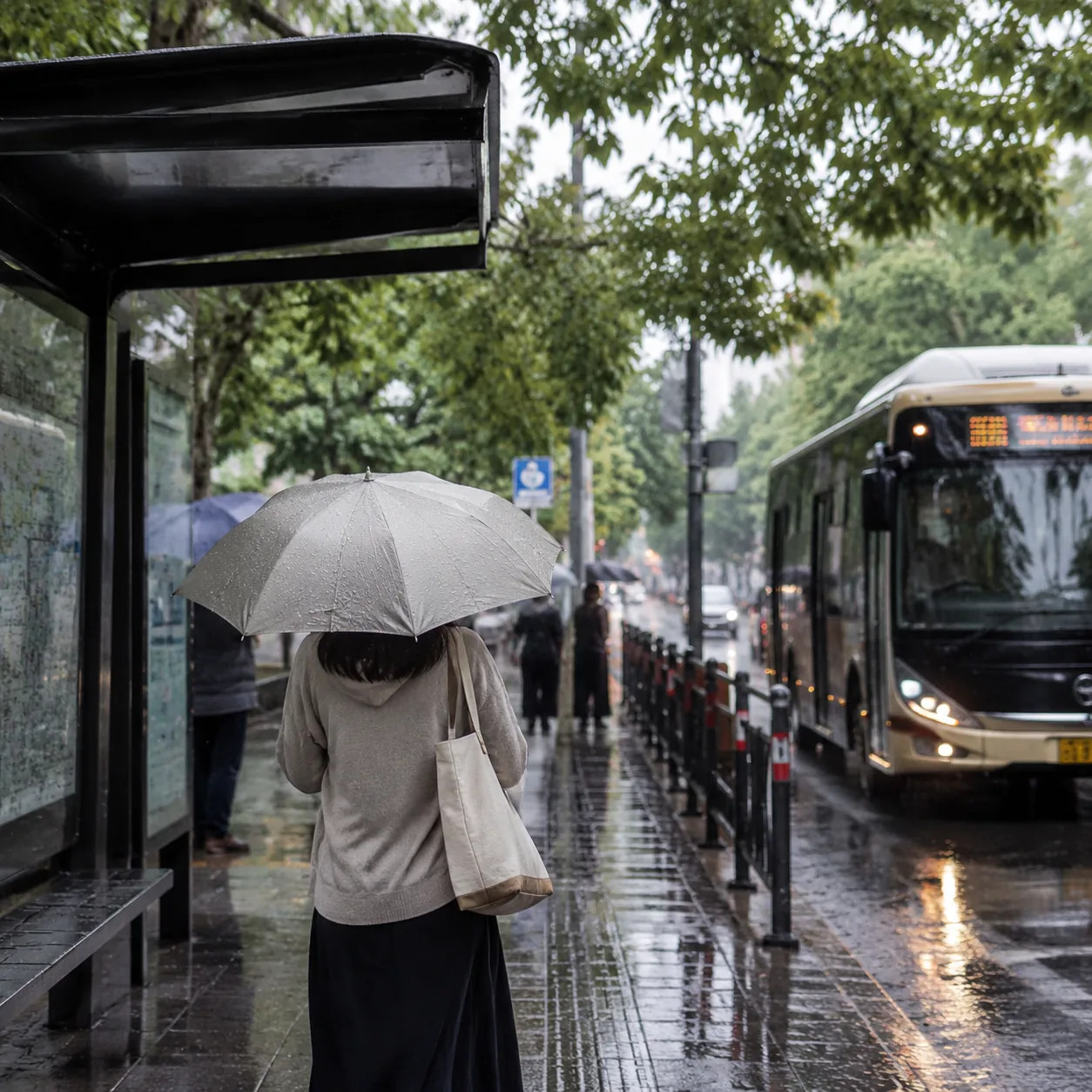
The first time I heard the phrase “a little lighter” in a Hangzhou eatery, it was a rainy noon. The leaves near West Lake looked polished by rain, and I slipped from a bus stop into a narrow lane with water dripping from my umbrella. The small restaurant had no flashy sign, only a wooden board that said home-style dishes, with steamed-up glass and the sound of a wok inside.
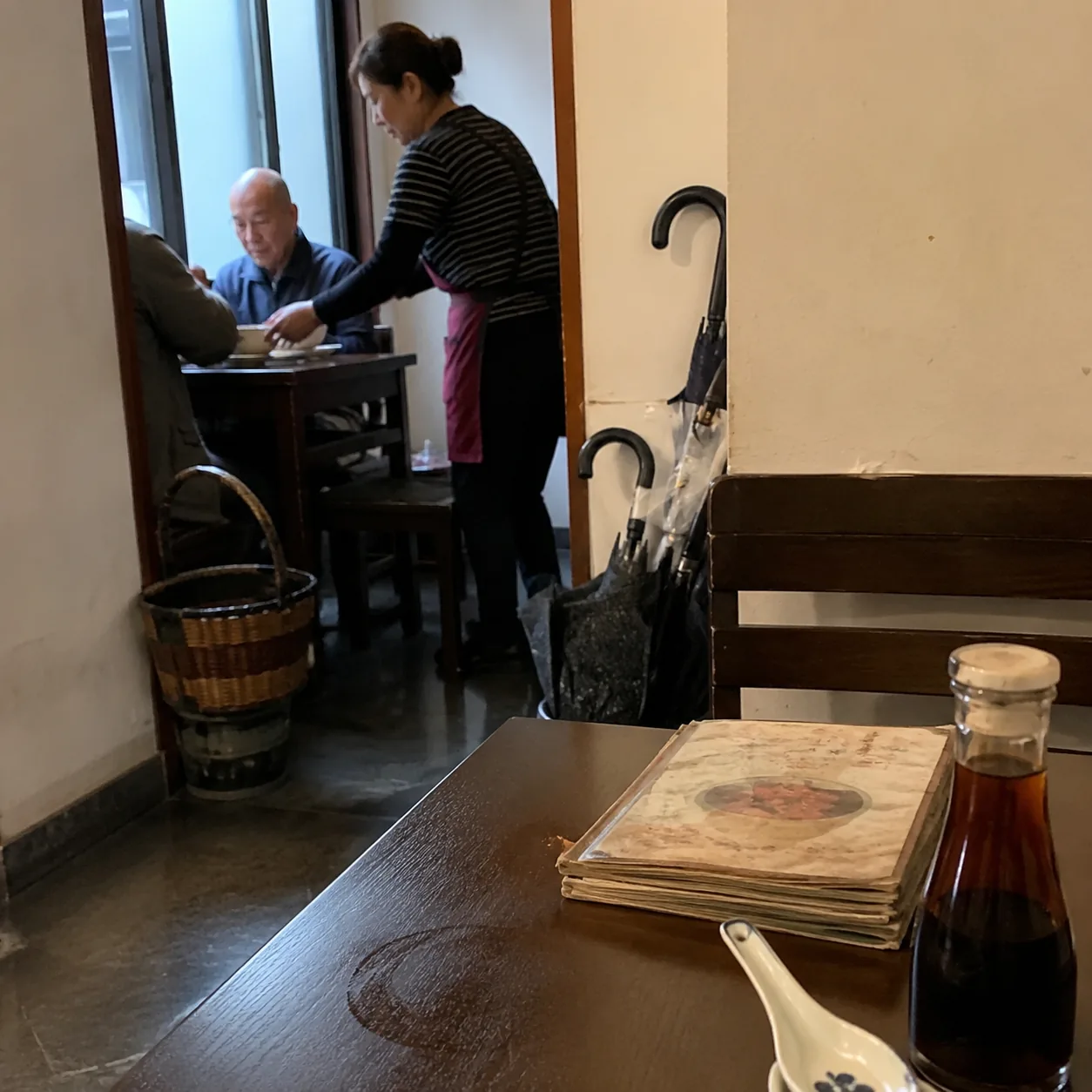
When I pushed the door open, the woman who ran the place was carrying a bowl of soup to an old gentleman by the window. She glanced up, pointed at the only small table left in the corner, and told me to sit there because it was warmer. I leaned my umbrella against the wall and noticed tea stains on the tabletop, a small bottle of vinegar, a porcelain spoon, and a stack of worn menus.
The dish names on the menu were not hard for me to read, but I still did not know how to order. At the next table, a mother and daughter sat with the daughter’s schoolbag on her knees. The mother told the owner, “Make the greens a little lighter, and the soup not too salty.” The owner simply answered that she knew. I assumed “lighter” meant less oil, less salt, and almost no flavor.
I ordered greens, tomato egg soup, and a small plate of stir-fried bamboo shoots. Copying the confidence of the nearby table, I also said, “A little lighter.” The owner leaned out from the kitchen and asked with a smile, “Are you used to that?” I did not know how to answer, so I said I wanted to try the taste of Hangzhou. She nodded and said, “That does not mean tasteless. It means leaving some flavor for you.”
That sentence made me pause. When traveling, I used to think local flavor should be strong, obvious, like the brightest color in a photograph. But “a little lighter” in this Hangzhou eatery felt like the rain outside, falling finely without trying to prove itself. I listened to the kitchen: water in the pan, the quiet sound of oil, the owner calling for scallions, all with a steady rhythm.
The tomato egg soup came first. The bowl was plain, with a tiny chip on the white porcelain rim. Thin ribbons of egg floated on the surface, and the tomato had not been cooked until it disappeared; it still held a red outline. When I took the first spoonful, my tongue was ready to search for salt, but it met tomato sweetness and sourness first, then the softness of egg, and only after that a little salt.
I looked up at the owner, who was adding rice for another table. She seemed to see me judging the soup and asked across two tables, “Too light?” I said, “Not light.” She smiled. “Good. Light does not mean water. It means not covering the ingredients.” The mother at the next table turned slightly and added, as if helping teach me, “In Hangzhou soup, you should first taste the scent of the food.”
After saying that, the mother lowered her head and placed greens into her daughter’s bowl. The movement was ordinary and natural. I suddenly realized I was not watching a performance; I had been briefly placed inside a daily order. Rainy weather, lunch, a child after school, an old man slowly drinking soup, the owner remembering tastes—these details felt more like a city than any menu description.
When the greens arrived, I understood them better. The leaves were bright, the stems still crisp, and only a shallow layer of cooking liquid sat at the bottom of the plate. They were not wrapped in thick sauce like vegetables I had eaten elsewhere. I picked up a stem: first crispness, then a small sweetness, and finally a bit of garlic from behind, like someone tapping my shoulder gently.
When the owner set down the bamboo shoots, she told me to eat them slowly because bamboo shoots had their own freshness. I followed her advice. I did not immediately mix them with rice or look for chili. The slices were thin enough to let light through, pale yellow at the edges, and carried a clean scent like a bamboo grove. I once would have found such a dish too quiet, but that day I was willing to wait for it to appear.
The daughter at the next table secretly watched how I used my chopsticks, probably because my movements were too careful. Her mother told her not to stare, but the owner laughed and said, “Let him learn. Our foreign friend is eating seriously.” I felt embarrassed, but it also relaxed me. I asked whether soup must always be drunk first. The mother said, “Not always. Just smell it first.”
So I moved the soup bowl closer and did not scoop immediately. I let the steam touch my face first. The smell of tomato, egg, and scallion came together, telling me the soup’s character before I tasted it. At that moment I thought about how rushed I had been in many cities: rushing to compare, rushing to summarize, rushing to turn every meal into a conclusion.
Outside the eatery, a delivery rider stopped, rain dripping from his coat onto the tiles. He leaned in and asked if two orders of greens with rice were ready. The owner said soon, then turned back to remind the kitchen to use less salt. She was not changing the cooking only for me; she was constantly adjusting for each person’s body, the weather, and the mood. Lightness here was not a fixed recipe, but a way of taking care of people.
Halfway through my meal, the old gentleman pushed his empty bowl to the edge of the table and told the owner that the soup was good today. She replied, “The tomatoes are good today.” I liked that answer. She did not take all the credit; she returned the flavor to the ingredient. Looking at the greens on my plate, I realized deliciousness could be a quiet judgment and did not always need to surprise me.
I asked the owner whether people in Hangzhou all liked light food. She put her account book on the counter and said, “Not exactly. Some like spice, some like sweetness, some have weak stomachs, some are tired today. You cannot remember only one word.” She did not sound like she was giving a lecture. She was simply telling me not to flatten a city. One phrase could bring me through the door, but it could not eat the meal for me.
That reminded me of when I first arrived in China. I often treated flavors like colors on a map: Sichuan spicy, Guangdong fresh, Hangzhou light. Such labels helped me begin, but they also tempted me to stop observing. Only after sitting in a small eatery did I see that “a little lighter” depends on who says it, in what weather, with which dish, and even whether the person serving asks one more question.
Near the end of the meal, the daughter’s homework notebook slipped from her schoolbag and fell to the floor. I picked it up for her, and she thanked me in English, pronouncing the words carefully like a classroom exercise. Her mother asked where I came from and whether it was my first time in Hangzhou. I said it was not my first time, but it felt like my first time sitting down and eating this slowly. She said, “Slow down, and the flavor can catch up.”
I did not write that sentence into any travel checklist, but I kept remembering it over the next few days. Walking through Hefang Street, I did not only look at signs. In a teahouse, I did not rush to judge the aroma. Passing a path near West Lake, I noticed how an old man folded his umbrella and how a shop worker moved a wet mat outside. The city began to change from loud attractions into many quiet gestures.
The next evening, I returned to the same lane. The rain had stopped, and the tiles outside were half dry. Inside the eatery, the lunch crowd had been replaced by people after work. I hesitated at the door, and the owner recognized me. “A little lighter again today?” she asked. I nodded. Then she asked whether I wanted more scallion in the soup. This time I did not say whatever. I thought for a moment and said, “A little.”
That small amount of scallion made me feel I was finally participating in the meal rather than only receiving it. When the soup arrived, the scallion was indeed clearer, but it did not steal space from the tomato and egg. As I had learned the day before, I smelled first, then drank, then ate the greens. The owner looked at me from behind the counter without speaking, but her expression seemed to confirm that I had understood a little.
What I learned in Hangzhou was not a universal ordering formula. If I carried “a little lighter” everywhere and forced it onto every meal, it would quickly become another misunderstanding. What mattered was the posture: lowering my voice, slowing my judgment, letting the owner, the neighboring table, the soup bowl, and the vegetables explain themselves together. In travel, the rare thing is not knowing the answer, but allowing it to arrive later.
When I left the eatery, the owner handed me my umbrella and warned me that the stone path outside was still slippery. I stepped into the lane, where the air smelled of freshly washed greens and damp wooden doors. Looking back, steam on the window blurred the people inside again. The phrase “a little lighter” did not remain on the menu. It stayed in the steam of that soup, and in my slow steps back into Hangzhou after the rain.