In Linhai's May Mist, I Stopped Just Seeing the Scenery and Started Listening to the City
The day I arrived in Yangzhou, the air carried a faint sweetness, as if willow branches by the water, wet stone pavement, and the steam from breakfast stalls had all blended together. The small May rain never fully committed to a downpour. It came and went, softening the long embankments, railings, and tree shadows around Slender West Lake. I had assumed that coming here alone might feel lonely, so before leaving I had filled my head with things to do: should I take a boat, should I visit several gardens, should I try that restaurant everyone online keeps recommending? But once I really reached the lakeside, I went quiet at once. The rain landed on the water first as tiny circles, then the wind rubbed them gently apart. I stood in a pavilion folding my umbrella and realized that the first thing solo travel asks you to solve may not be your route, but how to sit with your own silence.
At first I was not entirely comfortable. When I saw other people laughing in twos and threes, or families sitting close together by the lake to take pictures, I would instinctively feel that because I was alone, perhaps something was missing. It was not dramatic, but it was like a grain of sand inside a shoe—small, yet impossible not to notice when walking. Later, when I sat down in a pavilion, a local older woman beside me set her thermos on the stone table. Seeing my camera bag and the fine drops still caught in my hair, she shifted over and waved me closer to shelter from the wind. She handed me a tissue and said that on rainy days at Slender West Lake, one should stop trying to hurry and just look at the color of the willows first. That made me laugh. “Look at the color of the willows” sounded old-fashioned and wonderfully slow, and somehow it fit the rain perfectly.
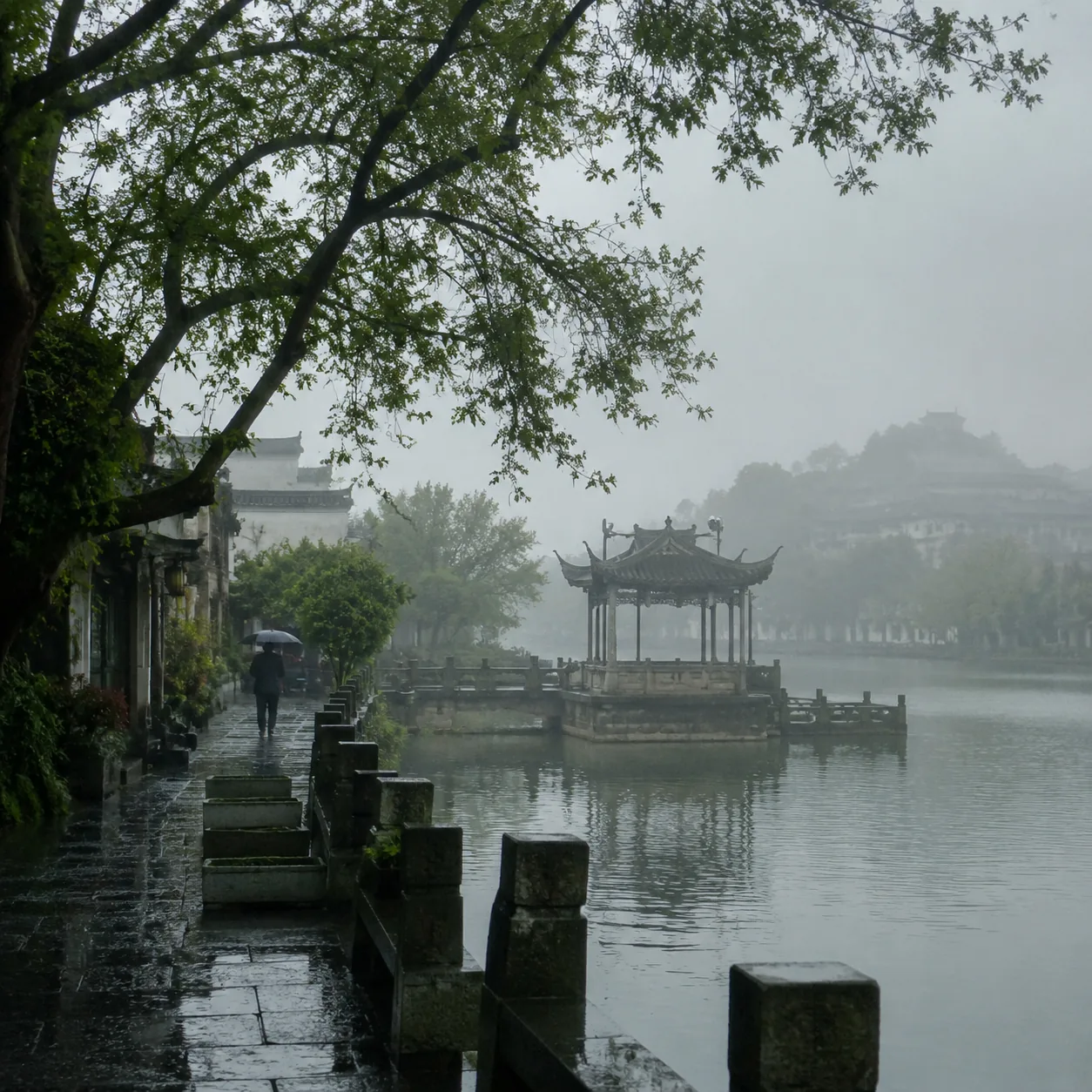
So I really did not rush off. The woman unscrewed her thermos and told me that Slender West Lake in the rain was not meant for charging through attractions, but for loosening both your eyes and your heart. She pointed at a row of willow trees and said that on sunny days you notice their lines, but in the rain you notice their layers. I followed her finger and suddenly understood. The same patch of green could hold depth, weight, brightness, and shade, and even the direction in which the branches dropped under the wind seemed different from tree to tree. Every now and then someone passed along the lake with an umbrella held low, walking without hurry, as if everyone quietly agreed that this little rain deserved not to be wasted. I sat there holding the tissue she had given me, and something inside me softened. Traveling alone did not necessarily mean loneliness. Sometimes it simply meant no longer being dragged by anyone else’s pace.
At noon I eventually found only a small lakeside restaurant and ordered Yangzhou fried rice with a bowl of hot soup. When my chopsticks touched the porcelain bowl, the sound was crisp. Outside, willow branches were still dripping, and as a server passed my table, she pulled the window a little more closed so the rain would not blow in. I suddenly loved that feeling of being lightly cared for by a strange city. It was not some grand display of warmth, but a quiet sort of practical thoughtfulness. While eating, I glanced through a few articles I had saved earlier and saw in 江南水乡7日慢行:苏州杭州乌镇 that same mood of slowing down alone in the rain, and thought too of 四月江南烟雨游 and its waterside rhythm. But the meal in front of me, the dampness in the air, and this one-person table were already enough to make an answer for the day.
After lunch, the rain paused for a short while. I kept walking slowly along the lake and realized I was no longer worried about moving too slowly, seeing too little, or taking too few photos. The thoughts that would normally make me anxious had been soaked open, little by little, by the rain. Later, when I passed the pavilion again, the woman was gone. Only a faint trace of water remained on the table, along with a small leaf blown down by the wind. I stood there for a while and suddenly felt that the most lively part of this trip was not how many people were around me, but those very brief yet very real encounters: one remark, one tissue, the sound of hot water in a thermos, and one person gradually learning to enjoy the company of their own quiet.
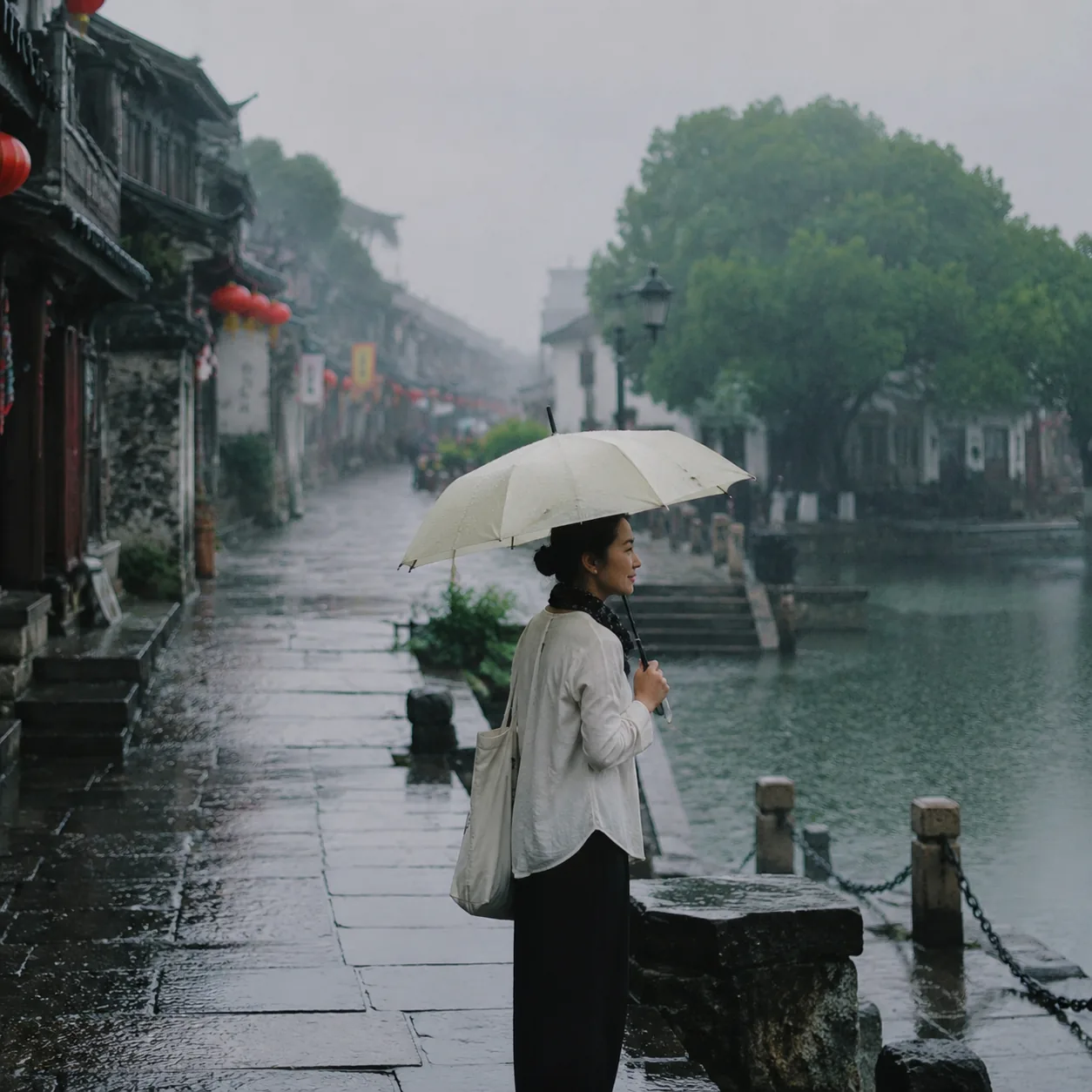
When I left Slender West Lake, the rain began again. Willow branches brushed the water softly in the wind, and although I opened my umbrella, I did not immediately speed up. I used to think that solo travel had to be either freedom or loneliness, as if you were forced to choose one. But this rainy May day in Yangzhou told me that the most comfortable state often lies between the two: you are indeed alone, yet not empty; you are not surrounded by noise, yet still held by small gestures of human warmth. By the time I reached the street corner and turned back for one last look at the lake, I was no longer worried about whether coming alone would feel too bleak. I already knew that some places do not need many people in order for their gentleness to exist.