An Evening by Tianjin’s Haihe River Is Not for Check-In Speed
When I reached Tianjin in the evening, I came out of the subway as the sky paused between blue and gray. The Haihe River had not hurried into darkness; the surface still held the day’s last light, while cars on the bridges had already turned on their lamps. My map guided me toward the river, listing photogenic points: bridges, a clock tower, the Italian Style Area, and illuminated cruise boats. I had intended to follow those names one by one, but as soon as I reached the railing, the wind stopped me. It carried moisture and a chill, as if reminding me that an evening by the Haihe should not be pushed forward by a checklist.
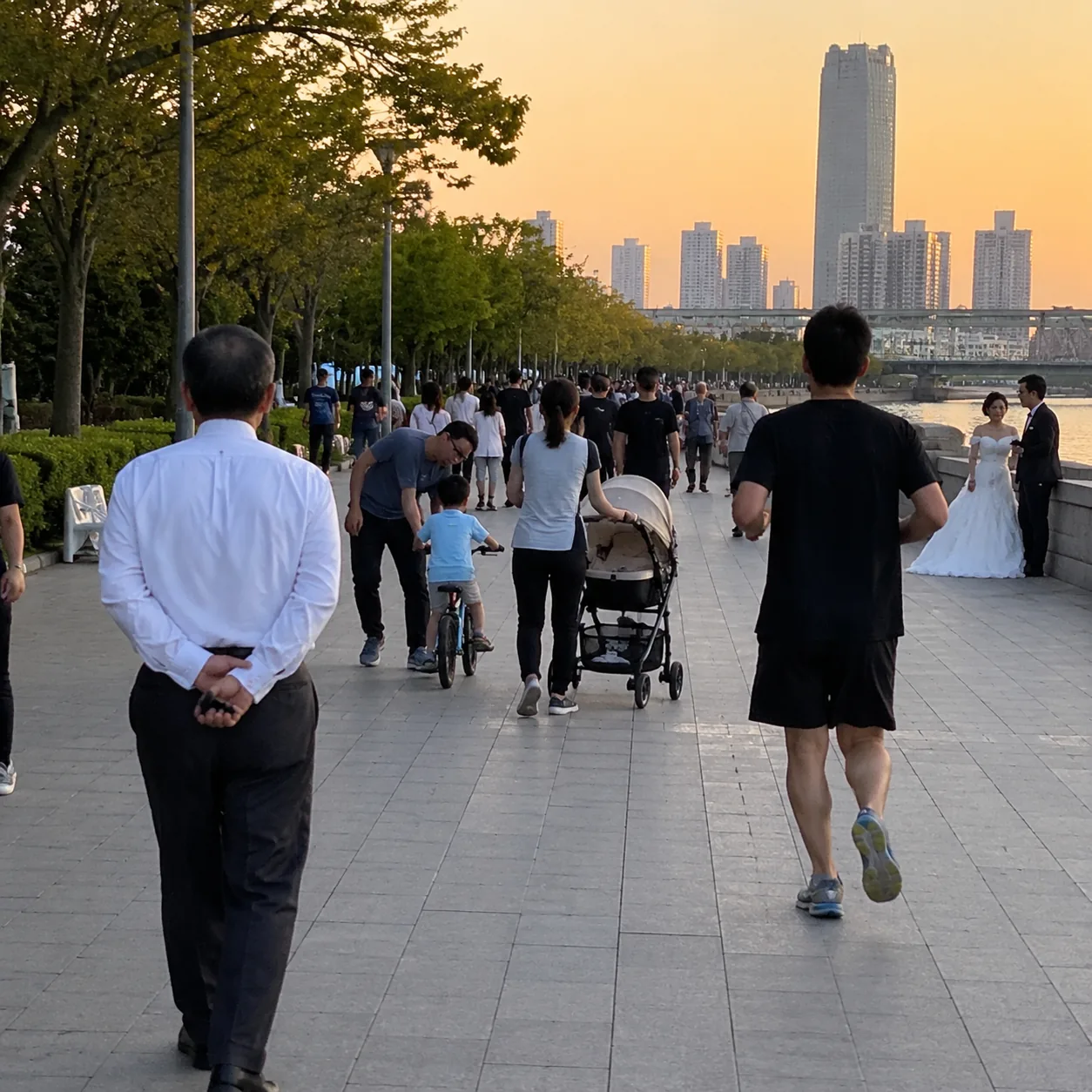
The riverside path was wider than I expected. Some people jogged, some pushed strollers, and older walkers kept their hands clasped behind their backs, moving step by step. What drew me most was not a single landmark, but the way these speeds did not collide. Runners curved around walkers, a child on a bicycle was softly told by his father to keep to the side, and a couple taking wedding photos waited in the wind for the lights to turn on. The city did not arrange itself into one pose here. It placed different daily rhythms along the same water and let each move on its own.
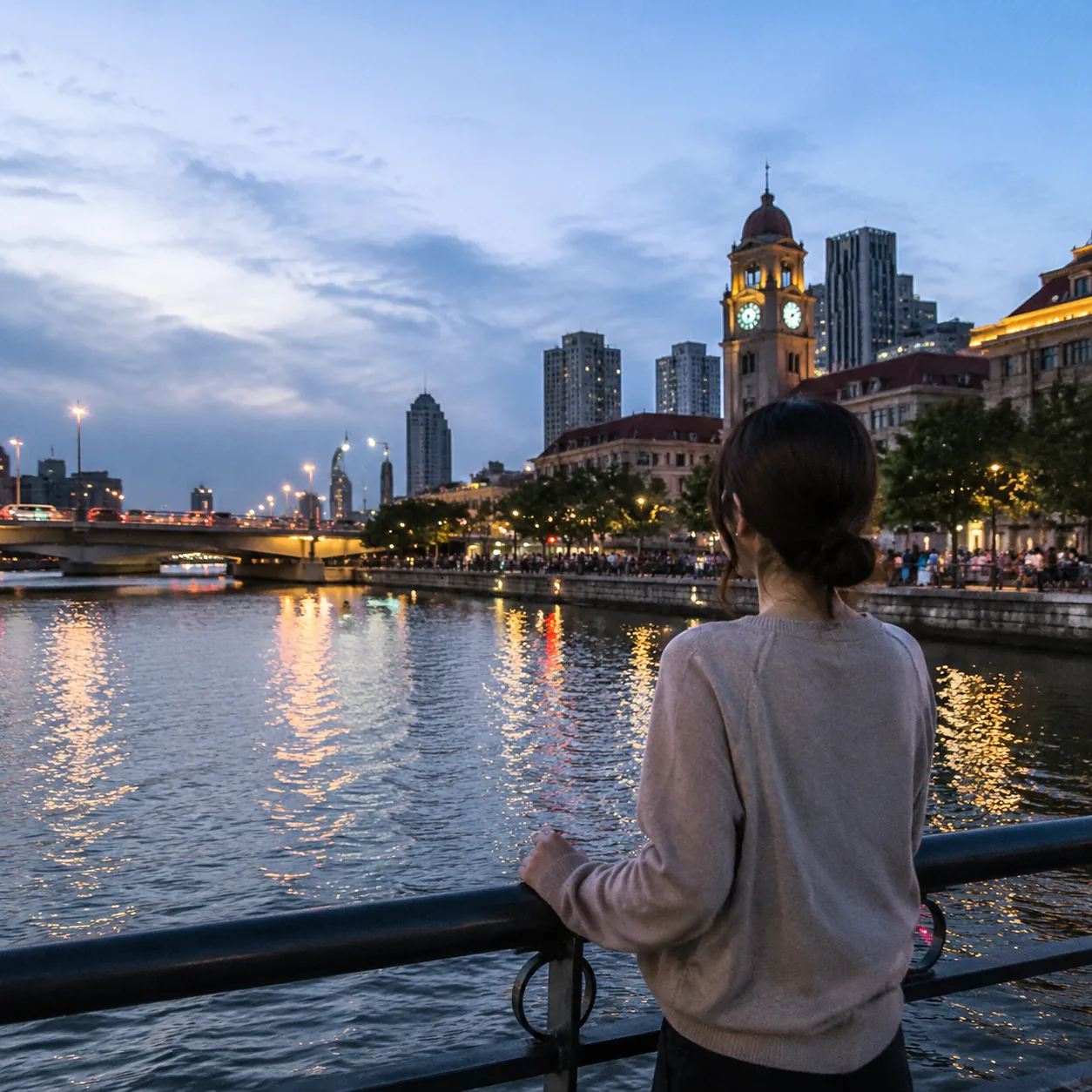
I stood beneath a bridge for a long while. From a distance its body had clean lines, but up close I could see rivets, shadows, and colors weathered by wind. Traffic continued above, while the water below made a softer sound, and together they felt like Tianjin offering both the firmness of a modern city and the looseness of lived life. Many visitors come to the Haihe to photograph bridge names, and I took a few pictures too. But a photograph could keep the shape without keeping the layers of sound beneath it. So I returned the phone to my pocket and kept walking by the water.
Evening on the Haihe feels like a slow opening. Darkness does not arrive all at once; it withdraws in layers. First the edges of buildings soften, then the river stretches the lights, and only later do the cruise boats glow in the distance like a sentence arriving late. People along the bank slow down with the change. Tourists who had been hunting for angles begin leaning on the railing to wait, and office workers who meant only to pass through stop to take a call. The beauty here does not complete itself in an instant. It asks you to match your steps to the pace of the light.
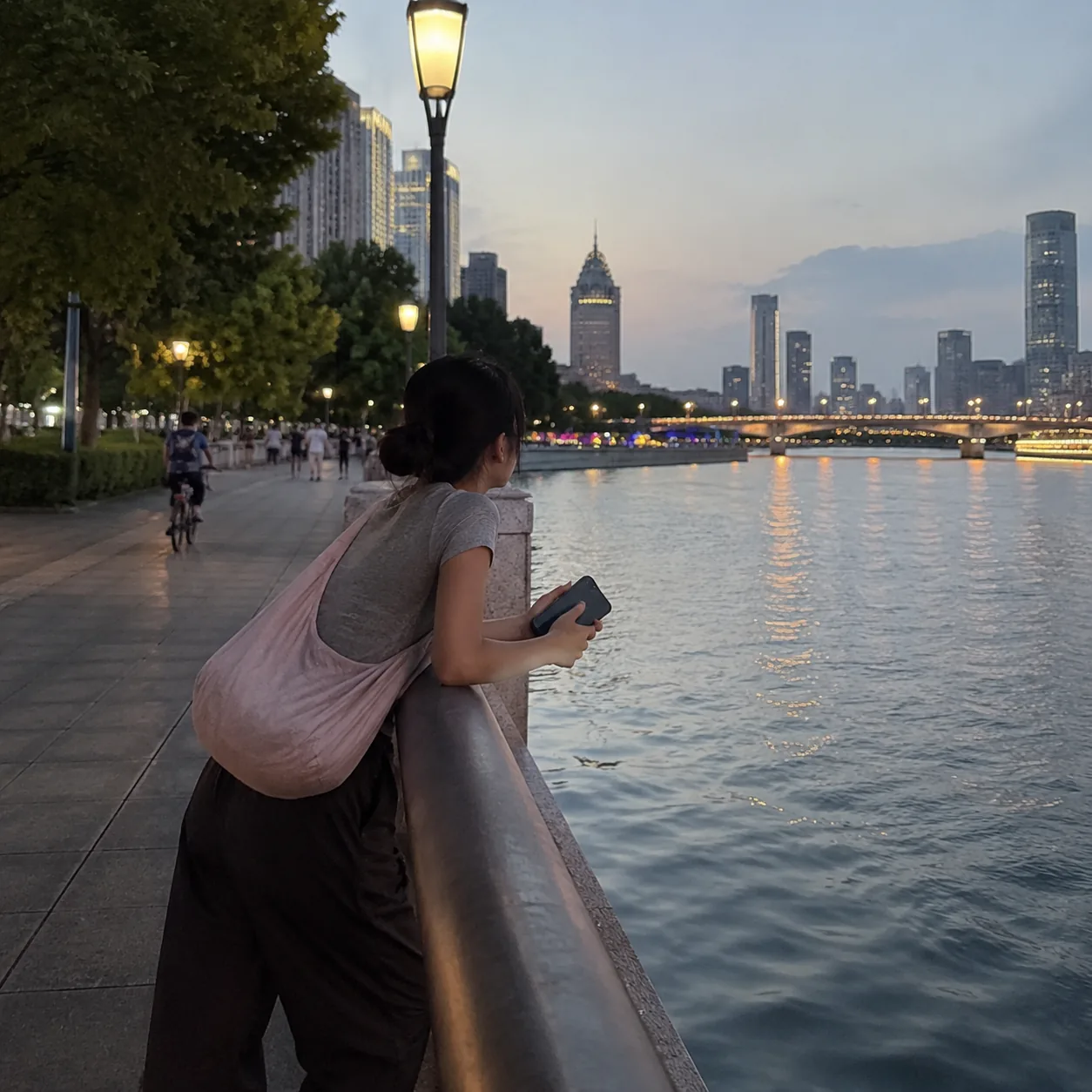
As I passed a bench, two older men were discussing what to eat for dinner. One said he would cook noodles at home, while the other said buying jianbing guozi would be easier. The wind scattered half their voices, but what remained carried a very Tianjin tone: a little humorous, a little unhurried, and firmly at ease. Farther on, young people set coffee cups on the railing and watched boats while talking; children leaned over to study reflections in the water as if researching another city. Observing the Haihe is not a matter of looking down from above. It means placing yourself beside these low, ordinary details.
Near the Italian Style Area, the lights and voices grew denser. People queued outside restaurants, glasses touched on terraces, and saxophone notes drifted from a corner. This looked more like the Tianjin visitors expect: handsome buildings, complete backdrops, and easy proof that you had been there. Yet I did not stay long, because the rhythm the river had given me was still present. Liveliness is certainly worth seeing, but if you look only at liveliness, the Haihe shrinks into a tourist boundary. What makes it interesting is that beside the bustle, there remains room simply to walk.
On one stretch, the silhouettes of buildings across the river appeared in the water, broken and rejoined by waves from passing boats. I thought of how Tianjin is often summarized by a few labels: port, concessions, crosstalk, jianbing guozi, Haihe night views. None of these labels is wrong, but they cut a river into postcards. Standing by the water, I felt it was more like a seam stitching together different periods. Bridges, Western-style buildings, high-rises, parks, and older residents’ evening walks all sit along the same line, neighboring one another without fully merging.
After all the lights came on, the Haihe looked more like the night view people expect. Gold and blue fragments spread across the water, cruise boats passed under bridge arches, and shutter sounds repeated along the bank. I understood that excitement and felt some of it myself. But I preferred the moment when the lights were not fully on yet, because the city had not entirely entered performance mode. You could see workers adjusting ropes, cleaners sweeping leaves into dustpans, and one half-broken lamp still flickering. Those uneven details gave the night view not only beauty, but warmth.
After the sky turned fully dark, I did not chase the next photo spot. I slowly walked back the way I had come. The scenery did not repeat itself, because the direction had changed and so had the light. A bridge that had been on my left became a silhouette ahead; a bench I had not noticed now held a quiet mother and daughter; a place where I had heard only traffic now offered the sound of water touching the bank. This is the gift of walking: it allows the same stretch to appear twice without demanding that it remain the same.
Near the subway entrance, I finally understood why this evening should not be walked too quickly. It was not because there were so many sights that I might miss them. On the contrary, the things most worth seeing were spread out and did not call attention to themselves. They hid in the wind, in the first minutes after the lights came on, in ordinary conversations, and in the layered sounds beneath the bridges. If you move at check-in speed, you can still get a decent set of photographs, but you will miss how this river quietly holds up Tianjin’s daily life.
What the Haihe left me was not a must-recommend camera position, but a way of looking that suits Tianjin better. Walk along the water first, without rushing to summarize. Pause when you see a bridge, make room when you meet a crowd, and wait when light falls into the water until it begins to tremble outward. Urban observation does not require turning yourself into a detached observer. It is more like walking beside a city for a while. You do not have to explain every detail; let them line up slowly in your mind, and later you will know which ones stayed.
If I return to Tianjin, I think I will still leave the evening for the Haihe. But I will not arrange it as a tight route, nor hurry to find the most representative photograph. I will start near some bridge, choose a direction almost at random, and walk until the wind cools, until the lights come on, until hunger reminds me it is time to eat. Leaving then will feel like having truly greeted the river. The Haihe can be checked in, of course; it simply gives its better parts to those willing to slow down.