Before Weihai’s Sea Wind Reached My Face, I Had Already Put Tickets, Maps, and Payment Codes in Order
Before going to Weihai, the first thing I did was not pack clothes or search for seaside restaurants, but prepare my phone from beginning to end. Many people say that travel should involve less looking at the phone and more looking at the scenery, and of course that is right. Yet when one actually sets out, the phone becomes a small drawer carried everywhere, holding tickets, maps, weather, payment codes, hotel addresses, and the patience needed for unexpected moments. Prepared well, it helps quietly; prepared poorly, it creates trouble exactly when it is needed most.
Weihai is a seaside city well suited to slow walking, but precisely because it is spread out, refreshing, and stretched along a long coastline, preparation on the phone becomes important. You might watch the sea at Torch Eighth Street in the morning, feel the wind at Maotou Mountain in the afternoon, and suddenly look for a small seafood restaurant in the evening. None of these segments is especially complicated, but if you have to check routes, find transport, and confirm opening hours on the spot, a relaxed trip becomes fragmented. Preparing the phone in advance is a way to look down less after arriving at the sea.
I first cleared the phone’s storage. The photo album held many repeated screenshots, blurry food photos, useless QR codes, and temporarily saved files. They do not seem troublesome in daily life, but during travel the phone always chooses the moment before a beautiful sea photo to warn that storage is low. So I spent half an hour deleting duplicate photos, uploading important files to the cloud, and uninstalling apps I had not used for a long time. The process felt like making room in a backpack, except that the backpack was invisible.
Next came battery and charging. A trip to Weihai involves a lot of time outdoors. The wind by the sea is strong, the temperature changes quickly, and the phone battery drains more noticeably than expected. I checked whether my charging cable was loose, confirmed that the power bank had enough capacity, and put a short cable and an adapter into my small bag. In the past, I always thought these things were trivial while traveling. Later I learned that much embarrassment comes not from big problems, but from a broken cable, one remaining bar of battery, and an afternoon with no outlet in sight.
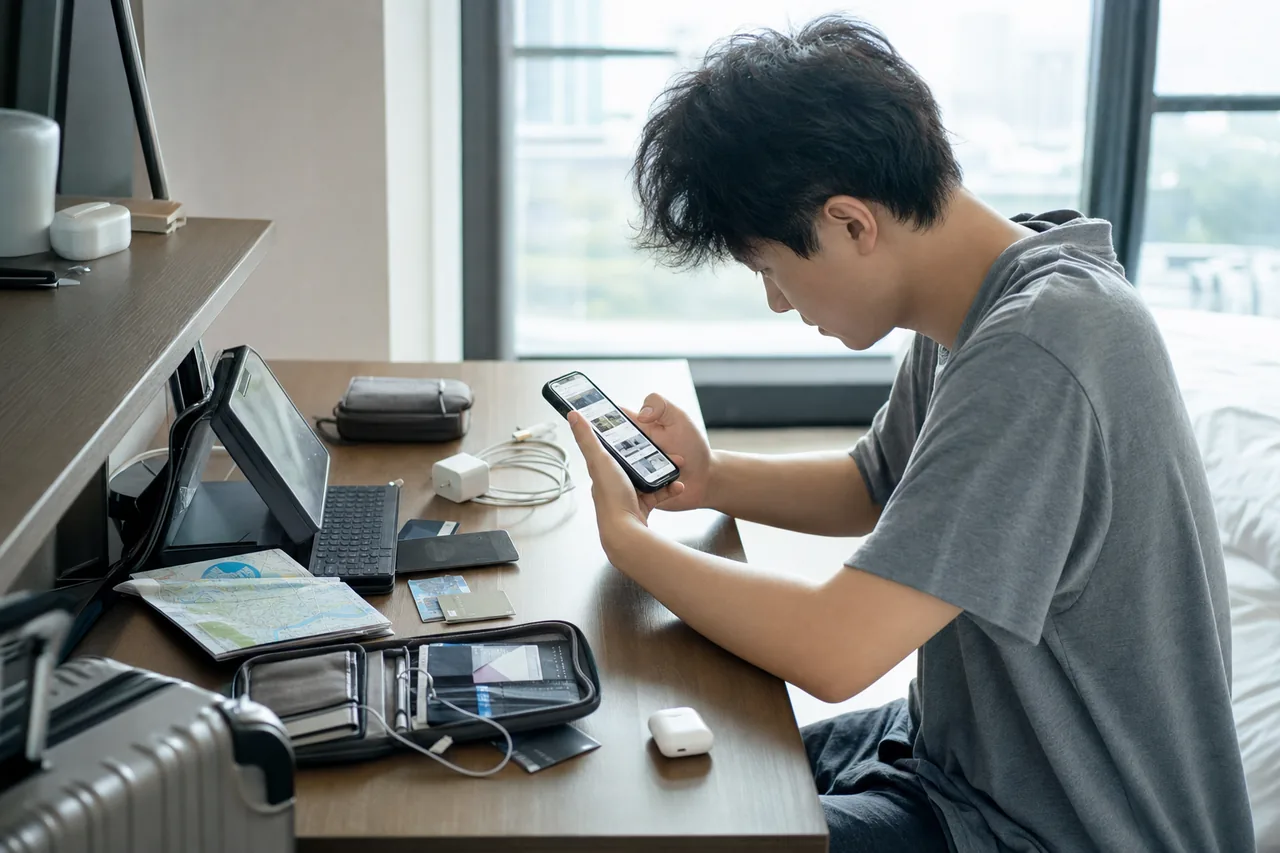
Map apps were a focus of my preparation. I saved the hotel, station, planned beaches, parks, cafés, and backup restaurants, and gave them simple labels. This was not to turn the trip into a strict spreadsheet, but to spend less energy when hesitating. In an unfamiliar city, people easily spend time comparing: which route is closer, which restaurant has higher ratings, which place is on the way. Marking locations in advance leaves more room for the mood of the day.
I also downloaded offline maps. Although there is usually signal in the city, the network can still become unstable between the seaside and mountain roads. Offline maps will not completely prevent getting lost, but they offer a little confidence when the signal weakens. Especially in windy places, standing by the road waiting for a page to load quickly drains patience. Downloading the area map in advance is like leaving oneself a backup route that does not announce itself loudly but truly exists.
I took screenshots of tickets, hotel reservations, and important addresses, placing them in a separate album. This may look a little old-fashioned, but it is very useful. Many apps turn order pages blank once the network is poor, while screenshots can be opened as long as the phone has power. I saved the hotel name, front desk number, check-in time, and nearby bus stops, and put the return ticket at the front. The most reassuring details in travel are often the escape routes prepared in advance.
For payment, I checked whether several commonly used apps were still logged in. The worst part during travel is not paying itself, but suddenly being asked to verify again while the verification code is delayed because of poor signal. I opened the payment codes in advance, confirmed that bank cards and balances were normal, and prepared a little cash. Weihai is convenient, but at seaside stalls, temporary parking spots, old shops, or markets, cash can still prevent embarrassment. Technology makes life smooth, while cash works like a small safety buckle.
I also moved the weather app to the home screen. Wind and fog have a strong presence in Weihai. The forecast may not be completely accurate, but it can remind you whether it is suitable to go to higher places, whether the seaside will be too cold, and whether an extra jacket is needed in the evening. I checked hourly weather, wind strength, and sunset time. For seaside travel, temperature is only a number; wind is what truly determines how the body feels. The wind level on the phone can sometimes be more important than outfit guides.
Camera settings were another part of the preparation. Weihai’s sea surface, sloping roads, and white buildings easily make people want to take photos. But if every shot requires adjusting exposure, finding filters, and switching modes on the spot, natural moments may be missed. I turned on the camera grid in advance, checked the photo format, cleaned the lens, and took a few test shots of the sky. To me, the best preparation for phone photography is not chasing complicated settings, but being able to press the shutter quickly when light appears.

I also created a Weihai folder in the album. The benefit was not ceremony, but avoiding the need to search through thousands of photos later for one stretch of sea. Travel photos easily become piles: exciting when taken, difficult to organize when revisited. Creating a folder in advance is like placing an empty box in memory. When the trip ends, the waves, road signs, sunsets, and accidental silhouettes passing by can fall into it more neatly.
In my contacts, I marked the hotel number, companions’ numbers, and several emergency contacts as favorites. This is especially important when traveling alone. We always think trouble will not happen to us, but travel naturally includes many uncontrollable factors: taking the wrong road, falling, losing battery, leaving luggage in a vehicle. Preparing emergency contacts is not pessimism, but an acknowledgment that the world occasionally refuses to follow the plan. After acknowledging that, one can actually relax more.
I also checked the phone case and waterproof pouch. Weihai is not a place where constant waterproofing is necessary, but seaside wind can carry fine moisture onto the screen, and rain or fog may appear suddenly. If the corners of a phone case are loose, one fall can make the whole trip expensive. I changed to a sturdier case and put a transparent waterproof pouch into my bag. It might not be used, but knowing it was there felt as reassuring as knowing an umbrella was by the door.
The night before departure, I rearranged commonly used apps. Maps, weather, camera, payment, tickets, and translation tools went on the first page, while entertainment apps moved farther back. It was not because entertainment is forbidden during travel, but because I know that once tired, I easily open short videos and give ten minutes that could be spent looking at the sea to endless scrolling. Phone preparation is not only for convenience; it is also a protection of attention. It reminds me that I am going to Weihai to see real light, not the light inside a screen.
Notification settings were important too. I turned off unnecessary push messages and kept only transportation, accommodation, payment, and family messages. The city’s sounds are already rich enough; the phone does not need to keep interrupting. Waves, wind, bus announcements, and spatulas in restaurants are the true background sounds of travel. If the phone keeps vibrating, it pulls one from the present scene back into ordinary life. Turning off some notifications creates a piece of quiet for the journey.
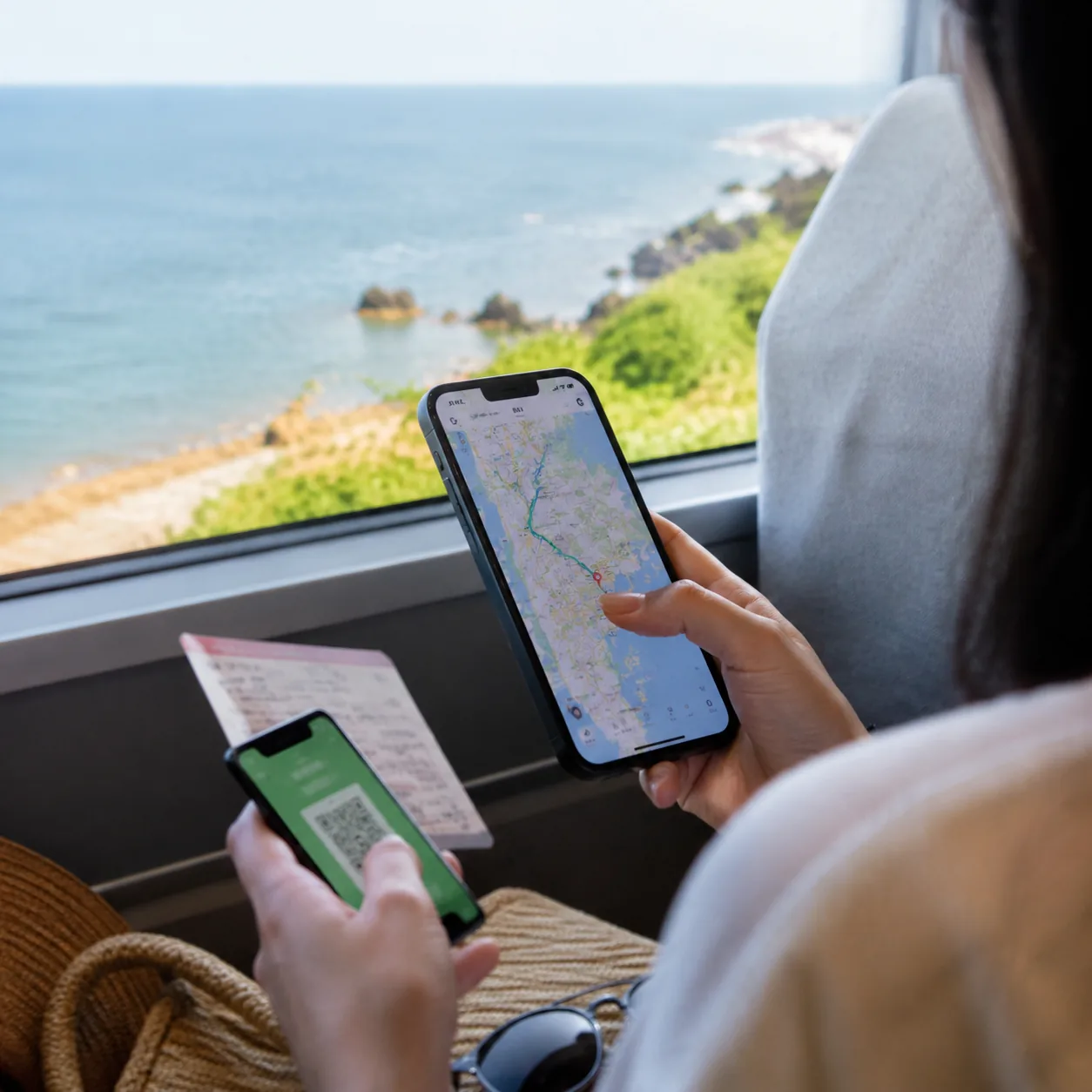
I saved several Weihai names into my notes in advance: International Bathing Beach, Happiness Gate, Huanhai Road, Banyue Bay, Naxianghai, and a few smaller places I might not visit. Notes are not as complete as a guide, but they have a relaxed advantage. They simply place possibilities there without forcing completion. Once there, if the weather is good, walk farther along the coast; if the wind is too strong, sit down in a shop. The best arrangement for travel is often casualness after sufficient preparation.
To avoid panic when lost, I also copied the hotel address into a short text and placed it at the top of my notes. It included the Chinese address, nearby landmarks, and a sentence that could be shown directly to a driver. This text might not be used during the entire trip, but if it is needed, it saves great effort. The value of many preparations is not that they work every day, but that they let you know that even if a small problem occurs, you will not immediately lose direction.
I checked my data plan. A seaside city looks relaxed, but navigation, photo uploading, restaurant searches, messages, and weather checks quietly consume data. Especially if a companion suddenly needs a hotspot, insufficient data can make a person unexpectedly stingy. I confirmed the remaining data in advance and downloaded several large files to avoid wasting network on the road. Generosity during travel sometimes includes being willing to share a hotspot with someone else, and that requires some preparation.
I downloaded some music and podcasts too, but not too many. In a place like Weihai, I would rather leave my ears to the sea wind. Still, on the train, while waiting for transport, or when sorting photos at the hotel at night, a little familiar sound is useful. I chose a few slow songs and put them into an offline list. They are not meant to fill the journey, only to gently accompany the blank intervals. Good phone preparation should know when to appear and when to step back.
Before leaving, I checked the phone one last time. The battery was full, the power bank was full, map markers were complete, order screenshots were clear, the weather app was on the home screen, and the camera lens was clean. This action felt like confirming with myself before the trip: I could set out. It did not mean there would be no surprises ahead, but even if surprises came, there were basic tools to help me stay steady. At this point, phone preparation was no longer merely technical; it became a form of mental preparation before departure.
After truly arriving in Weihai, I found that these preparations did make things easier. When getting off the train, I did not need to search for the hotel address; while standing in the wind, I did not worry about battery; when changing routes on a whim, I did not have to start searching from zero. The phone stayed quietly in my pocket and came out only when needed. It did not steal the presence of the sea; instead, by handling small matters in advance, it made the sea feel more complete. A good tool, it turns out, is not one that makes people use it constantly, but one that helps people leave it alone.
Near Torch Eighth Street, I saw many people holding up phones to take photos. The blue sea, slope, road signs, and distant boats were all well suited to enter a screen. I took a few pictures too, but soon put the phone away and watched the wind mess up people’s hair. At that moment I realized that the final purpose of preparing the phone before departure was not to get more photos, but to reduce unnecessary panic during the journey. When people panic less, they can see more.
At night, after returning to the hotel, I quickly sorted the day’s photos. Because I had created the folder in advance, organizing them was not difficult. A few shots of the sea, a few road signs, one wind-tilted selfie, and one photo of a small roadside shop’s light. They were not perfect, but enough to hold the day in place. Here the phone became a box of memory again, not the conductor’s baton of the itinerary. I like this relationship: it helps me preserve, but does not decide for me.
So if I were to make a preparation list for a trip to Weihai, I would place phone preparation near the top. Not because the phone is more important than the sea, but because the more reliable it is, the more the sea can simply be the sea. Clearing storage, saving orders, downloading maps, checking battery, and turning off extra notifications may seem plain, yet they are like the base of a journey. When the base is steady, one can confidently give attention to wind, waves, light, and the good moods that appear suddenly.
Weihai often leaves the impression of being clean, bright, coastal, and suitable for walking, while phone preparation is the less visible part behind these impressions. It is like shoelaces tied before going out: no one praises them specifically, but if they are not tied well, every step is affected. I am willing to acknowledge the importance of such triviality. Travel is not made only of distant places; it is also made of many small actions that allow the distant place to arrive smoothly.
When I finally stood by the sea in Weihai, the phone screen went dark, and a steady weight rested in my pocket. I knew the tickets were inside, the maps were inside, the weather was inside, and the way back was inside. So I could lift my eyes and watch the sea brighten layer by layer. The meaning of preparation appeared at that moment: it does not trap people inside the screen, but helps them come out of the screen and stand quietly in the real wind.