The Day Guangzhou Finally Became Easy for Me Was the Day I Let a Meal Set the Rhythm of the Route
The first time I arrived in Guangzhou, what unsettled me was not the lack of landmarks. It was the feeling that the city was never waiting politely for tourists. The moment I came out of the metro, people were already carrying trays under the arcade streets, plastic stools scraped quickly across the ground, and when a bamboo steamer lid opened, the heat came straight into my face with flour, moisture, and breakfast smell mixed together. In that instant I realized that Guangzhou is not the kind of city that gives you one huge viewpoint first so you can steady yourself before entering. It pulls you into daily life immediately and then tests whether you can move forward inside that rhythm.
Many guides describe Guangzhou with phrases like “great food everywhere” or “good for eating and strolling.” None of that is false, but for a first-time visitor to China it is still not enough. The real point is that eating here is not a reward waiting outside the route. It is part of the route itself. You do not finish half a day and then search for food. You use one meal to judge how the district moves, where the crowd presses, and whether you should keep walking or sit down first. I only understood later that Guangzhou often begins not from a map, but from a table.
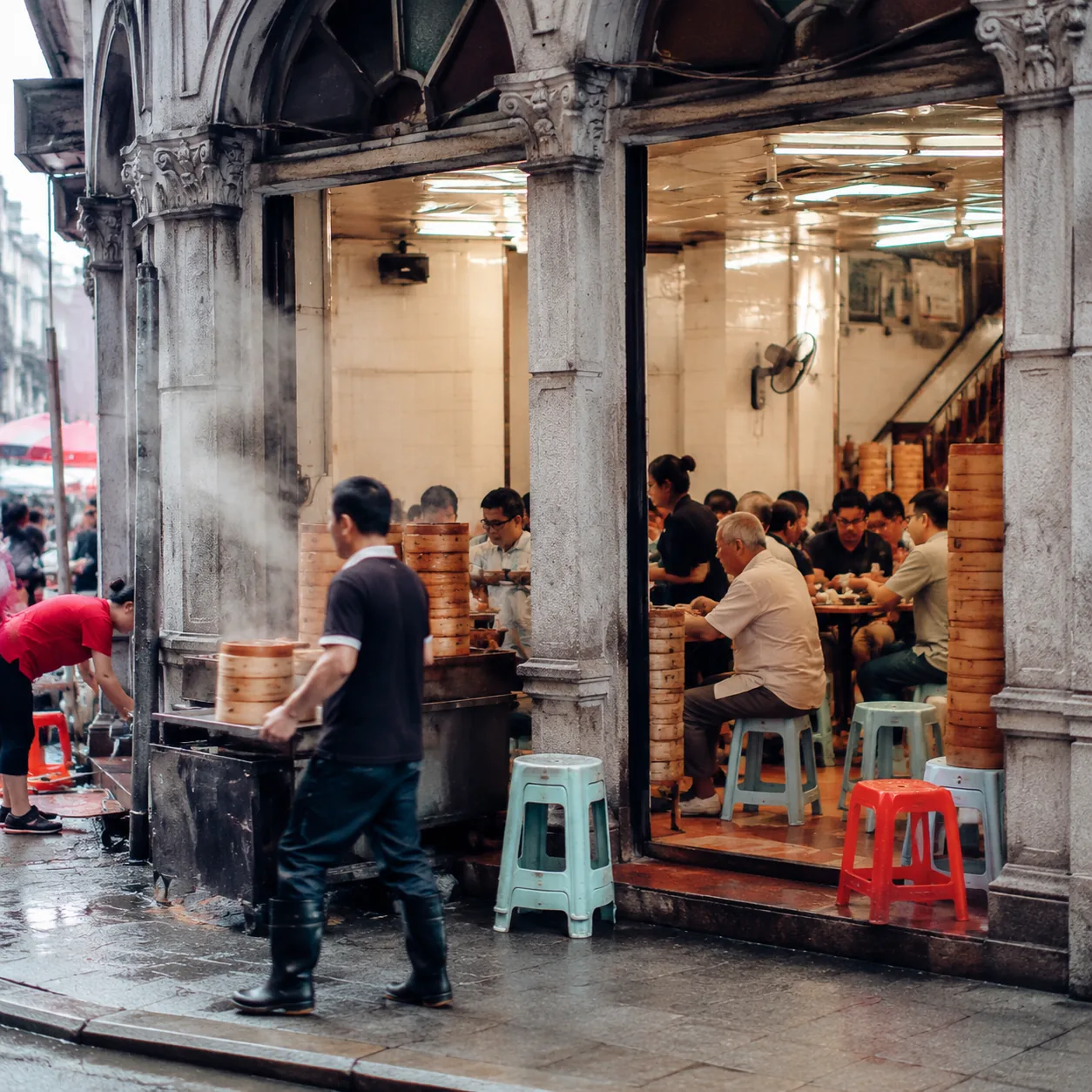
The First Thing I Learned Was Not How to Find Sights, but How to Know When to Sit Down
In other cities, I used to connect the most important landmarks first and push meals into whatever gaps remained. Guangzhou does not reward that habit very much. Its rhythm is sticky. If you keep telling yourself that you will sit down only after finishing the next segment, the route actually becomes rougher. The first time I moved through the older districts, I intended to stretch the walking line longer in one go. But in less than an hour, smell and sound kept interrupting my pace: numbers being called outside teahouses, heavy chopping from roast-meat shops, people standing at dessert stalls eating with plastic spoons, and electric scooters slowly sliding into the arcade shade. That was when I understood that Guangzhou is not a city that becomes smoother the longer you resist pausing. It is a city that opens the next part of the route more willingly once you know when to sit down.
So I changed my method. I stopped waiting until I was hungry to look for a place to eat. I started leaving myself one sitting point in advance. I stopped treating restaurants as rescue stations that appear only after fatigue. I began to recognize that some streets are meant to pause exactly where they pause. Once I moved that way, the city changed from feeling overloaded with information into feeling ordered. For a first-time visitor to China, that shift matters enormously because it lowers nervousness almost immediately.
Morning Tea Is Not Just Food — It Is Guangzhou’s Opening Move
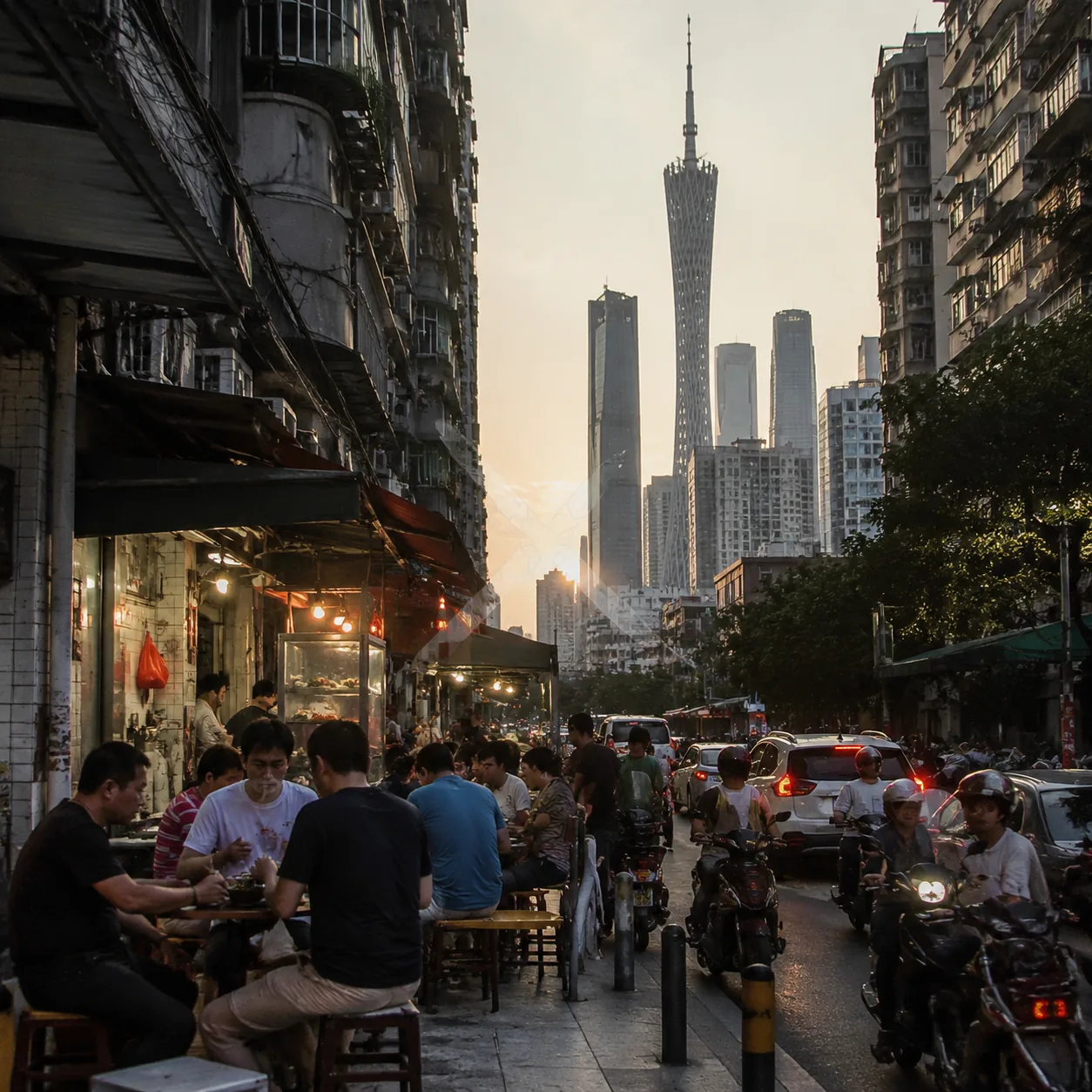
If morning tea is treated only as a local breakfast specialty, then half of Guangzhou disappears from view. For me, the first shock of sitting down in a teahouse was not the number of dishes. It was how clearly the meal itself told me: do not rush. The table does not hurry you, the tea does not hurry you, and even the conversation at the next table does not sound time-starved. When a server pushed the cart over and the steam brushed the edge of my glasses, I found myself watching how people ticked orders, divided dishes, and placed food in front of older relatives. In that moment I suddenly felt that Guangzhou was not a city meant to be understood through charging at attractions.
Morning tea matters not only because it tastes good, but because it recalibrates the speed at which you look at the city. After coming out of a teahouse, the arcade streets, markets, and roadside shops suddenly become easier to read. The crowd is not chaotic; it bends and releases. A queue is not necessarily a blockage; it is often a default order. The people who stop to eat are not just stopping. They are helping the street maintain its rhythm. For me, that first morning tea felt almost like an introductory lesson taught without theory and entirely through bodily perception.
What Moved Me Most in Guangzhou Was Not a Grand View, but the Fact That Ordinary Corners Never Went Empty
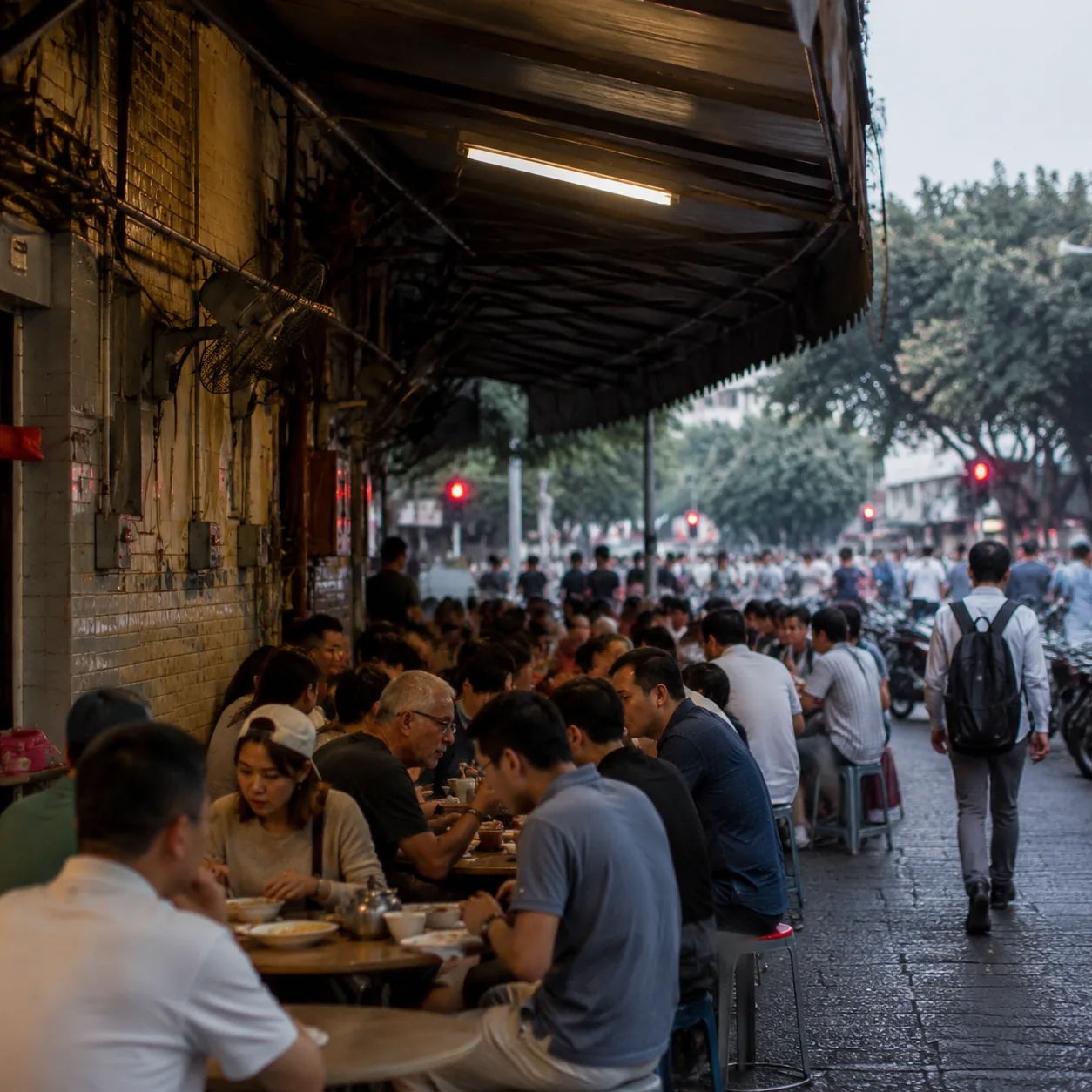
I do not mean that Guangzhou lacks places worth going out of one’s way to see. I mean that its strongest layer often lies outside the category of special sights altogether. You can walk through what seems like an ordinary street and watch it become three different streets within ten minutes. First the breakfast places are firing up, then the market edge becomes busy, and after that dessert shops and snack stalls take over the tempo. If you stand still for long enough, you can actually feel the street shifting gears on its own. That is not a common experience in many cities, and that is why Guangzhou keeps becoming more compelling the longer one stays inside it.
Many people coming to China for the first time naturally keep asking themselves whether they have reached the most worth-seeing place yet. Guangzhou quietly changes that question. After a while, what begins to matter more is whether one has entered a section of the city that feels most normal and most alive. Once that question replaces the earlier one, travel stops being a checklist and becomes a form of reading, and Guangzhou is especially suited to being read that way.
In the End, What I Remembered Was Not the Name of a Shop, but a Judgment About Rhythm
If I had to reduce my first Guangzhou experience to one short sentence now, I would not begin by naming the best shop, nor would I first report the hottest district. I would say this: Guangzhou is the kind of city you love more as you become better at knowing when to sit down, when to continue walking, and when one meal should reorganize the rhythm of half a day. It does not deliver its best qualities with one hammer strike. It draws you inward in layers. By the time you notice what has happened, you are no longer “visiting a city.” You are eating, walking, and shifting gears with it.