October Ginkgo Season: When China Turns to Gold
There’s a tree that can turn an entire street into a golden tunnel — the ginkgo. Every October to November, ginkgo trees across China turn yellow together, their fallen leaves carpeting the ground in gold. Walking on them feels like treading on a golden carpet. It’s the most romantic autumn scene in China, and it’s completely free.
Why Ginkgo Trees Are Special
Ginkgo is one of Earth’s oldest tree species — it existed 270 million years ago, predating dinosaurs. China is the ginkgo’s homeland, and many ancient ginkgo trees are over a thousand years old. When they turn yellow in autumn, each tree becomes a golden umbrella. When the wind blows, the leaves flutter down like golden butterflies.
In Chinese culture, ginkgo symbolizes longevity and resilience. Many temples and ancient villages have old ginkgo trees, some of which have become local “tree kings.”
Beijing: Urban Ginkgo Boulevards
Beijing might be the most convenient city in all of China for ginkgo viewing. No need to leave the city center — several major boulevards are lined with ginkgo trees.
Diaoyutai Ginkgo Avenue Beijing’s most famous ginkgo spot. The road outside the Diaoyutai State Guesthouse is lined with ginkgo trees that form a golden tunnel in late October. Free, no ticket needed, but weekends get very crowded.
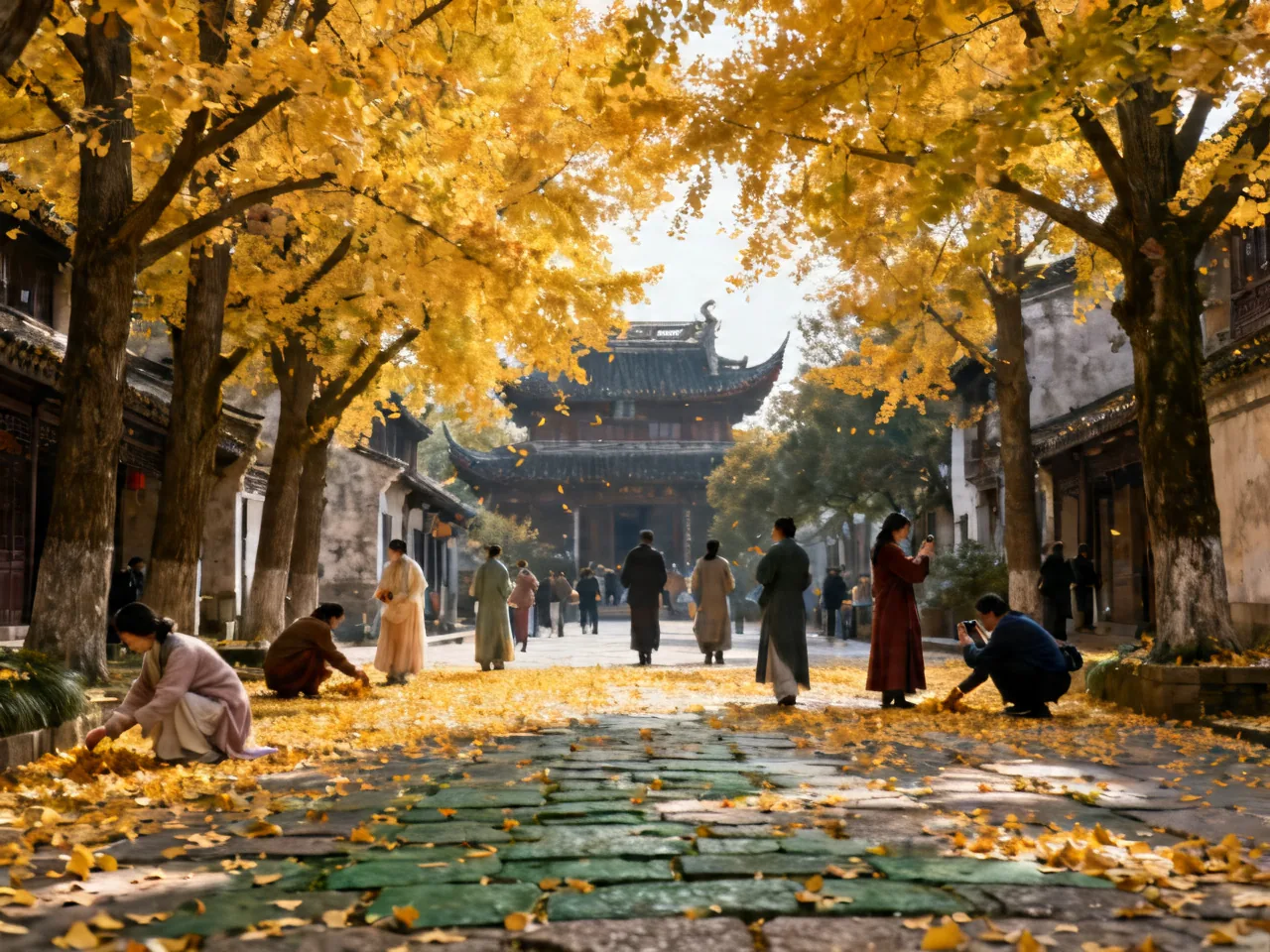
Ditan Park Just ¥2 admission. The ginkgo avenue inside is quieter than Diaoyutai, with larger trees. Ancient altar buildings nearby create stunning contrasts — red walls against golden leaves.
Sanlitun to Liangma River Combine ginkgo viewing with Sanlitun coffee shops. The ginkgo trees along Liangma River are beautiful in late October and much less crowded.
Best Timing: October 20 to November 10, depending on that year’s temperatures.
Tengchong Ginkgo Village, Yunnan: An Entire Village in Gold
Tengchong’s Ginkgo Village (Jiangdong Village in Gudong Town) is the most beautiful ginkgo viewing spot in China, bar none. Over 3,000 ginkgo trees grow here, the oldest over 500 years. In mid-November, the entire village is enveloped in gold — rooftops, paths, fields, everywhere.
What Makes It Special:
It doesn’t feel like a “scenic area” but a real village — residents sunbathe, cook, and chat under the ginkgo trees Farmhouse restaurants set tables right under the trees — leaves drift into your bowl while you eat Morning cooking smoke + ginkgo + old houses = the kind of beauty that makes you go quiet
How to Get There: Fly to Tengchong Tuofeng Airport (direct from Kunming/Chengdu), then 40 minutes by car. Stay in a village guesthouse (¥100-200/night, ~$14-28) to catch the best morning and evening light.
Best Timing: November 10-30 (about a month later than northern China).
More Ginkgo Destinations
| Location | Highlight | Best Time | Admission |
|---|---|---|---|
| Suzhou Tianping Mountain | Red maple + ginkgo | Late Oct-Nov | ¥30 (~$4) |
| Guilin Haiyang Village | 百万株银杏 A million ginkgo trees | Mid Nov-Dec | Free |
| Hubei Anlu | Ancient 1000-year ginkgo grove | November | Free |
| Chengdu UESTC Campus | University campus avenue | Early Nov | Free |
| Xi’an Guanyin Temple | 李世民种的1400年银杏 1,400-year ginkgo planted by Emperor Li Shimin | November | Free |
Photography Tips
Composition: Find a ginkgo avenue and shoot the “tunnel” effect from the middle (watch for traffic) Grab a handful of leaves, toss them up, and use burst mode to capture Shoot the leaf carpet from a low angle with the canopy as backdrop
What to Wear for Photos: Dark colors (black, navy, burgundy) stand out best against golden ginkgo. White works too but risks overexposure. Don’t wear yellow — you’ll “match” the leaves and disappear.
Practical Tips
Track the “Ginkgo Index”: Timing varies each year. Before your trip, search “银杏+[location]+2024” on Xiaohongshu or Weibo to check real-time photos and color progress.
Go on Weekdays: Most ginkgo spots are free and open, which means weekends are packed. Weekday visits are a completely different experience — quiet walks and unhurried photography.
Watch Out for Ginkgo Fruit: Ginkgo trees drop fruit in autumn, and stepping on them creates a terrible smell (somewhat like vomit). Watch your step and don’t wear light-colored shoes.
Related Reads
- Spring Bloom Map: China’s Most Beautiful Flower Fields
- Summer Escapes: Plateaus & Islands
- Huangshan Sea of Clouds & Welcome Pine: Beautiful in All Seasons
- Best Autumn Foliage Spots in China
- 10-Day East China Five-City Loop