Ordering Mild Spice in Chengdu Taught Me Translation Cannot Fully Explain Heat
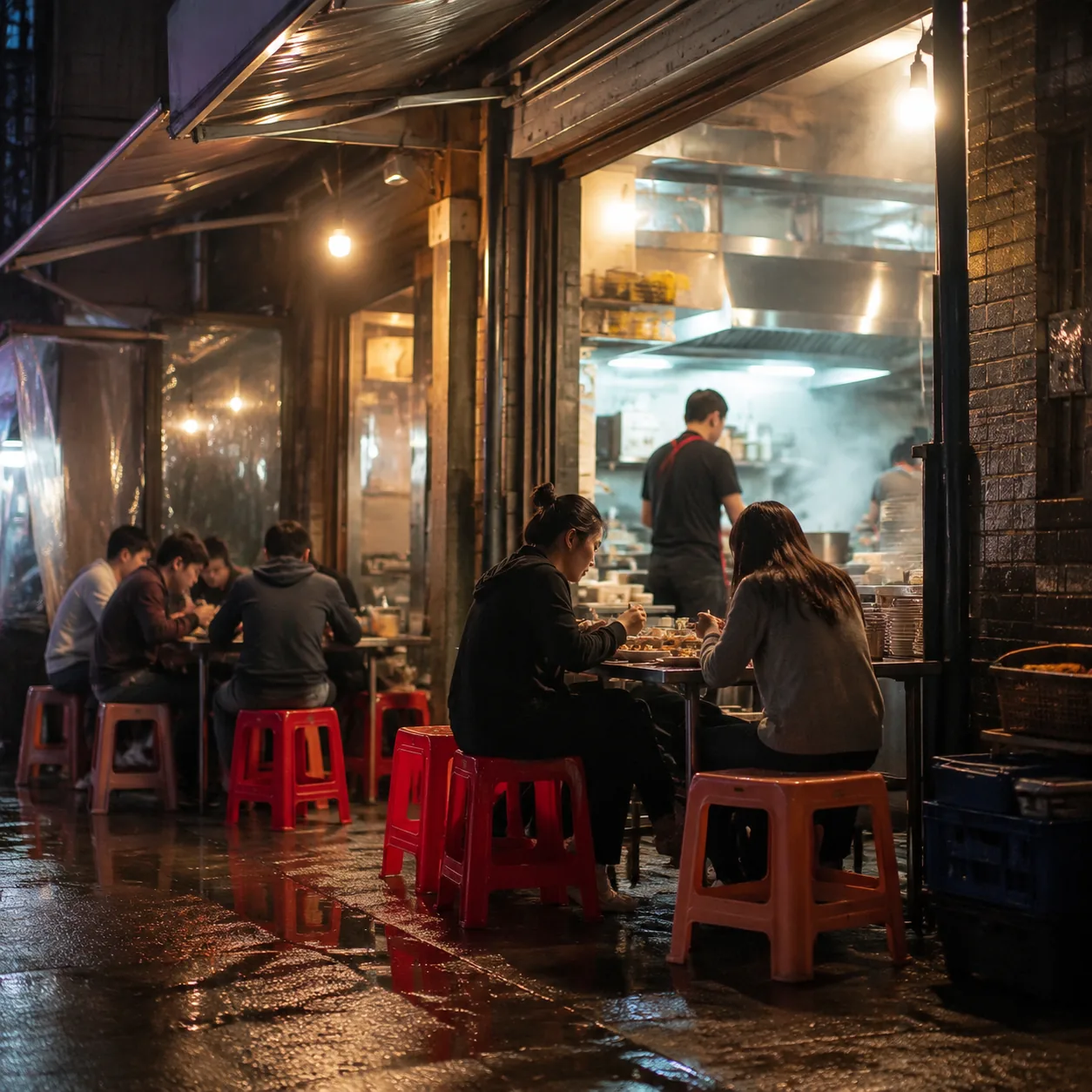
On my second evening in Chengdu, the rain had just stopped, and a small restaurant on the street had set plastic stools near the entrance as if inviting passersby into a cloud of warmth. As a foreign visitor, I had heard many warnings about Sichuan food before arriving: very fragrant, very spicy, be careful. I had prepared by saving a few words in my phone: mild spice, no spice, less spice, repeating them to myself until they sounded usable. That night I entered a modest eatery with a menu pasted on the wall. I recognized some dish names in red characters and could not guess others at all. From the kitchen came the aroma of chili oil and Sichuan peppercorn, not simply heat but a deep smell that made me hungry immediately. The server came over with an order pad, and I said with courage, “Mild spice.” I thought the phrase was a key that would open one exact, safe level of heat. I soon learned the key was real, but the room behind the door was larger than I imagined.
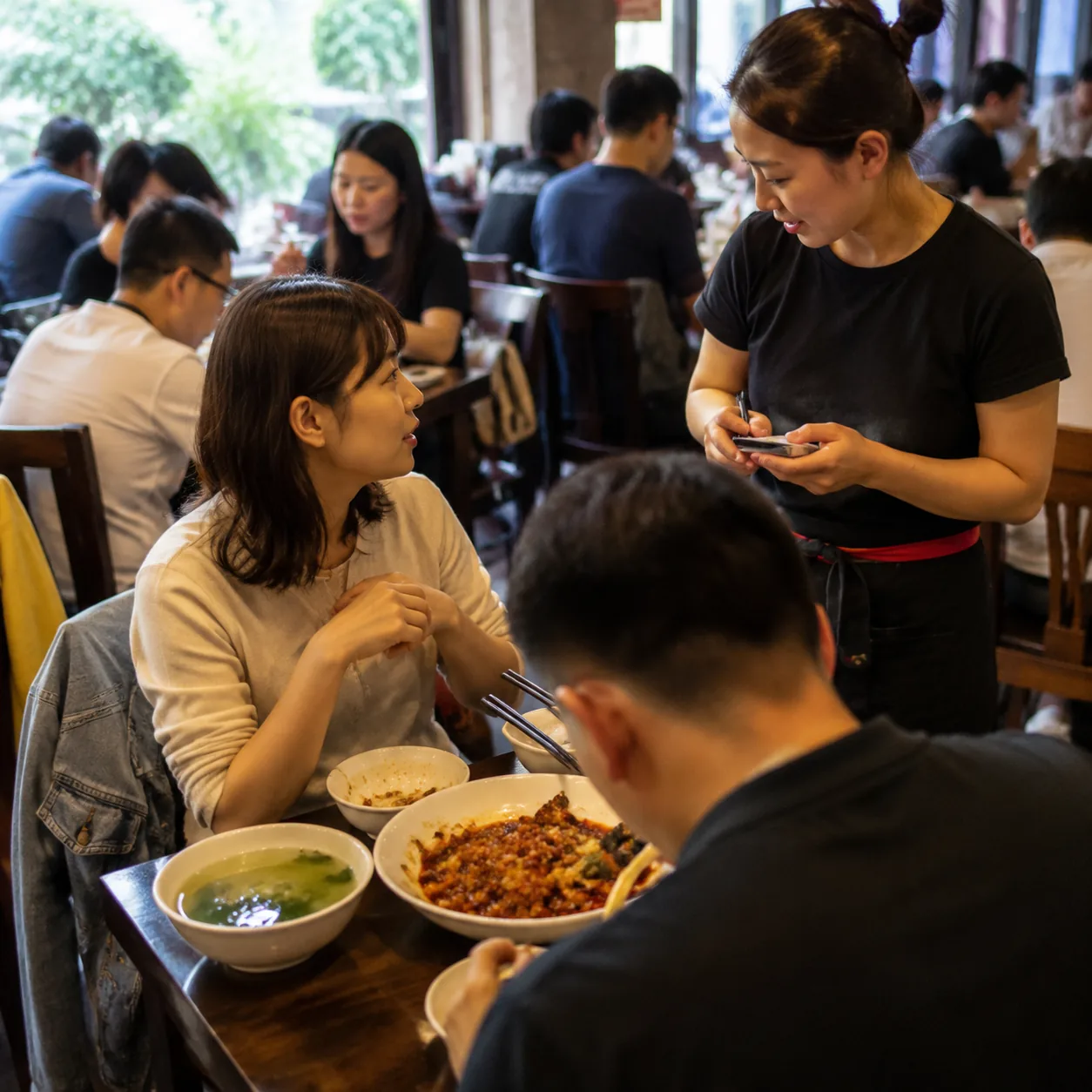
The restaurant was full of people after work. Jackets hung over chair backs, customers looked at phones while picking up food with chopsticks, and every bowl on every table shone with red oil. I ordered twice-cooked pork and a bowl of vegetable soup. When the server heard me say mild spice, she looked up and asked, “Can you eat spicy food?” I understood because I had practiced that question before coming to Chengdu. Wanting not to seem too fragile, I said, “A little is okay.” She smiled but did not write immediately. Instead, she explained, “Our mild spice here is still a bit spicy. Do you want us to put in less?” She spoke slowly and pinched a tiny distance in the air with her fingers, as if heat were a line she could hold between thumb and index finger. I suddenly realized ordering was not finished when I handed over a word. The server was helping translate that word into an action the kitchen could actually perform.
I nodded and said less would be better. Then she asked, “Can you handle Sichuan peppercorn?” That question made me pause. I knew chili could burn, but the numbing effect of peppercorn was harder for me to judge. In other cities I had tasted a little mala flavor, and when my lips tingled it felt like tiny electric currents moving across them. So I said, “A little less peppercorn.” The server pulled the order pad closer and wrote several characters beside the dish name. I could not read all of them, but I recognized “less” and “mild.” She pointed at the twice-cooked pork and said, “This will still have the aroma of red oil, but we will not make it too heavy.” Then she pointed to a dark red dish at the next table and said, “Do not order that one today.” Her tone was not forbidding; it felt like a local friend helping me adjust my route. In the kitchen, a spatula struck a wok, waves of chili oil fragrance came out, my stomach was excited, and my tongue was already nervous.
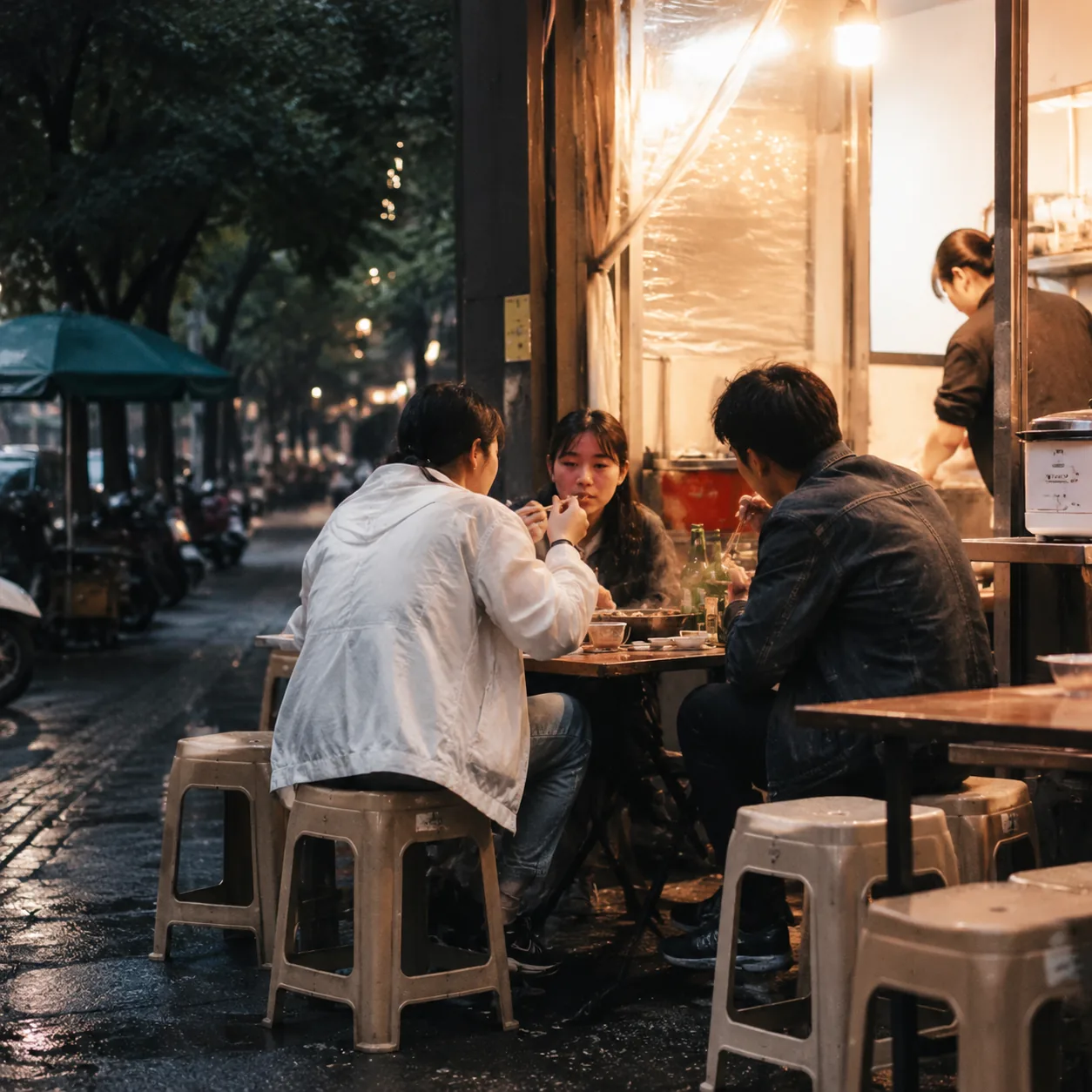
When the food arrived, a bright ring of red oil sat along the edge of the plate. The pork slices were thin and slightly curled, the garlic shoots were green, and the aroma of chili bean paste rose with the steam. First I smelled savory depth and fermentation, and only then did I realize the heat was waiting behind it. I picked up a small slice of pork with some rice and told myself not to be brave for no reason. The first bite did not burn immediately. Fragrance opened first, like a door. A few seconds later, the chili heat rose from the tip of my tongue across its surface, and the peppercorn numbness circled back from the corners of my mouth. I drank water. The server noticed from a distance and came over to ask, “Is it okay?” I said, “It is okay, very fragrant, a little spicy.” She smiled and said, “That is our mild spice here.” I smiled too, because there was no universal answer inside that sentence, only local experience.
I used to think “mild spice” was a level that could be translated precisely, as clear as small, medium, or large. In that Chengdu eatery, it was more like the beginning of a negotiation. For me, mild might mean warm lips. For the man at the next table, mild might only add color to the dish. For the kitchen, mild also depended on the dish itself: some dishes need chili oil for aroma, some use dried chilies for lift, and some feel boneless without Sichuan peppercorn. The server did not explain this with theory. She used simple questions to move me into a better position: Can you eat spicy food? Should we use less? Can you handle peppercorn? Is the rice enough? Each question taught me that translation can help me begin, but it cannot finish the judgment for me. Real judgment forms slowly between smell, color, the first bite, and the second bite.
Halfway through the meal, I started sweating, but not in a miserable way. I pressed a tissue to my forehead and kept eating. The aroma of red oil became clearer, and the heat settled like background music, no longer surprising me every second. The server passed by again, saw that half my plate was gone, and asked whether I wanted another bowl of rice. I almost said no, but my mouth was more honest than my pride, so I nodded at once. When the rice arrived, the pace of the whole dish slowed down. Each bite of pork was caught by the rice, and the peppercorn numbness became less sharp. I realized order adjustment did not happen only before the dish was cooked. It continued during the meal. More rice, a sip of soup, a pause, another bite: all of these were ways my body kept negotiating with Chengdu heat.
At the next table, a group ordered a dish so red that the chilies looked like festival decorations spread across the top. They ate it easily, chatting while reaching their chopsticks into the chili oil. I watched them and knew I was not there yet. But the distance did not discourage me; it made the city more interesting. A city’s flavor is not a one-time pass. It is a street you can approach slowly. On the first day, I only stood at the entrance, smelled the red oil, and learned to make “mild spice” more specific. Perhaps someday I can try medium heat, or perhaps I will always remain at mild with less peppercorn. The point is not to prove how much heat I can survive. The point is to find an honest position between my own tongue and the habits of the place.
When I paid, the server asked whether it was still too spicy. I thought for a moment and said, “Spicy, but delicious.” That made her laugh happily, as if this was the review she had hoped to hear. She told me that next time I could say “very very mild” and add “less Sichuan peppercorn.” I repeated the phrases, and she corrected my tones. I saved the words in my phone, but I knew the characters there were only shadows. What was truly useful was remembering the way she asked questions, remembering my own reaction when the red oil aroma came from the kitchen, and remembering how rice made a plate of food more approachable. When I left the restaurant, the wet road reflected the shop signs, my lips were still a little numb, and my stomach felt content. Chengdu did not become a non-spicy city just because I said mild spice. It simply offered me a step from which I could approach slowly.
When I think back to that meal now, I feel it taught me not one word, but the boundary of a word. “Mild spice” can be printed on a menu, entered into translation software, and understood by a server, but it cannot automatically know what my tongue has lived through. It also cannot automatically know how fragrant this restaurant’s chili bean paste is, how thick the red oil is, or how fresh the peppercorn tastes that day. Language matters here, but it is not everything. It knocks on the door; inside, people still need to confirm with one another. The server’s explanation, my nods, her notes on the order pad, and the extra bowl of rice together adjusted the meal to a place where I could enjoy it. Because of that, the mild spice was not weakened into a safe version. It still kept Chengdu’s character, but it did not push me outside the door.
After leaving Chengdu, whenever I see “mild” on a menu somewhere else, I think of that small restaurant. The English word looks calm, and the Chinese phrase for mild spice looks gentle, but real flavor never lives only on the surface of words. It lives in the temperature of oil in the wok, the server’s experience, the diner’s tolerance, and the taste a city has built over time. That evening in Chengdu, I thought I was choosing a heat level. Only later did I realize I was learning how to make a word land. It required explanation, adjustment, admitting what I did not know, and being willing to try. The aroma of red oil still remains in my memory, together with the server’s sentence, “Our mild spice here is still a bit spicy,” reminding me that understanding in travel is often not completed by translation, but slowly calibrated bite by bite.