On My First Evening High-Speed Train in China, Quiet Became Part of the Service
My first evening high-speed train in China was from Nanjing to Changsha. The ticket said 8:46 p.m., not exactly late at night, but already past the most excited hour of daytime travel. In the day, a high-speed rail station feels like a screen refreshing nonstop. In the evening, the lights are still bright, yet the sound of the hall drops by one layer. Someone lays a jacket over a suitcase, someone finishes the last bites of dinner, and a child rests on his father’s shoulder with open eyes while his body is already falling asleep.
Before that trip, I assumed the main service of night transport was speed and punctuality. If the train arrived, departed, and reached the destination on time, everything else seemed secondary. But after I boarded that evening, the first thing I noticed was not speed. It was a carefully arranged quietness. It was not absolute silence, and it did not force everyone to sleep at once. The whole train simply seemed to turn the volume knob a few notches to the left, giving each passenger a smaller, calmer space.
When the gate opened, the line did not feel as sharp as it often does during the day. People still moved quickly, but there was less of the edge of trying to get ahead of one another. The staff spoke more softly too. When they announced the train number, platform, and carriage direction, their words were clear but not loud. On the escalator, suitcase wheels clicked against the metal steps. I followed the crowd to the platform and saw the train waiting under the lights, its silver body reflecting the night as a dark blue stripe.
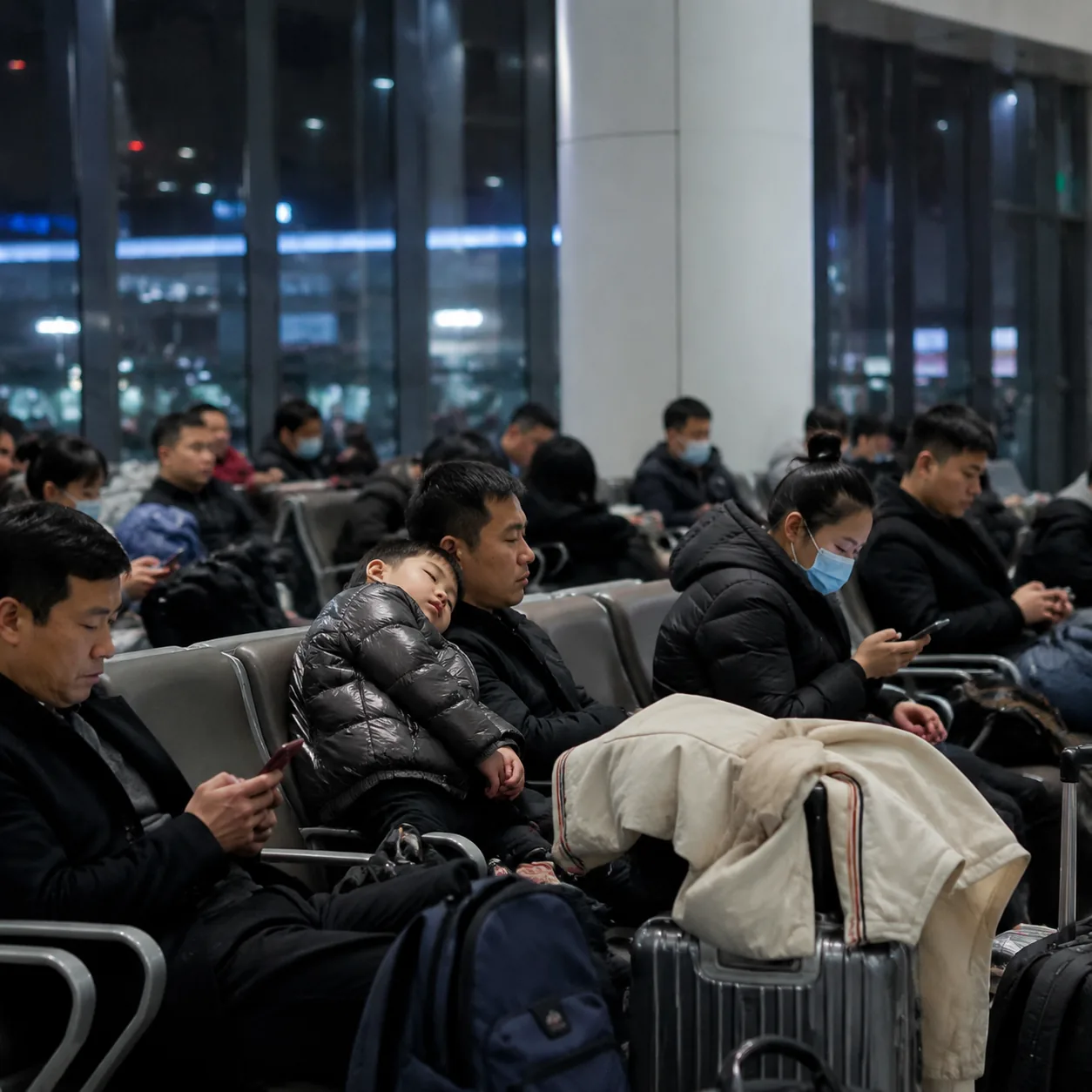
After boarding, my first task was to find space for my bag. On daytime trains, passengers often carry a list of plans and a mood for photos. Once the luggage is settled, conversations immediately turn to what to eat at the next stop or which street to visit. That evening was different. The luggage racks filled quickly, but the voices did not rise with them. Someone pushed a backpack deeper onto the rack; someone placed a thermos into the seat pocket. Every movement seemed careful not to disturb something. The carriage was not empty, yet the crowding felt thinner because of that restraint.
I sat by the window. At first I could still see people holding phones on the platform, staff in reflective vests, and the sign of a convenience store in the distance. After the train moved, those details stretched into lines and then disappeared into blackness. The carriage lights were not bright enough to make people fully alert, nor dim enough to create unease. They felt like hotel corridor lights: a reminder that the public space was still functioning, while also allowing your body to lean into the night.
That night I began to notice service details I would not have studied during the day. Announcements still reported stations, but the volume was gentler than I expected. Important information was repeated clearly enough, yet it did not pull people roughly out of a half-asleep state. When the attendant walked through, her steps were steady, and the trolley wheels crossing the floor joints did not sound harsh. When someone wanted hot water, she stopped, took the cup, and reminded the passenger to be careful. The whole exchange felt as if it were taking place in a library.
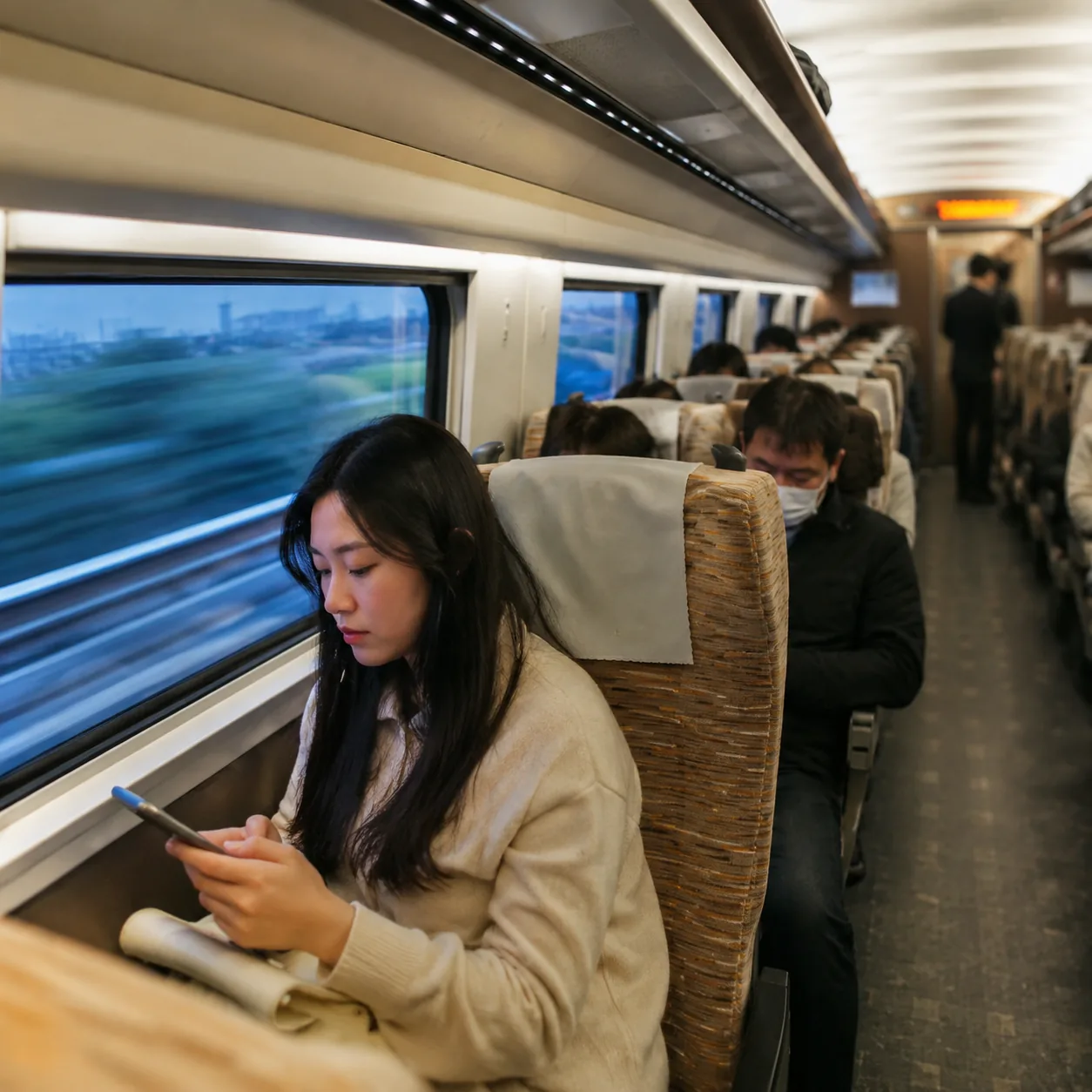
Beside me sat an engineer returning home from a business trip. He took out his laptop, then closed it almost immediately. The brief glow of the screen showed the tiredness on his face. He looked around, put his phone on silent, inserted his earphones, but did not play a video. He opened an article and read slowly. A few minutes later, he leaned his head against the seat and fell asleep. In that moment I felt that evening high-speed rail was not only serving movement; it was also protecting the small amount of strength people had left at the end of the day.
The quietness in the carriage did not come from one single rule. It came from many small choices stacked together. When someone answered a call, they first stood up and moved toward the vestibule, keeping their voice low. When someone opened a snack, they paused and tried not to make the plastic wrapper crackle too loudly. A parent with a child turned a story into a whisper. No one treated these actions as a performance. They felt more like a default courtesy of nighttime public transport.
I also noticed that the order of evening high-speed rail differs from daytime order. Daytime order is like a clear flowchart: queue, scan the ticket, find the carriage, store luggage, sit down. Evening order is more like a cushion. Its purpose is not to push you through each action, but to make every action less hard. When someone stands in the aisle to take a bag, nearby passengers pull their legs in more carefully. When a station announcement wakes someone suddenly, the seatmate gives a little extra room so the person can check the ticket and luggage.
As the train passed through parts of Anhui, there was almost no scenery outside, only the occasional lights of towns and villages. They flashed in the darkness like drawers opened and closed far away. I had planned to watch a documentary episode, but I turned it off after ten minutes. Not because I was bored, but because the carriage brought me into a state where time did not need to be filled. Usually, travel makes me want to use every free minute. That night, I was willing to let free time remain free.
At intermediate stops, the doors opened and cold air from the platform rushed in. A few passengers got off, and a few boarded. A daytime stop feels like a quick exchange. An evening stop feels more like a quiet handover. New passengers instinctively look at the carriage: who is sleeping, where the luggage is, whether the aisle is clear. Then they slow their movements, pull a coat sleeve free from a backpack strap, and try not to touch anyone’s shoulder.
I began to understand why quiet can become a form of service. It does not mean shifting all responsibility to passengers and simply telling everyone to be quieter. Nor does it mean creating pressure through stiff reminders. Effective quietness is an environment formed by facilities, staff, and passengers together. Lights should not be too sharp, announcements should not be too sudden, aisles should not be blocked, staff should not handle small issues in a hurried manner, and passengers should be willing to reduce the size of their own presence.
This is very different from luxury service in the usual sense. No one handed me an especially delicate dessert, and no one asked with exaggerated warmth whether I was satisfied. But when I could sit safely between two cities, rest a little, and not be repeatedly interrupted by noise, I felt a plainer kind of care. Sometimes travelers do not need surprise. They need a process in which their energy can return.
Before arriving in Changsha, the announcement reminded us of the station in advance. Many people woke up almost at the same time, but the carriage did not become chaotic. People first reached for phones, then checked bags and coats, and only then slowly stood up. I folded the tray table and checked the gap around my seat for anything I might have dropped. The engineer beside me looked out the window after waking, as if he had not fully left his sleep, yet already knew he was close to home.
When I got off, I looked back at the carriage. Seatbacks had returned upright, the aisle was clear again, and several paper cups had been taken away. There was no obvious mess. The night wind on the platform was colder than inside the train, and the city lights spread from the distance. I suddenly felt that the most valuable thing about evening high-speed rail was not that it extended daytime efficiency into the night. It was that it understood night should not merely copy day.
If you take an evening high-speed train in China for the first time, I would suggest expanding your attention from “Is it fast?” to “Is it steady, quiet, and not too tiring?” Place your luggage where it can be retrieved easily, lower your phone brightness, move to the vestibule for phone calls, and organize your things calmly after hearing the arrival reminder. You may find that joining this quietness is not difficult, and it will care for you in return, making long-distance movement feel less like endurance.
When I walked out of Changsha South Railway Station that night, I did not call a car immediately. I stood outside the exit for a while. Passengers continued to come out behind me, and the sound of suitcase wheels returned to the city pavement, looser than it had been inside the carriage. I thought about the past few hours: no dramatic story, no dangerous turn, yet I remembered a very fine side of China’s high-speed rail service. It does not only send people far away. At night, it also preserves a little peace for them.