Before Finishing My First Bowl of Rice Noodles in Nanchang, I Had Already Read the Temper of Its Crossings
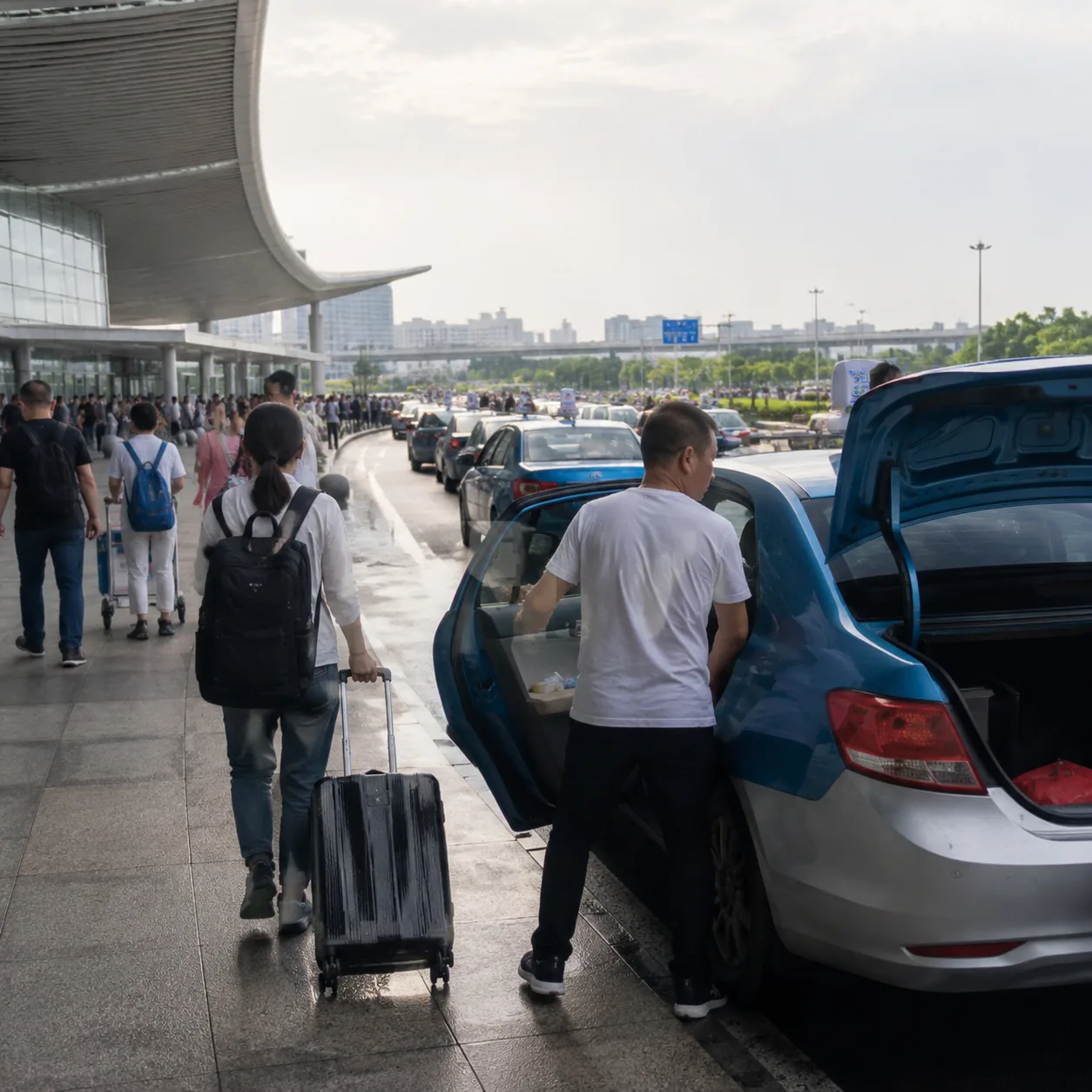
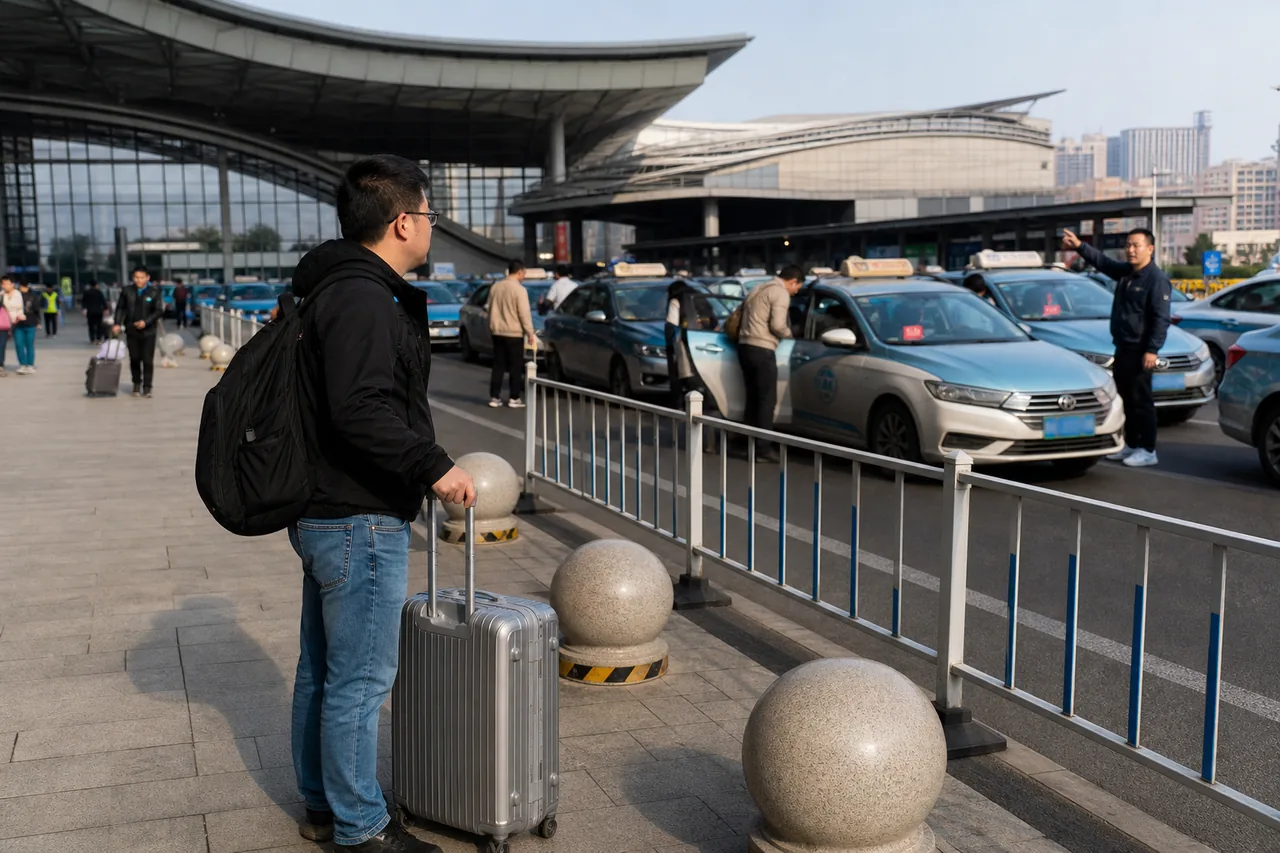
At eight in the morning, I stood outside Nanchang West Railway Station in the taxi boarding area with my suitcase, hearing wheels roll over paving bricks, drivers calling to passengers, and announcements reminding vehicles to stop only briefly. The air smelled of rice noodle soup, hot oil, and morning dampness mixed together. I come from Krakow, Poland, and in unfamiliar cities I am used to checking a map first, then moving along the blue route given by navigation. But during my first hour in Nanchang, I discovered that its crossroads were not determined only by traffic lights. The true rhythm hid in the shoulders of the crowd, in the moment when electric scooters released their brakes, and in the way breakfast vendors shifted steamers half a step inward to leave a narrow path for people rushing to trains. Nanchang did not first give me a complete answer. It made me stand by the road and learn to slow my eyes.
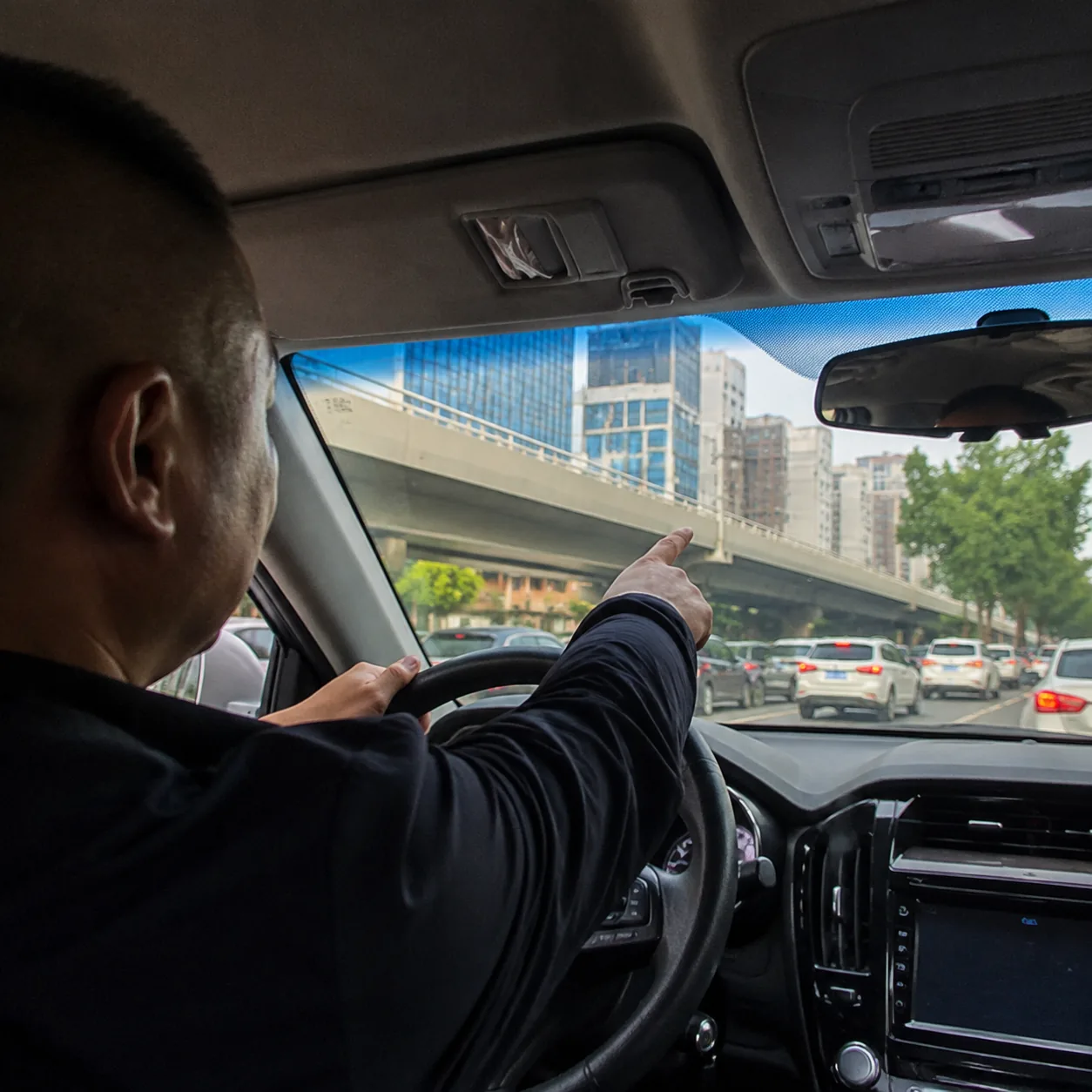
My hotel was between Tengwang Pavilion and the old urban area. The taxi driver’s surname was Deng. He did not speak much along the way, but he slowed in advance at several intersections. With his left hand on the steering wheel, he occasionally pointed with his right: “During rush hour there are many scooters here. Over there, many cars cross the river. At night, people going to dinner suddenly come out of the lanes.” At first I thought these were ordinary reminders. Later I understood that he was introducing the hidden punctuation of a city. Outside the window, elevated roads, wide streets, old residential buildings, and new malls appeared in turn. Nanchang is not a city that lets outsiders understand it through one old street alone. It has many layers, and the connections between those layers are often crossroads. If you look only at buildings, you easily miss how these places send people toward different lives.
After putting down my luggage, I first went to a small crossroad beside the hotel where rice noodles and clay-pot soup were sold. The stall was not large. Several low tables stood on the inner side of the sidewalk, and steam rose from the mouths of clay pots. Office workers ate while standing with bowls in their hands, students hung schoolbags in front of their chests, and two elderly people slowly mixed chili sauce into their noodles. The road was not wide, yet the flow did not become chaotic. When someone finished eating, they handed the bowl back and naturally leaned aside so the next person could take the place. When an electric scooter passed, the rider lightly touched the brake first, then slipped between the table corner and the curb. I stood for several minutes before daring to order, because I first needed to understand the order here. It was not written on any sign, yet everyone knew it.
The owner asked whether I wanted chili. I said just a little. She smiled, as if she had heard the most common answer from an outsider, but the spoon in her hand was careful and gave me only a small ring of chili oil. A man in blue work clothes saw me holding the bowl and looking for a seat. He moved inward and said that mornings here had to be quick, otherwise the soup would cool. After sitting down, I realized that eating breakfast was also a way of observing a crossroad. Who had to leave quickly, who still had time to talk, who bought only soup to take away, and who carried a bowl under a tree to eat slowly—these differences explained the city’s morning better than road colors on a map. My first bowl of rice noodles in Nanchang was not a scenic spot, but it let me enter the city through both tongue and eyes.
I had originally planned to go straight to Tengwang Pavilion, because it was the name I knew best before departure. But when I reached the crossroad beside a bus stop, I paused again. The flow here was more complex than at the breakfast stall: visitors checked navigation, elderly people waited for buses, students in uniform came across the zebra crossing in groups, and several delivery riders stopped under the shade of a tree to read orders. When the red light was on, the crowd was not completely still. Everyone adjusted position in small ways, like water taking shape before a dam. When the green light appeared, not everyone moved first. Those in the front row with the clearest direction moved, and the people behind followed their shoulders. Nanchang’s crossroads taught me that urban order is not always a straight line. It is often a flow formed together.
When the bus entered the stop, I instinctively stepped back, afraid of blocking people getting off. An auntie saw my hesitation and said in Mandarin, “Stand on this side. It will be faster to board.” The place she pointed to was not directly under the stop sign, but where the bus door would stop. When the doors opened, passengers got off from the left side, and those boarding entered along the right side near the door. The whole process was faster than I had imagined. Inside the bus were the spicy smell of rice noodles, the damp smell of umbrella fabric, and the sound of short videos playing from someone’s phone. Before every intersection, the driver eased off the accelerator and swept his eyes across the right-turn lane, the zebra crossing, and scooters emerging from side lanes. Sitting on the bus, I felt as if I were watching a moving score of the city.
Near Tengwang Pavilion, I did not hurry into the scenic area. Instead, I stood at the outside crossroad for ten minutes. The wind from the Gan River lifted the edges of visitors’ hats, tour-group flags swayed by the road, and local residents crossed through side paths carrying vegetables and fruit. There was an interesting layering here: people taking photos stayed near angles where the pavilion could be seen, people in a hurry walked along the shade of trees, and people waiting for others stood where they would not block the passage. Tengwang Pavilion is of course a symbol of Nanchang, but the crossroads around it brought that symbol back into reality. The pavilion stands high above, while the flow of people connects it again to the city every day.
At noon I walked along the river. The sun came through gaps in the clouds, and the road surface began to shine. An elderly man selling bottled water dragged his box under a tree, while several young people nearby discussed where to eat. I asked him whether there was an ordinary small restaurant nearby. He did not recommend an internet-famous place. He simply said to walk two streets inward and enter whichever place had more people, because Nanchang people would not let themselves eat too poorly. The advice sounded casual, but it was useful. In a new city, I always wanted an exact answer, while local people often gave me a method of judgment. So I stopped asking for a specific shop name and began watching bowl-and-chopstick sounds at entrances, how quickly tables turned over, and which lanes office workers emerged from.
In the afternoon I reached the area near Bayi Square, where intersections became wider and both vehicle flow and pedestrian flow carried more force. The monument stood at the center of sight, while surrounding malls, bus stops, subway entrances, and pedestrian passages kept sending people in and out. This Nanchang was no longer the close warmth of the morning rice noodle stall. It had the openness and urgency of a provincial capital. I stood before the zebra crossing and saw a mother holding her child’s hand. The child wanted to run, and she gently held him back, releasing her grip only when the crowd truly began to move. Delivery riders aligned their scooters two seconds before the green light, and a bus driver nodded to pedestrians before turning right. Each action was small, yet it kept the huge intersection from losing control.
At the edge of the square I met a retired teacher. Seeing me stare at the flow of people, he asked whether I was lost. I said no, I was only learning how to read intersections. He laughed and said that Nanchang people crossing a road had to watch three things: lights, vehicles, and people. Missing any one of them would not work. He added that in summer one also had to watch shadows, because everyone moved toward places with trees, and the walking lines changed. This felt fresh to me. Roads on a map never change direction because of the sun, but human routes do. A city is not fixed lines on paper; it is a map temporarily drawn by temperature, weather, habit, and bodies together. After that day, I no longer treated navigation as the only truth.
In the evening I went to the Wanshou Palace historical and cultural district. It was livelier than during the day. Once the lights came on, people seemed to be summoned again from every direction. Lines formed in front of snack stalls, young people held milk tea while taking photos, and elderly residents slowly emerged from lanes to watch the bustle. The intersections were the most interesting: visitors wanted to move toward the brightest places, local people knew which alleys could avoid the crowd, and stall owners kept adjusting tables and chairs so the line would not block neighboring shop entrances. I bought a piece of white sugar cake and ate it while standing to the side. I realized I was no longer staring only at traffic lights as I had in the morning. I had begun to watch gaps in the crowd, who was stopping, who was waiting, and who was about to turn. At night, Nanchang tested again what it had taught me during the day.
On the way back to the hotel, I did not open navigation immediately. The wind by the Gan River had cooled, and streetlights fell intermittently through the leaves. I walked according to several points I had memorized during the day: the small crossroad by the breakfast stall, the tree beside the bus stop, the corner from which I could see the side silhouette of Tengwang Pavilion, and the widest zebra crossing near the square. At each place, I could remember a sound and a gesture. The unfamiliar city was no longer one whole field of uncertainty. It had become several confirmable nodes. My first day in Nanchang did not make me memorize many attractions. It taught me that as long as I understood a few crossroads, I would not be completely suspended in the air.
After nine that night, I sat by the window of my room and wrote the day’s route into my notes. In the end, I did not record practical information like what time I reached which sight. Instead, I wrote several lines that felt more like private signals: at the breakfast crossroad, watch bowls; at the bus stop, watch doors; at the square intersection, watch shadows; at Wanshou Palace, watch gaps in the crowd. These sentences might not help others make an itinerary, but they helped me remember how Nanchang slowly changed me from someone who only watched maps into someone willing to watch people. On my first day in Nanchang, what I truly learned was not a shortcut, but how to give my steps to the flow in front of me. A city’s direction is sometimes not on the screen, but in the small space the crowd has just opened.