Travel Routes
After Rain Stopped Along Lijiang’s Eaves, I Began Following the Canals and Stone Lanes Slowly
- The rain stopped in the afternoon, and the stone lanes of Lijiang looked as if they had been gently polished, with tiny beads of water resting in the gray-blue cracks. I entered from the edge of the old town, not hurrying toward any courtyard gate or shop, letting my soles follow the damp slope forward. The eaves were still dripping, each drop landing beside wooden thresholds like someone turning down the volume of the day. In the distance, Jade Dragon Snow Mountain hid half a shoulder behind clouds; nearby, willow branches leaned over the canal with the clean scent of rain on their tips. This version of Lijiang does not need an itinerary. If you slow down, it hands you the turns of alleys, moss on walls, and flowerpots under windows one by one.
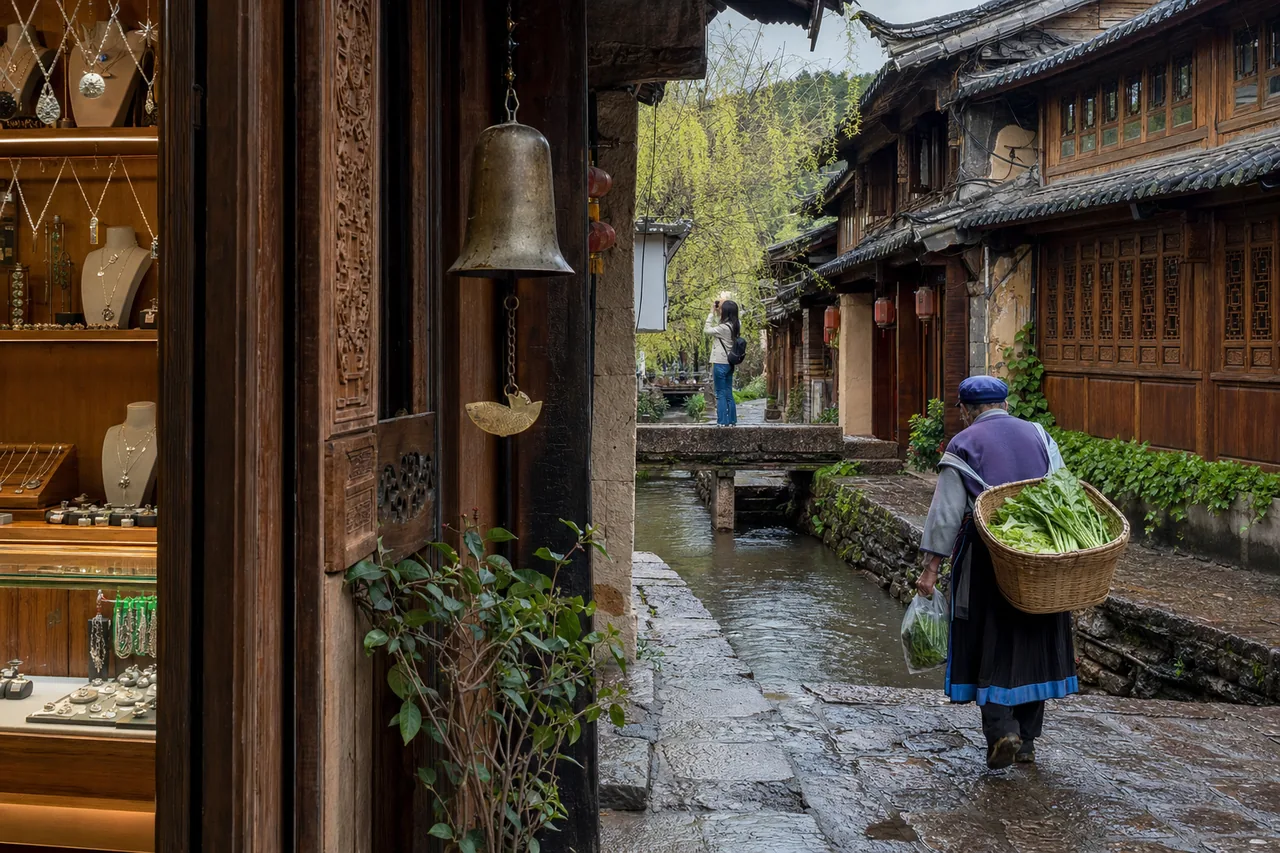
- After rain, the air has a filtered transparency, and even the characters on shop signs appear calmer. Naxi wooden houses line the street, their carved window lattices darkened by moisture, like old pages suddenly regaining their ink. I passed a silver shop; a bell at the doorway was stirred by the wind, its faint sound mingling with the water in the canal. The small bridge was narrow and glossy. Some travelers paused in the middle for photos, while a local elder passed with a vegetable basket, and no one hurried anyone else. This is the gift of walking slowly: the town stops being a checklist of sights and becomes a length of time that is still breathing.
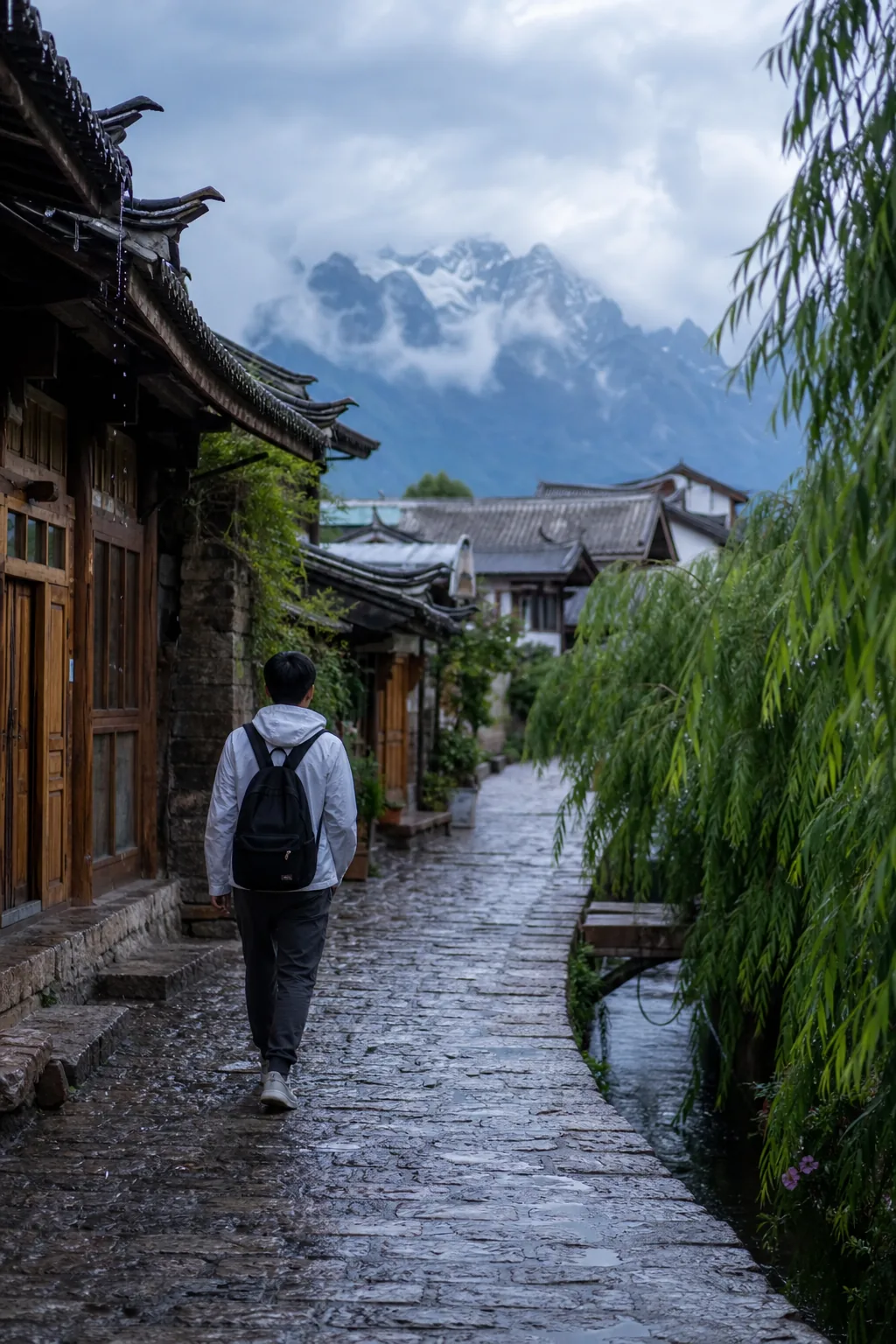
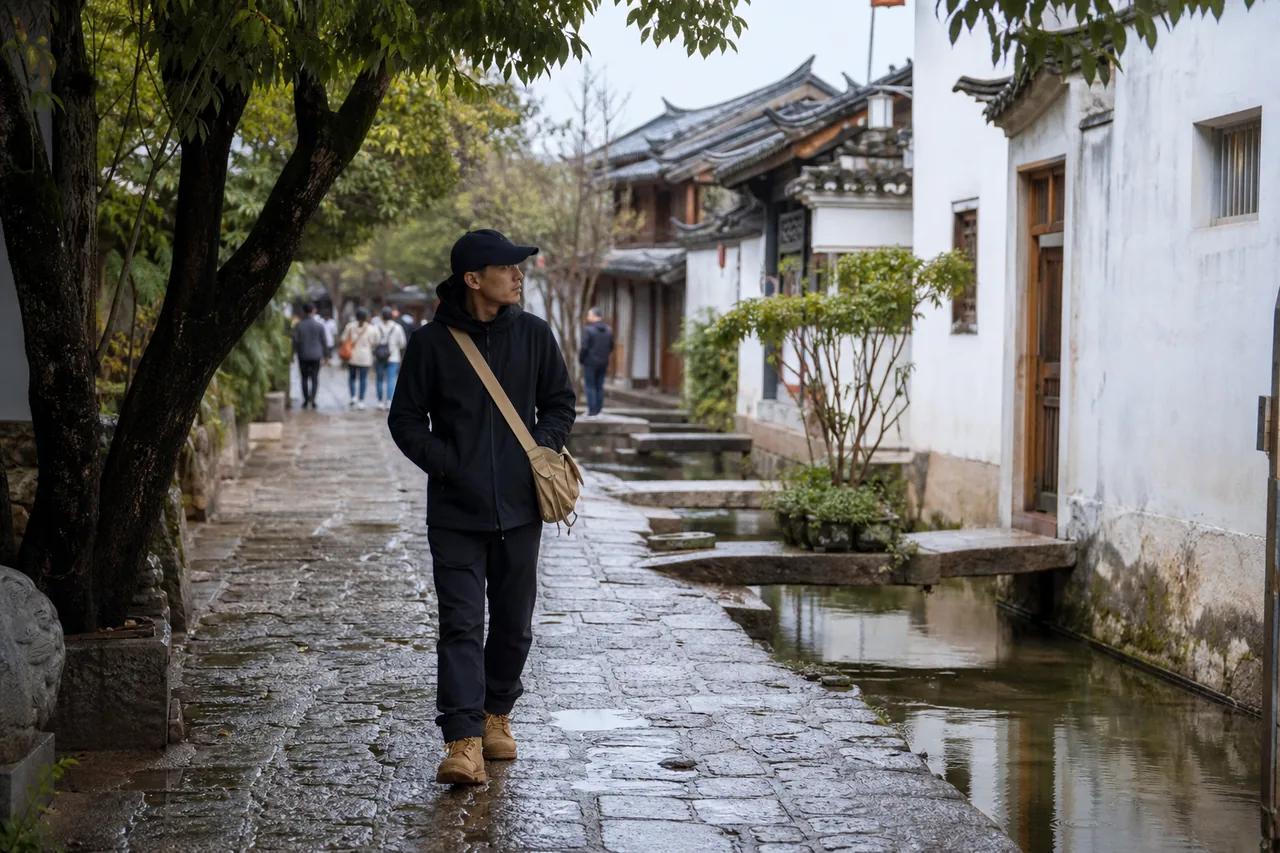
- I followed the canal forward. A few fallen blossoms floated on the surface, their colors washed pale by rain yet more durable to the eye. The stone rail beside the water was uneven; some corners were rounded by use, some hollows held puddles reflecting small pieces of sky. Water in Lijiang always seems to speak for the old town. It is not loud, but it keeps reminding you that mountain snow, city wells, and life under eaves are tied by an invisible thread. Walking slowly after rain, that thread becomes clearer. You notice freshly washed blue cloth drying at a doorway, and you notice someone in a café pushing open a window so damp air and warm air can trade places.
- Around Sifang Street there were more people than in the side alleys, yet the voices after rain had softened. Drumbeats came from a shop, wrapped in humid air and less sharp than usual. A flower-cake store opened its steamer, and the scent of rose and pastry spilled into the street, mixing with the smell of wet wood into something distinctly Lijiang. I bought one and ate it slowly under the eaves. The crust was warm, the filling sweet without being heavy. People nearby discussed where to go next, but I suddenly felt that going nowhere was also acceptable. The old town after rain is like a freshly unfolded map, but what is most worth seeing is not the destination; it is the pause in the blank spaces.
- In a narrower alley, moss at the base of the wall shone like newborn velvet. A few cats peered from door cracks and, after confirming the rain had stopped, stepped out onto the stone steps. They understood slowness better than people: first sniffing the air, then circling puddles, finally settling beneath a bamboo chair. Deeper in the alley, an auntie was arranging flowerpots. Mud clung to her hands as she lifted rain-bent stems and leaves with careful motions, as if comforting children just waking up. I stood there for a while and did not take a photo. Some travel scenes lose warmth once fixed by a lens. Kept in memory, their mist and breathing remain alive.
- Lijiang after rain also has a sound made by footsteps answering water. A sole touches stone with a soft note, and the canal beside it seems to reply. At a corner, a damp cool wind comes through the lane, then is stopped by a row of wooden buildings. Many shops begin to lift their curtains again: colorful shawls are hung, silver ornaments set out, tea tins arranged. The old town is like a person just waking, stretching slightly. But I prefer the moment before it becomes fully lively again: light from a half-open door, tabletops not yet wiped dry, a shopkeeper bending over change. These details have more patience than any sales call.
- I walked along a road outside Mufu Mansion, where rain had washed the walls clean and sharpened the contrast between yellow earth walls and dark tiled eaves. Travelers passed in small groups. Some folded umbrellas into bags; others could not yet bear to close them, letting beads of water roll from the fabric as they walked. Slow walking is not deliberate delay; it is letting the body relearn the pace of a place. Lijiang’s pace should not be disturbed by rushing: water flows slowly, clouds scatter slowly, tea warms slowly, elders slowly tell stories from youth. If you hurry to arrive, you see only tickets and signs; if you slow down, you see time itself settling on the eaves.
- As evening approached, rain clouds shifted from behind the rooftops and the sky revealed a little pale gold. Wet stone began to reflect, as if someone had spread a thin layer of light over the ground. The bar street lights had not fully come on, leaving a quiet seam between day and night. I sat on a low stool by the water and watched a staff member test strings of bulbs one by one, watched travelers put cameras away and take them out again, watched a dog cross the bridge and shake water from its coat. Lijiang at this moment felt completely ordinary and completely precious. It did not need legends to prove itself; this slow light after rain was enough to be remembered.
- Some people say the old town has become commercial, and while walking slowly after rain I can also see the similar goods, similar music, and similar signs. Yet on the same street there remain many things that cannot be copied: the waterline along tile edges, the worn cuffs of an elder’s sleeves, the sudden laughter of a child stepping into a puddle, the slight turn of a stranger making room. Travel is not about defending a place or condemning it. It is about finding what is still genuine within complexity. Lijiang hides truth in small textures, and you see them only after rain, in slow steps, when you are not rushing to judge.
- When night truly fell, lanterns swayed into strings of red reflections on the water. Coolness rose from beneath the stones, and I pulled my jacket closer as I walked back. Alley entrances I had seen by day became unfamiliar; lamps behind wooden doors warmed the window paper, as if every household guarded its own small universe. Travelers’ footsteps increased, and music grew clearer, yet I still carried the damp quiet of the afternoon. Slow walking does not give you possession of a place; it lets a place leave its rhythm in you. After leaving Lijiang, you may not remember the name of each bridge, but you will remember the sound of your soles after rain.
- At the entrance of the old town, I turned back once more. Rain had revealed Lijiang’s unpolished layers: new shops against old walls, noisy crowds passing quiet water, bright lights falling on stones smoothed by years. The contradictions had not vanished, but the post-rain air temporarily reconciled them. Perhaps the true attraction of an old town is not whether it has perfectly preserved the past, but how it places past and present, distant visitors and local life, on the same street, allowing them to collide and yield to one another. I walked slowly through that street as if finishing a letter dampened by rain yet still legible.
- This slow walk after rain had no grand story and no conclusion that demanded a check-in photo. It simply taught me that Lijiang is often most moving not in its busiest square or brightest night view, but in the instant after rain stops, footsteps slow, and the heart makes room. Then you discover that the old town is not a frozen scene but a slowly flowing relationship: people and water, wood and stone, mountain clouds and lamplight, visitors and daily life all draw closer again after the same rain. As I write this, I can still recall the damp wind moving through the alley and a drop of water falling from an eave, placing a soft, round period at the end of the walk.
- If I come again, I would still choose an afternoon after rain, asking no route and checking no rankings, beginning only from a small lane with the sound of water. Perhaps I would meet different flowers, different cats, different shopkeepers; perhaps the snow mountain would still hide behind clouds, and the old town would still move forward amid debate. But I believe that as long as one is willing to walk slowly, Lijiang will offer its smallest truths: the temperature of a stone, the waiting of a lamp, the direction of flowing water, and the reason a person suddenly grows quiet far from home. Travel is not about seeing the whole world; it is about learning to see again somewhere. Rain-washed Lijiang is well suited to teach that lesson.
…