The Great BBQ Map of China
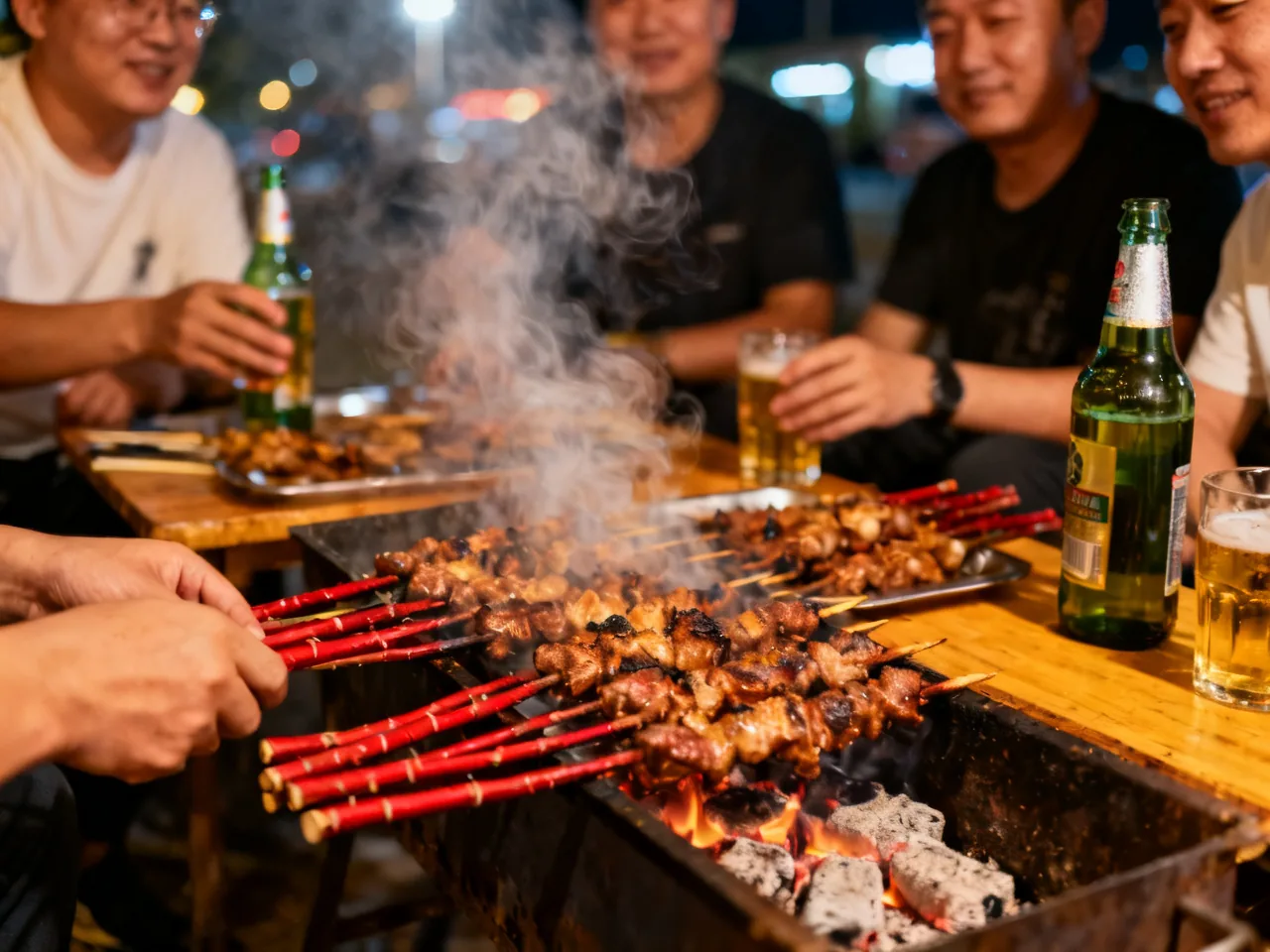
At one in the morning, the street across from Jinzhou South Station is still lit up. Plastic stools spill onto the sidewalk while charcoal turns the pitmaster’s face a deep red. A local guy hollers: “Boss, twenty more tendon skewers, extra dipping sauce!” This is Chinese BBQ in its most primal form: late night, street-side, strangers sharing tables, a few skewers enough to make you friends.
Chinese BBQ isn’t a single dish — it’s an entire underworld with its own codes. Every city has its own secret language. Jinzhou locals treat skewers as their city’s calling card. By one count, this Liaoning city of three million has over 20,000 BBQ joints, arguably the highest density in the country. The soul of Jinzhou BBQ isn’t the meat itself but the dipping sauce: sesame paste, chili flakes, cumin, and crushed peanuts — four flavors blended and brushed onto lamb skewers fresh off the flame, sizzling on contact.
The Northwest: Silk Road Echoes on Red Willow Skewers
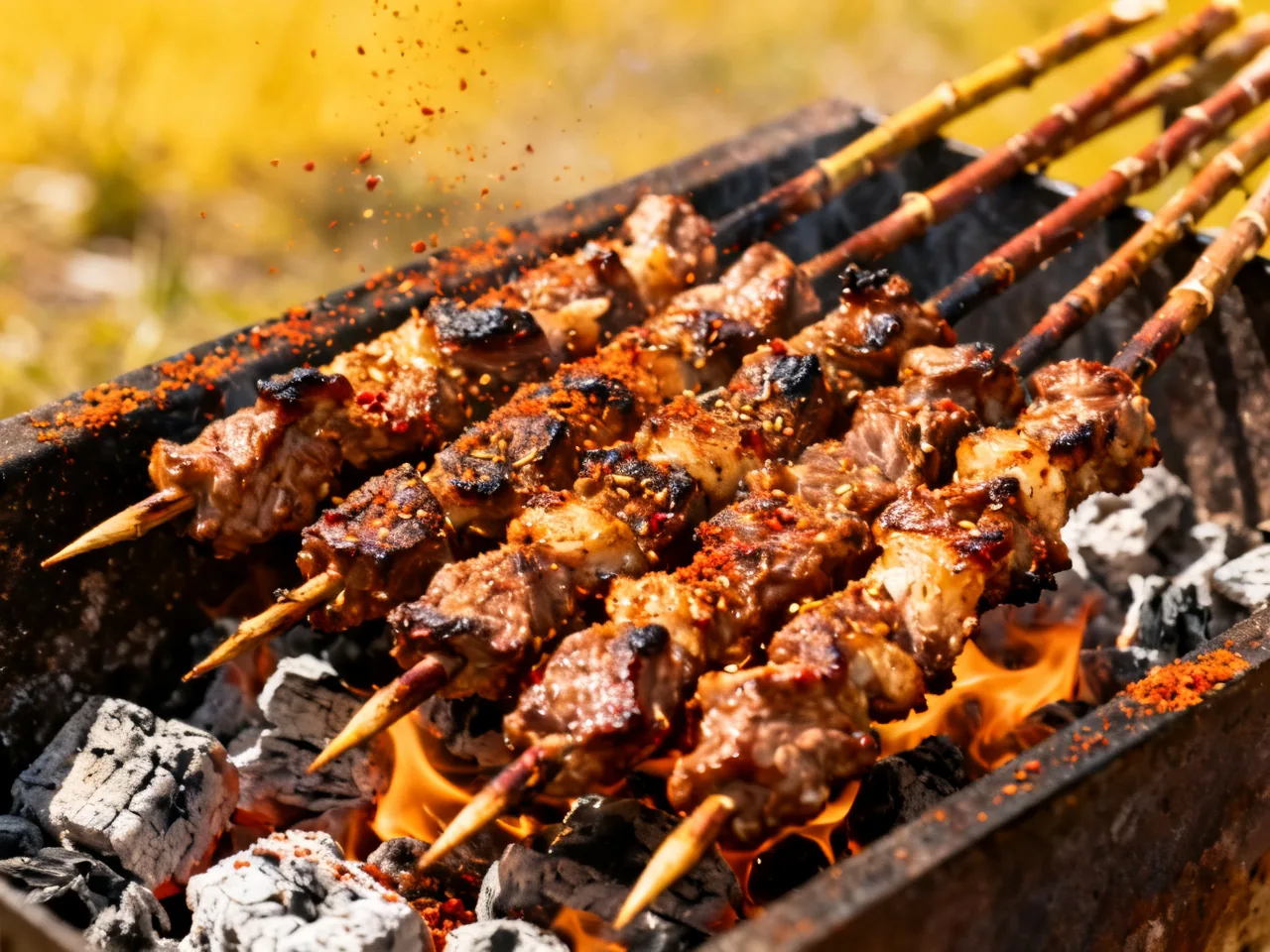
Travel two thousand kilometers west and the BBQ landscape transforms completely. Xinjiang kebabs use red willow branches as skewers, each chunk of meat fist-sized, fat marbled with lean, dusted with coarse salt and cumin, then grilled over coals beside a naan pit. At Urumqi’s May First Starlight Night Market, one red willow skewer goes for fifteen yuan, its aroma — smoky meat mingled with the bitter-sweet scent of red willow wood — drifting half a block. Uyghur pitmasters never rush; their flipping rhythm resembles an ancient ritual. These skewers traveled down the Silk Road, carrying the ruggedness of Central Asia and the vastness of the desert.
The Southwest: Everything Can Be Grilled
Sichuan and Yunnan folks take a wilder approach to BBQ. In Xichang, fire-basin grilling is standard — no fancy equipment, just a wire rack over a charcoal basin, tiny skewers packed tight, brushed with the same red chili oil that fuels Chongqing hotpot. Zhaotong mini-skewers are even more extreme: each skewer holds a morsel no bigger than a fingernail, and eating three hundred in one sitting is considered beginner level. In Jianshui, Yunnan, grilled tofu rules the late night. Palm-sized blocks puff up slowly over coals, crispy outside and pillowy inside, dipped in dried chili and mint — one bite floods your mouth with fermented umami.
The Southeast: Seafood Meets Charcoal
Head south along the coastline and BBQ embraces the ocean. Zhanjiang’s charcoal-grilled oysters consume over a billion shells annually, with oyster stalls stretching from street corners deep into alleyways. Garlic, black bean, and chopped chili — three flavors divide the kingdom equally. Eating your way from Guangzhou to Chaoshan, you’ll notice Cantonese seafood grilling prizes the ingredient’s natural sweetness, keeping seasoning restrained. Cross into Taiwan and Fujian, and BBQ picks up the sweet fragrance of soy paste and Thai basil.
BBQ Economics: A Late-Night Business
China’s BBQ industry surpassed 200 billion yuan in 2023. According to China’s restaurant big-data reports, BBQ ranks as the number-one late-night dining category nationwide, beating hotpot and crayfish. Interestingly, peak BBQ consumption isn’t in summer — data shows winter orders in the northeast actually exceed summer ones by fifteen percent. On Harbin streets at minus twenty degrees, people in puffy down jackets huddle around open-air grills waiting for their skewers, breath clouds mingling with grill smoke. The image itself is a metaphor for Chinese BBQ culture: no matter how cold the night, a single skewer can ignite the warmth of human life.
BBQ is China’s late-night cathedral. No menu formalities, no table manners to observe — just charcoal, skewers, and beer composing an egalitarian world. Next time you arrive in an unfamiliar Chinese city, don’t rush to find influencer-approved restaurants. Ask the locals first: “Which street here has the wildest BBQ?”