Many People Finally Commit to a China Trip Because Shanghai Gives Them a First Sense of Ease
Among foreign creator videos about China, Shanghai occupies a very particular place. It does not seize attention first through vertical drama the way Chongqing does, nor does it overwhelm memory in one glance through landscape spectacle the way Zhangjiajie can. Yet the city that often persuades first-time visitors to move a flight search one step closer is Shanghai. The reason is not mysterious. Shanghai knows how to receive people. In a short span, it allows a traveler still holding some distance from China to connect transport, payment, walking, eating, and urban rhythm into a line that feels relatively smooth.
When city-observation or route-experience creators arrive in Shanghai, they often do not stop at saying that the skyline feels modern. What their public material really communicates is something more useful: China travel here can begin with smoothness. For first-time visitors, that kind of smoothness is more persuasive than any tower photograph. It suggests that the first step into China does not have to be the hardest, most complex, or most intimidating place. It can be a city that receives you first and only gradually pushes you deeper.
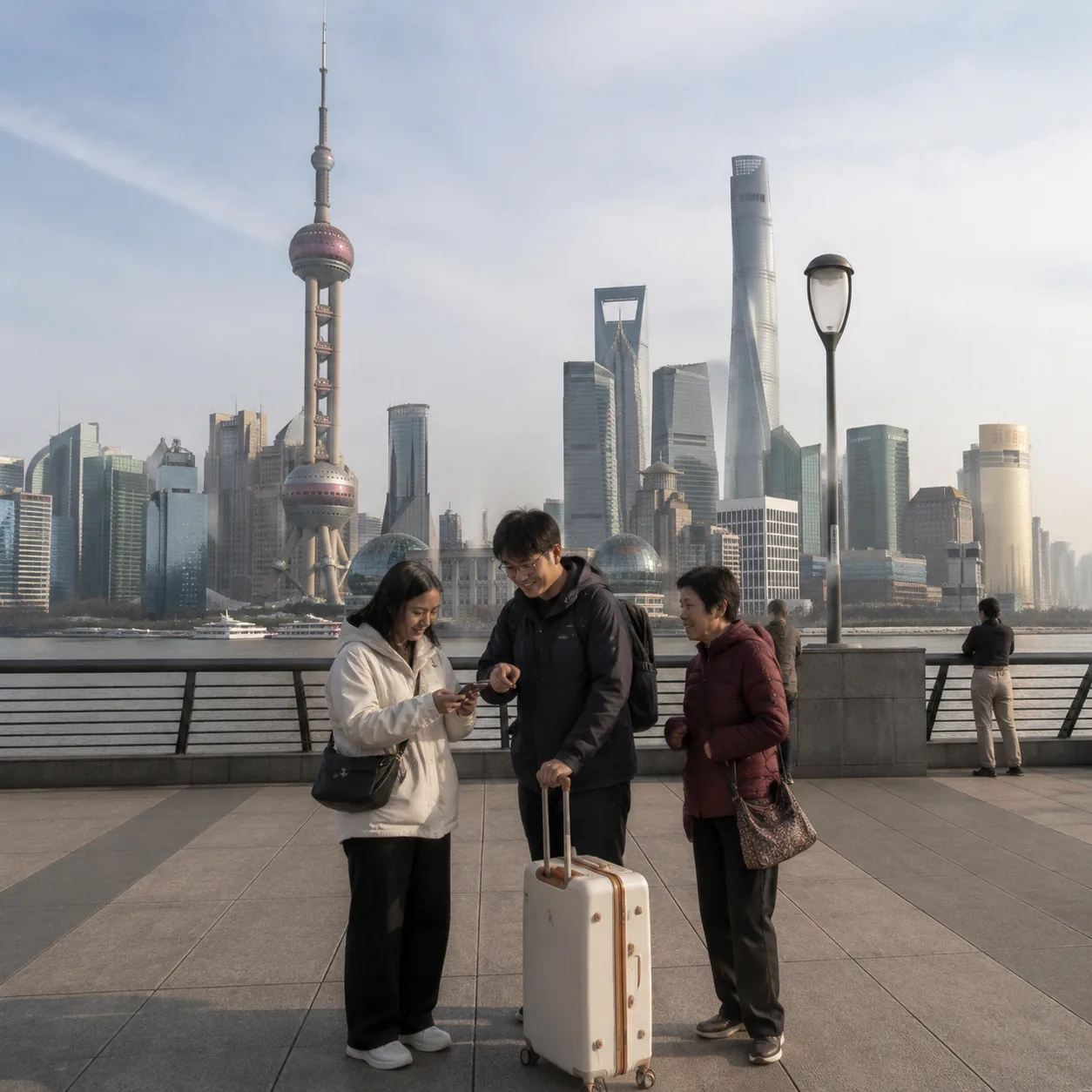
Why Shanghai Keeps Becoming an Entry City for First-Time China Travelers
Whether a city works as an entry point does not depend only on the number of landmarks. It depends on whether strangers can build behavioral confidence there quickly. One of Shanghai’s greatest strengths is that a traveler can confirm several essential judgments in a relatively short period: the metro is readable, the walking lines connect, restaurants are not hard to enter, and moving between the riverfront and the city core does not punish the body too severely. Once those basic actions go smoothly on day one, the following days become noticeably lighter.
That is also why many foreign creators in Shanghai end up filming not only what they saw, but how they moved. From a site-operations perspective, this kind of video is especially worth rewriting. Readers do not decide to come merely because they learn that the Oriental Pearl exists. What they need to know is whether the city will panic them the moment they land in China. On that question, Shanghai often gives a gentler and more effective answer than more dramatic destinations.
What Truly Belongs in a Reported Format Is Not Modernity, but Enterability
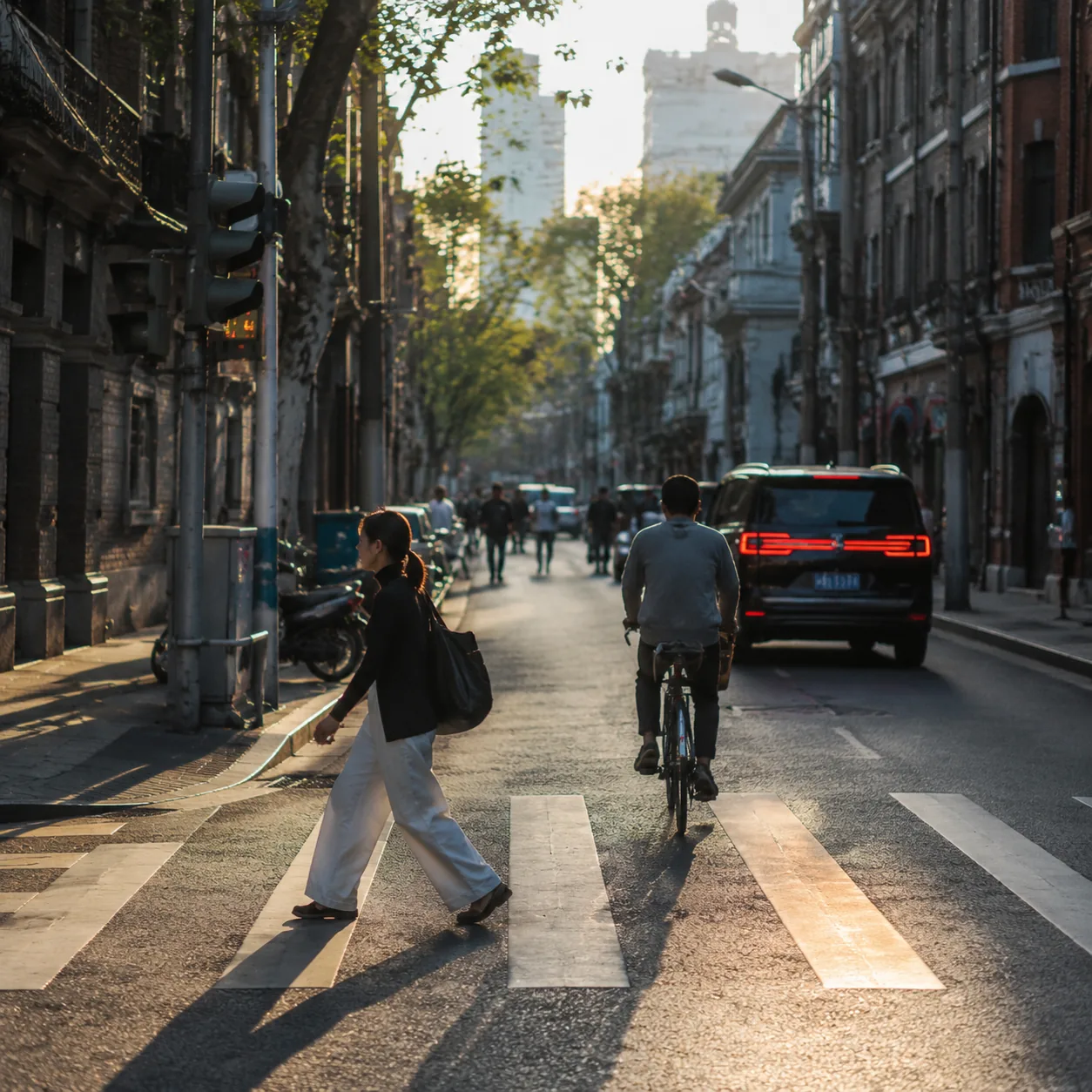
The writer has always felt that describing Shanghai as a window into modern China is not wrong, but stopping there makes the article empty very quickly. The word modernity floats too easily in the air. What actually lands on the traveler is enterability: whether a large city can be approached by a first-time foreign visitor, and whether it allows that person to complete payment, transfers, walking, meals, and night views without too much embarrassment or friction.
If foreign creators succeed in filming this kind of enterability, what Travel Notes should do next is not merely repeat that the city feels international. It should break the experience apart. Which districts suit day one? Which routes belong to the evening? Which neighborhoods reward slower walking? Which areas are better treated as urban scenery to glance at once and move on from? That kind of breakdown changes the article from a generic city recommendation into something that helps readers decide whether Shanghai should become stop number one.
For a First-Time Visitor, Shanghai’s Biggest Role May Not Be Maximum Wonder, but the Building of Travel Feel
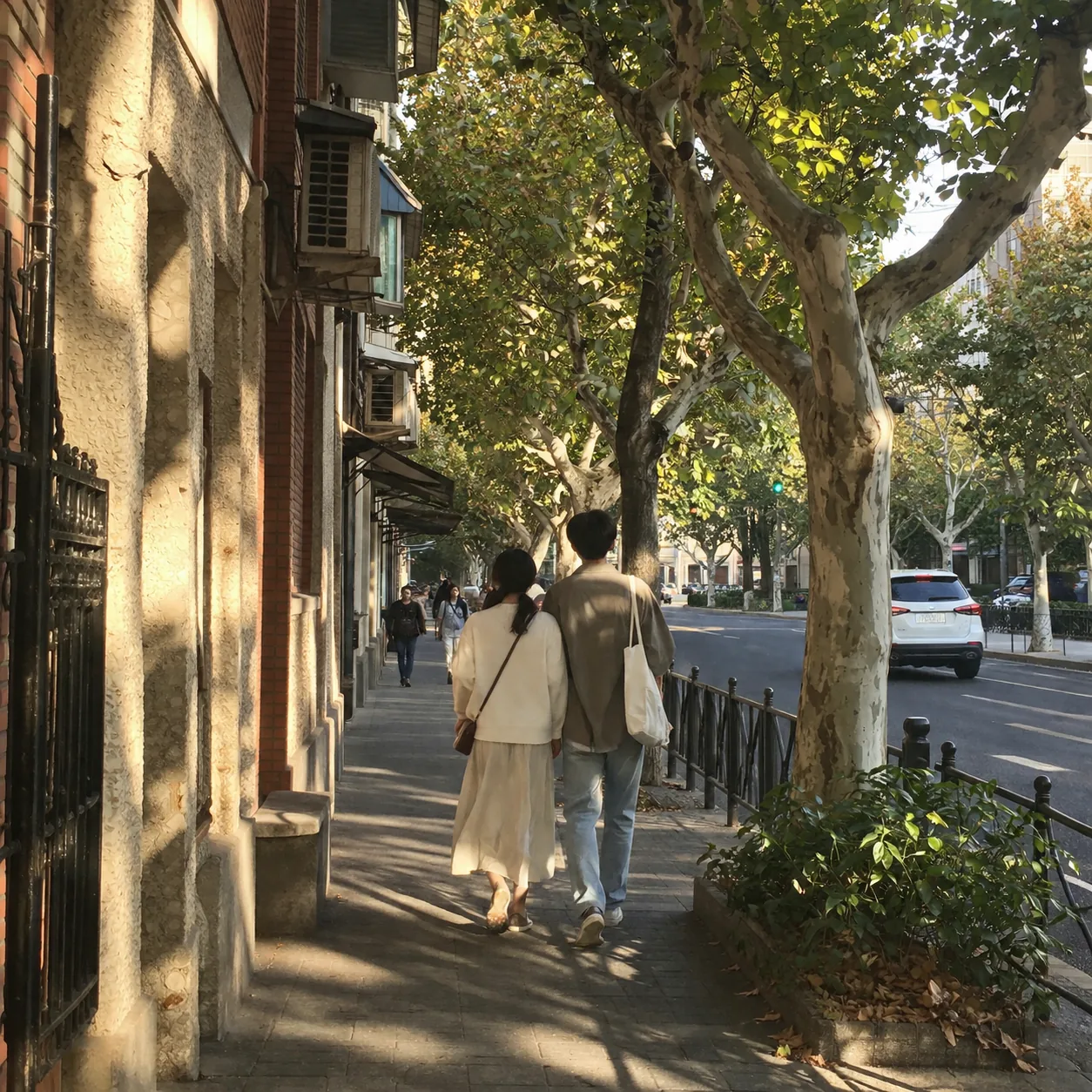
China is large, intense, and dramatically varied from city to city. A first-time visitor often spends the first two days translating many small uncertainties into the question, am I still not adapted to this place? Shanghai’s value lies in helping people move through that testing period more quickly. It may not become the most emotionally overwhelming stop of an entire trip, but it may be the best place to build travel feel. Once that feel is in place, later cities—whether Hangzhou, Xi’an, Chongqing, or something farther away—tend to become steadier.
From a third-person reporting perspective, this becomes a China travel principle worth repeating: the first stop does not need to be the most intense. It should be the place best able to receive the traveler. One reason Shanghai keeps a stable position in foreign-facing travel content is that it does this exceptionally well. It does not merely display one face of China. It buffers the route before more complex segments begin.
Public Source Notes
Public source note:
- Rewritten from publicly visible foreign-creator China city-route angles, focusing on Shanghai as an entry city for first-time visitors.
- No wholesale reproduction is used; the emphasis is on route and entry logic.