My First Public Toilet Lesson in China Was to Check Signs and Tissue First
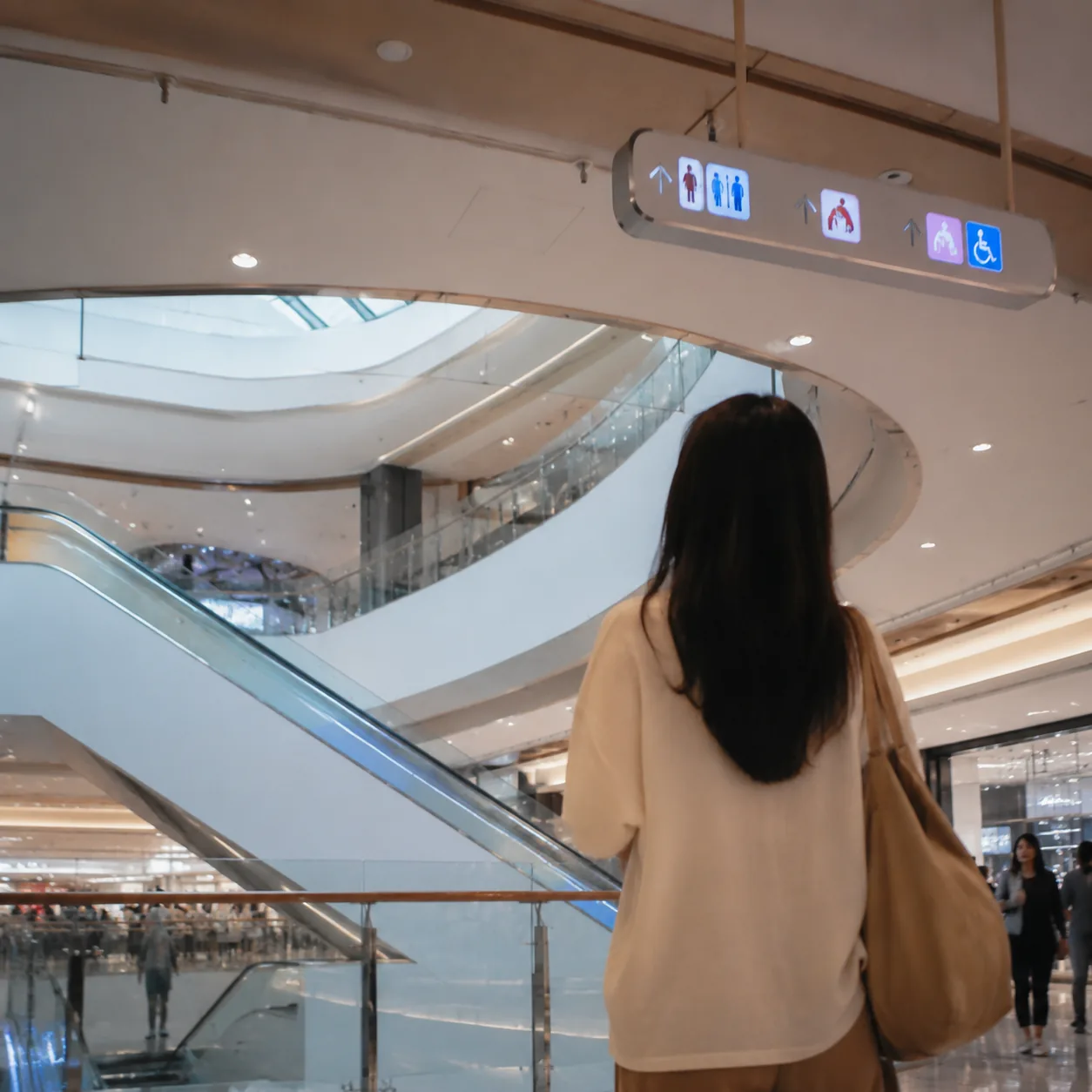
My first real lesson about public toilets in China happened inside a shopping mall on a weekend. I had just arrived in a southern city, spent the morning in a bookstore near the metro, and then went to the mall for lunch. Coffee, soup, and strong air conditioning suddenly made the restroom urgent. I assumed it would be simple, like back home: find the restroom sign, follow the arrow, walk in. Instead, I stood near an escalator and saw signs for 卫生间, 母婴室, and 无障碍卫生间, plus several colored icons. My confidence paused for a second.
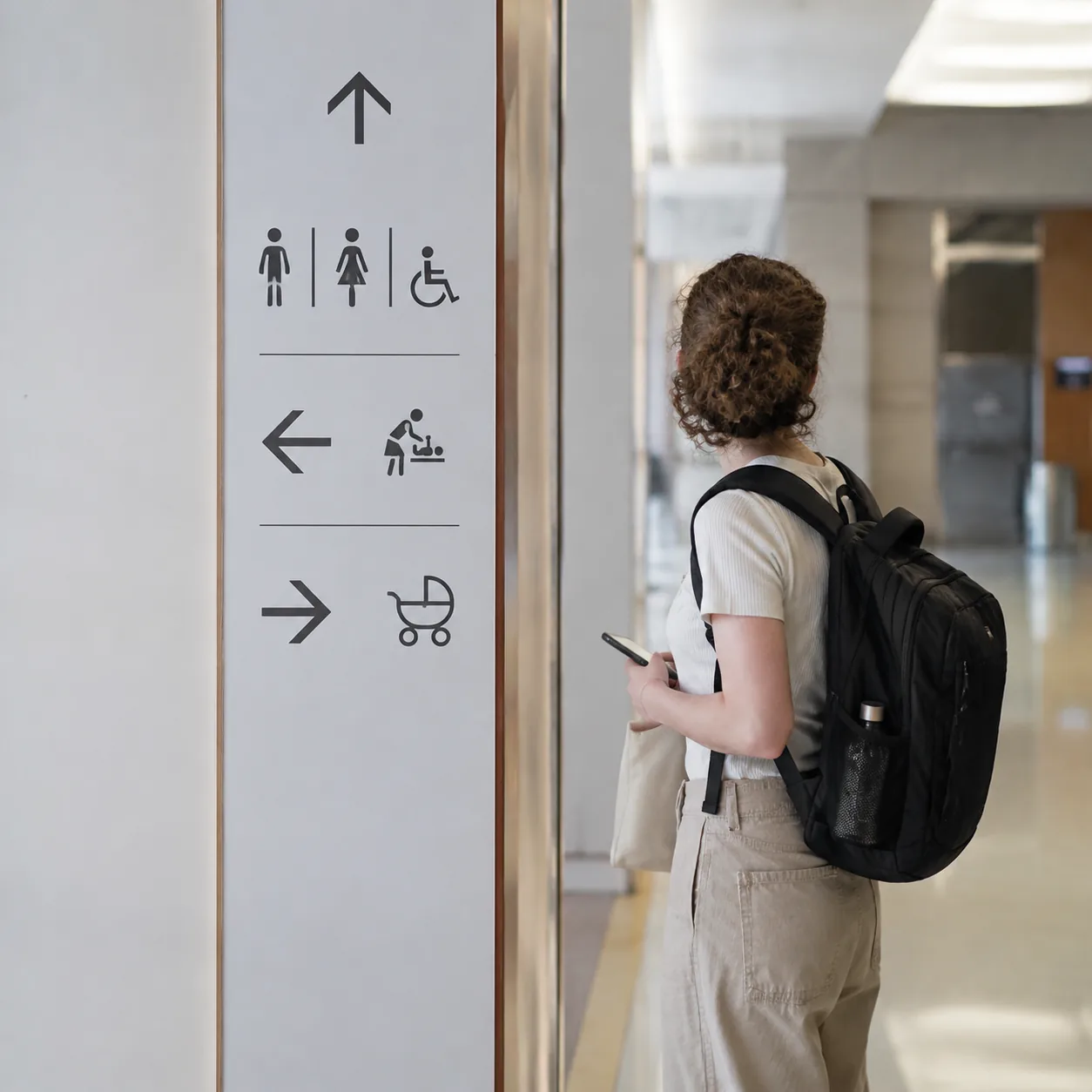
The signs in the mall were actually clear; I was the one who did not slow down enough. The floor map showed small toilet icons with locations on the east side of L3 and west side of L5. I followed the nearest arrow first and ended up in front of the nursing room. The stroller icon on the door finally told me it was not a regular toilet. I walked back to the corridor, looked again, and noticed that the male and female icons were separated to different sides, with an accessible toilet in the middle. For a foreigner new to China, the key is not moving fast. The key is reading the icons and Chinese words fully.
Before entering, I met a small embarrassment. There was no long English explanation like I expected, only icons and short Chinese notices. Someone came out, and I almost followed them in. A cleaning auntie gently pointed to the other side and said, “The men’s room is over there.” I thanked her at once, feeling my face get warm. She did not laugh at me; she simply continued mopping. In that moment I understood that when I am unsure in a public place, asking is easier than pretending I know. Chinese malls can be crowded, but staff are often used to helping lost people.
The queue was my second classroom. A small line had formed at the entrance, and people were not pushing into a cluster. They stood naturally along the wall. Some checked their phones, some held shopping bags, and one person had a child with them. My first instinct was to look at each stall door for an empty one, but I realized that would block people coming out. I copied the others, stood at the end of the line, and moved forward slowly. In Chinese public toilets, the queue can be quiet. Nobody explains the rule, but if I observe for ten seconds, I can usually see where the line starts and ends.
The third lesson was tissue. In my home country, many public toilets keep paper inside each stall, so I did not think much before going in. Then I saw people taking paper from a dispenser near the entrance, and others pulling tissues from their own bags. I suddenly remembered a friend telling me that some public toilets in China may not have paper inside the stall, or the paper may be placed in a shared area outside. I turned back quickly and saw a tissue box near the sinks, almost empty. I got the last few sheets from it, and it felt like a tiny rescue mission.
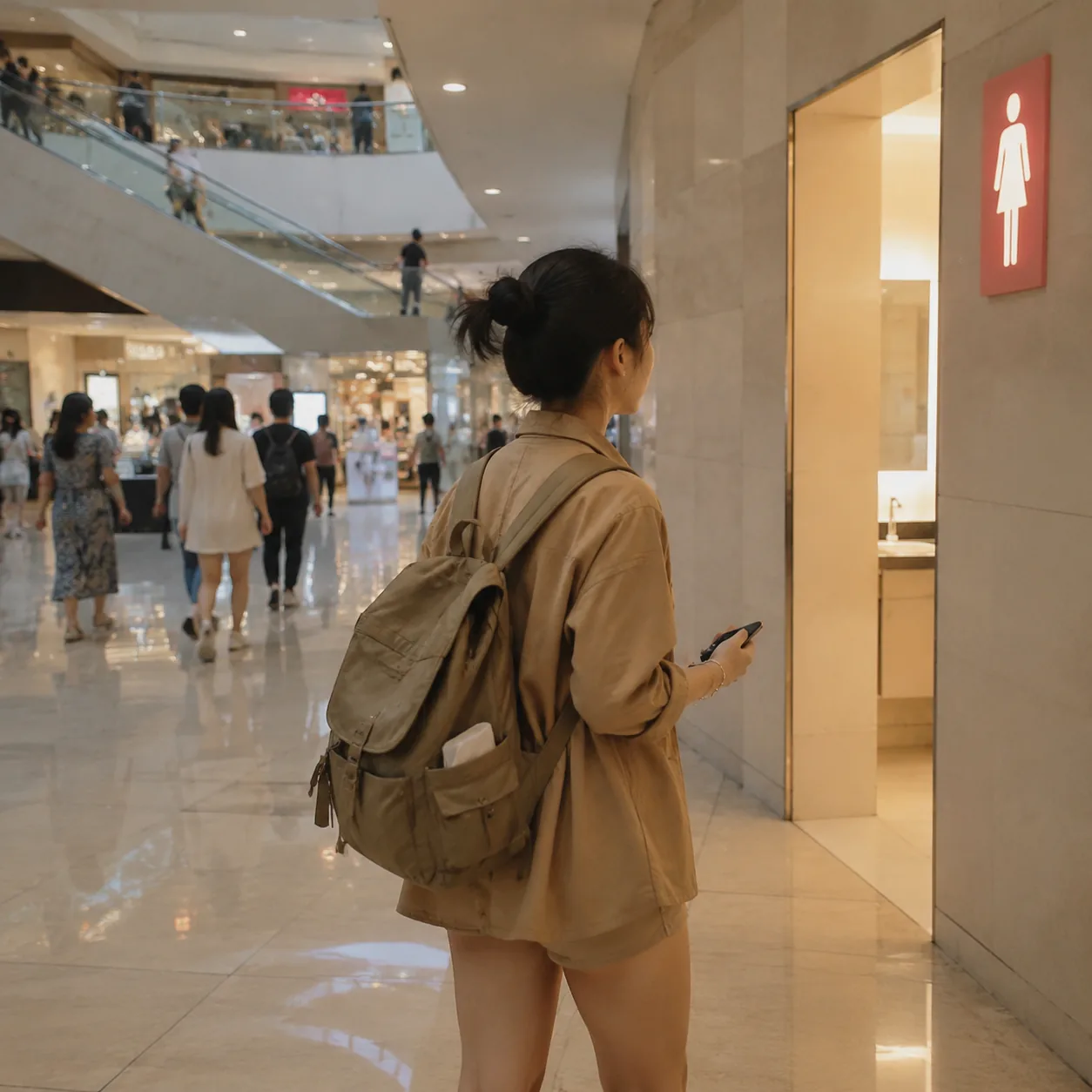
Since then, I have stopped treating tissue as a minor detail. Before walking through malls, visiting scenic spots, or taking a high-speed train, I check that my bag has a small pack of tissues and wet wipes. They take almost no space but give me a lot of calm. This matters especially in scenic areas, where toilets may be far from the entrance, parking lot, or viewing platform, and finding a convenience store at the last minute is not realistic. Many Chinese cities have modern facilities, but toilet supplies still vary by location. Having tissue in my bag gives me a margin of comfort.
A scenic area gave me another lesson. I visited a landscape park with mountains and water, and the toilet near the entrance was large, clean, and easy to find. I assumed every toilet inside would be the same. Halfway up the hill, I found a much smaller one with a longer queue. The signs at the door said to queue, save paper, and beware of slippery floors. There were English translations, but the letters were small. Standing in line gave me time to read them properly, and I realized the floor had just been washed, so I needed to walk more carefully.
At that scenic toilet, I also seriously noticed the difference between squat toilets and seated toilets. Small icons on the wall showed that some stalls were squat style and others were seated. Before, I only looked for an empty stall; now I check the sign first. For me, squat toilets felt a little stressful at the beginning because I had to think about my backpack, phone, and door lock at the same time. I learned to put my phone away, secure my backpack, and then go in. Moving slowly is fine. People behind me usually wait. A few seconds of preparation before entering is better than panic inside.
The sinks have their own details too. In malls, faucets are often sensor-based; water comes out when I place my hands underneath. In scenic areas, some faucets are push-button style and need to be pressed. The first time I met one, I thought it was broken. A child beside me glanced at me and pressed it down to show me. I smiled and said thank you, and he smiled back. Soap may be in the middle of the sink area, on the wall, or already empty. Hand dryers may be powerful or may not work at all. My wet wipes and tissues become useful again.
A cleaning auntie’s reminder stayed with me. Once in a mall toilet, she had just mopped the floor, placed a yellow caution sign at the entrance, and reminded everyone to walk slowly. I was in a hurry and almost stepped onto a wet patch. She saw me stop and pointed to a drier area beside it. I said, “Thank you, auntie,” and she nodded. It was not a grand travel-guide moment, but it changed how I moved: in a public toilet, I should not only look at doors and queues. I should also watch the floor, read warning signs, and listen to staff.
I also learned to distinguish entrance and exit. Some large mall toilets work almost like a small passage: people enter from one side and leave from another. If I walk against the flow, I bump into others. In scenic areas, the difference can be even clearer. The entrance may have a queue, while the exit is closer to sinks and trash bins. Before, I walked toward any door I saw. Now I first read the movement of people. Where are they lining up? Where are they washing hands? Where are they coming out? The route is already visible if I slow down.
My way of staying calm comes from a few simple actions. First, when I see toilet signs from far away, I start observing early instead of waiting until I stand at the door. Second, I confirm the icons for men’s room, women’s room, accessible toilet, and nursing room, instead of just following others. Third, before joining the queue, I check whether there is a shared tissue dispenser, and I keep my own pack in my bag. Fourth, at the sink, I look at the faucet type and whether the floor is wet. Fifth, if I am unsure, I ask staff. Even incomplete Chinese can work; pointing at a sign and saying “this?” is often enough.
After traveling in China for a while, I realized that public toilets are not an embarrassing topic; they are part of everyday travel skill. If I can read signs, I take fewer wrong turns. If I understand the queue, I block fewer people. If I carry tissue, I feel less nervous. If I listen to the cleaning auntie, I avoid small dangers. These are small things, but on an ordinary afternoon they can decide whether I keep enjoying the city or suddenly feel helpless. Making a mistake the first time is not terrible. Repeating the same rushed behavior everywhere is the real problem.
Now, when I enter a mall or scenic area and see restroom signs, I naturally slow down a little. Not because I am afraid, but because I know these places have their own order. Arrows, icons, queues, tissue boxes, sinks, yellow caution boards, and reminders from cleaning aunties all tell me what to do in ordinary ways. I am still the foreigner who sometimes misreads Chinese, but I no longer panic. If I check the signs first, confirm the tissue situation, and follow the queue and the flow of people, public toilets in China stop being a problem and become a daily travel detail I can handle.