In Qinhuangdao, I Skipped the Famous Seafood Spots and Looked for a Table Where I Could Eat Something Hot
When I arrived in Qinhuangdao in the evening, the sea breeze had already blown away half of the heat from the day. The leaves along the street turned softly in the wind, showing their pale gray undersides, as if the seaside city were putting away the emotions of the day. I did not plan a grand dinner, nor did I search in advance for any must-visit restaurant. I simply left my lodging, walked along a modest road, and hoped to find an ordinary, warm meal that would not make me feel pressured.
This kind of dinner often has no special name. It is not the highlight of a travel guide, and it does not suit an exaggerated recommendation. It might be a small eatery with a plastic curtain at the door, or a yellow-lit shop beneath a residential building. The menu is written on the wall, the characters slightly faded, with some prices covered again by transparent tape. There is no complicated decoration inside, only a few tables wiped until they shine, disposable chopsticks in a holder, and an electric fan in the corner making a steady sound.
The place I chose had several blue plastic stools at the entrance, with a basket full of empty beer bottles beside them. The owner was putting newly collected bowls and plates into the sink. Hearing someone enter, she looked up and asked, “What would you like to eat?” Her tone was neither enthusiastic nor cold, just an everyday sentence she must have repeated many times. I looked at the dishes on the wall and ordered home-style braised eggplant, a bowl of clam soup, and a serving of rice.
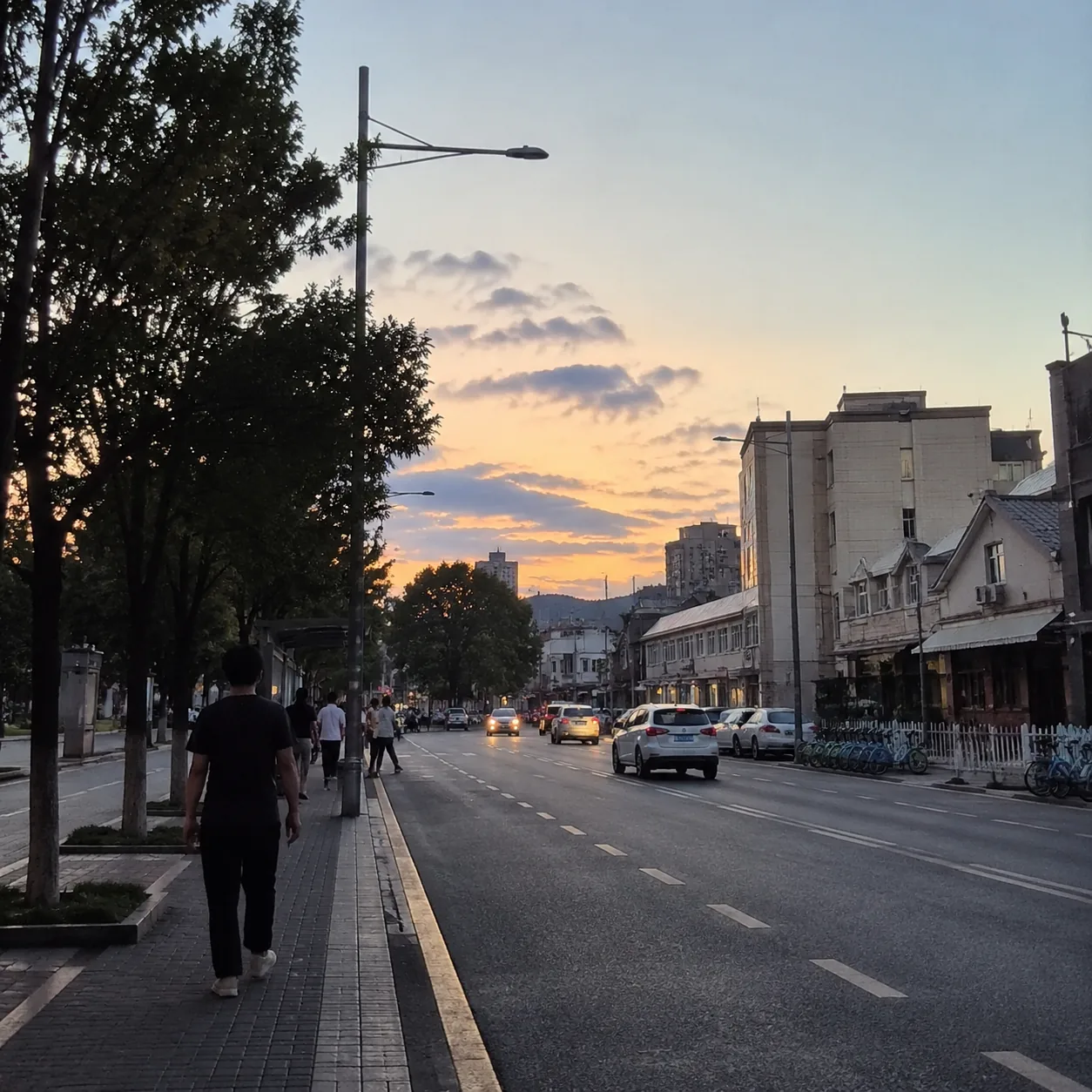
After sitting down, I truly felt that I had left the day’s itinerary behind. I placed my phone face down on the table, and the screen stopped lighting up for the moment. Outside the window, people on electric scooters passed by, their headlights flashing across the glass. Somewhere in the distance there might have been the sea, or perhaps only the sound of evening wind moving through buildings. Either way, a loose dampness slowly settled on my sleeves. Many moments in travel are pulled forward by plans, while an ordinary dinner works like a pause button, letting one finally hear the stomach and the breath.
Dinner in Qinhuangdao has a special kind of simplicity. It does not hurry to prove that the city is by the sea, nor does it turn seafood into a performance. When the clam soup arrived, steam still rose from the rim of the bowl. A few pieces of scallion floated on the surface, and the clam shells opened like tiny fan-shaped doors. The first sip had only a gentle saltiness, more clean and fresh than strong. It was not as rich as soup served at a banquet, yet it made the parts of the body dried out by the day’s sun feel moist again.
The braised eggplant came in a deep, glossy color, with oil slowly gathering at the bottom of the plate. The eggplant was so soft it hardly needed chewing; it collapsed as soon as the chopsticks picked it up. The sauce carried a faint garlic aroma and was perfect mixed into rice. This dish did not feel unfamiliar, as if it could be found in many cities, yet that was exactly why it pulled a traveler’s heart back a little. Eating a familiar taste in an unfamiliar place is not a denial of distance, but a way to give distance somewhere to settle.
Two more tables of customers came in later. One group seemed to be workers from nearby, still carrying the dust of the day, and they sat down calling for beer. The other was a mother and son; the child wore a schoolbag and spread his homework on the table, while the mother ordered food and reminded him not to get eraser crumbs into the bowl. The sounds of the small eatery gradually filled the room: a spatula hitting an iron wok, beer caps being opened, and unclear news from the television.
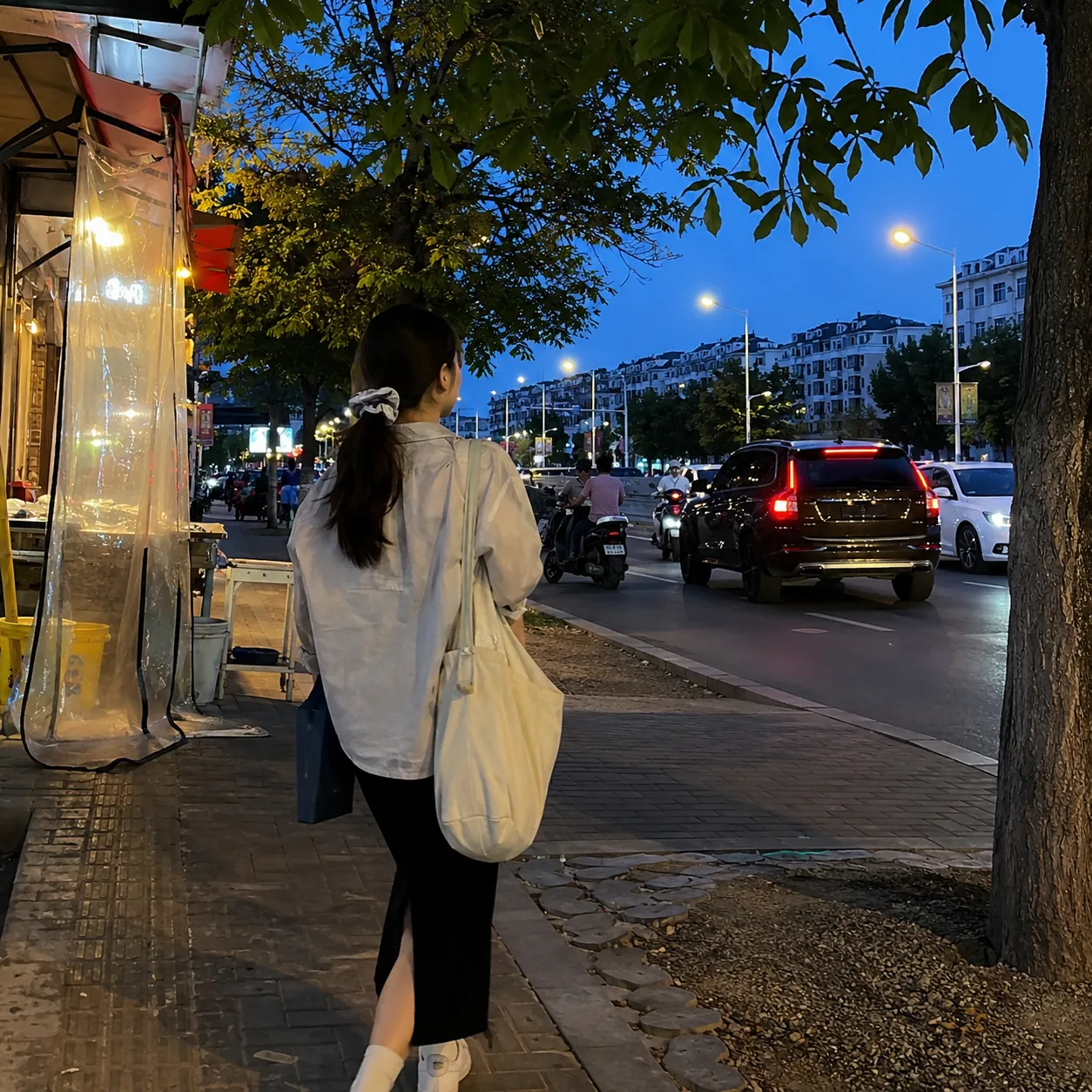
I like this kind of unarranged liveliness. It is not the crowding of a scenic spot, nor background music in a shopping mall, but the natural sound of ordinary life. Travelers often enter a city with an attitude of observation, as if searching for its defining traits, but this attitude relaxes during a meal. You sit beside local people, pick up food with the same kind of chopsticks, wipe your mouth with the same paper napkin, and suddenly realize that a city is not made of landmarks, but supported by countless dinners like this one.
Halfway through the meal, I turned my phone over and glanced at it. The map app still showed the nearby streets, crowded with saved markers that seemed to urge me to keep completing tasks. I placed the phone face down again and decided not to look up the next stop. At that moment, I felt that Qinhuangdao was not giving me a checklist to finish, but permission to slow down. Outside, the sky grew darker, streetlights stretched people’s shadows, and the evening wind slipped through the doorway carrying a little sea smell and a little food aroma.
An ordinary dinner also makes one remember many other dinners. Rice bowls eaten in a small restaurant near home after school, noodles swallowed quickly beside a station on a business trip, delivery ordered when living alone in a rented room, barbecue found at the last minute after parting with friends. They may not have been excellent enough to remember deliberately, yet each of them caught a person on some tired evening. This dinner in Qinhuangdao was the same: not stunning, not expensive, but appearing exactly when I needed it.
When the owner refilled water for the next table, she glanced at my bowl and asked whether I had enough rice. I said it was enough; she nodded and turned back to call something into the kitchen. This small question made me feel steady. It was not deliberate service, but the kind of care common in small eateries. It did not require a standardized smile or excessive conversation. Before you looked up, someone had already noticed whether the soup was cooling, how much rice remained, and whether there were enough napkins on the table.
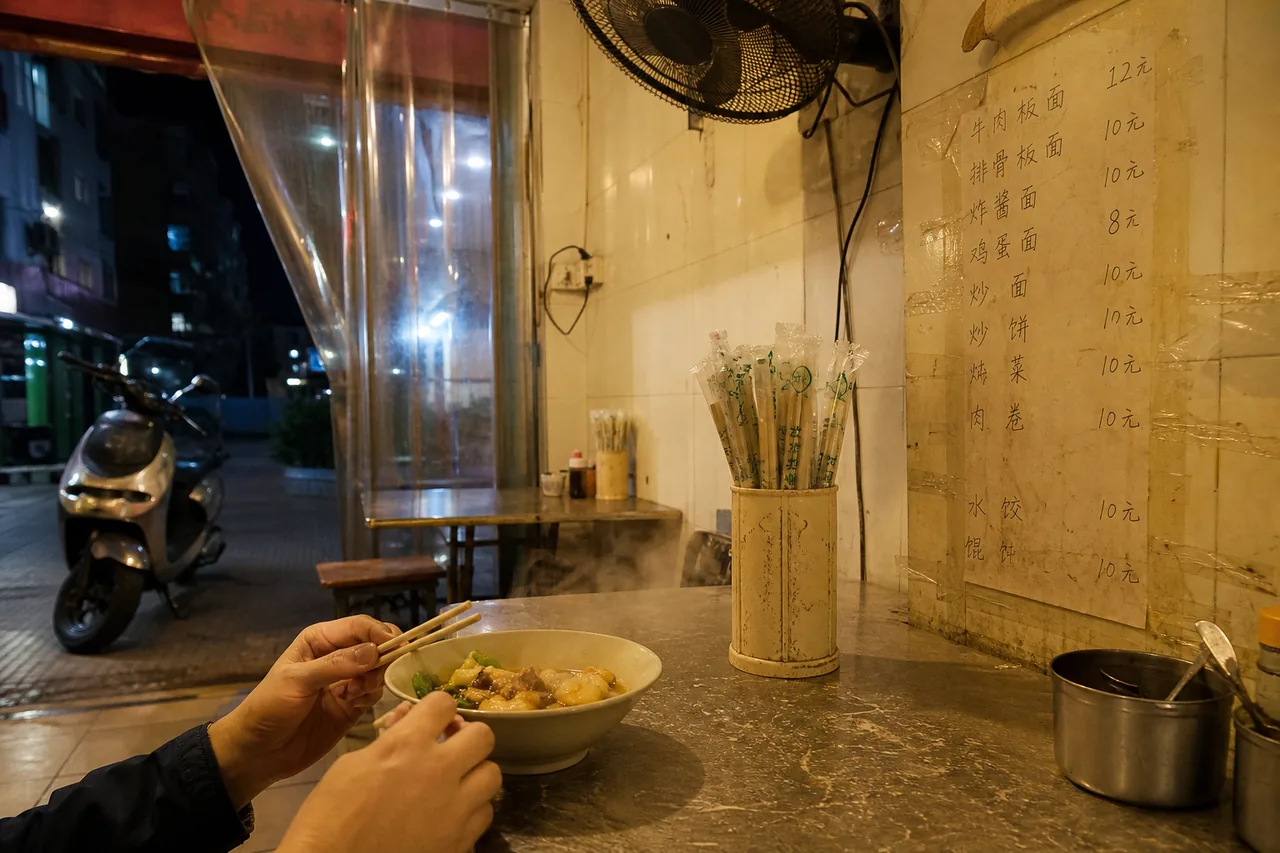
I slowly finished the last few bites of rice. A little sauce and several soft pieces of eggplant skin remained on the plate. The clam shells stacked at the bottom of the bowl looked like small stones washed together by the tide. When I paid, the owner named a very ordinary amount. After I transferred the money, she said, “Take care.” These words can be heard in many places, but that evening they sounded like Qinhuangdao’s quiet farewell to a traveler.
When I stepped out of the shop, the air was cooler than when I had entered. There was nothing dramatic on the street, only pedestrians, headlights, people returning late, and a fruit stand that had not yet closed. I did not go back to my lodging immediately, but took a small loop around the neighborhood. After my stomach was full, the outline of the city softened. The unfamiliar buildings were no longer blocks on a map, but places where people turned on lights, ate, talked, washed dishes, and prepared for sleep.
Perhaps truly getting to know a city does not have to begin with its most famous places. It can begin with an ordinary table, with a bowl of hot soup, with the owner asking whether you have enough rice. The things called scenery help people remember what a city looks like, while these plain dinners help people remember its temperature. That ordinary dinner in Qinhuangdao did not change my itinerary, but it changed the speed at which I moved through it.
Later, when I thought of Qinhuangdao again, I did not only think of the seaside, boardwalks, and the footsteps of summer visitors. I also thought of the light in that small eatery, the smoke-stained menu on the wall, the scallions floating in the clam soup, and a bowl of rice dyed light brown by sauce. They held no grand meaning, yet they were real in a steady way, like an inconspicuous nail in a journey, fastening that evening firmly into memory.
Travel sometimes makes people mistakenly believe that only special moments are worth keeping. But an ordinary dinner reminds me that the body does not live on specialness. The body needs hot rice, needs to sit down, needs someone to place a dish in front of it, needs to find a small piece of familiar order in an unfamiliar city. After eating, when one walks back into the night, the steps are steadier than before, and the heart is a little wider.
Qinhuangdao did not give me an exclamation mark that day; it gave me a comma. It let me pause in the middle of moving around, swallow a mouthful of soup, and hear the sound of the spatula mixing with the wind. This is the virtue of an ordinary dinner: it does not require you to be excited, to judge, or to take beautiful photos. It simply and honestly feeds you, then returns you to the night.
Before returning to my lodging, I bought a bottle of water at a convenience store. When the clerk scanned it, the wind chime at the door rang softly. Suddenly I felt that the city was not distant. It still had streets, accents, and rhythms of life I did not understand, but a dinner had already opened a small door for me. Behind the door there was no spectacle, only lights, food, and human voices, and that was already enough for me to call the day a good one.
If someone later asks what I ate in Qinhuangdao, I may not be able to name the shop, because I did not even remember its sign carefully. I will say that I ate a very ordinary dinner, so ordinary it could have happened on any evening. Yet precisely because it was ordinary, it briefly made me feel less like a tourist and more like someone passing through, gently taken in by the city.