After a Week in Chengdu, I Finally Learned How to Live Without Rushing
The first time I treated Chengdu as a place to live for a week rather than a city to check off, the biggest surprise was not the hotpot but how manageable daily life felt as a foreign visitor. My real challenge was never finding attractions. It was linking together mobile payments, metro transfers, ordering food, laundry, and quiet cafés where I could work. Once I handled those basics in the first two days, the city stopped feeling like a maze and started functioning like a temporary home.
I usually stay near dense metro connections and walkable streets, such as the Chunxi Road area, around Taikoo Li, or in the zone between People’s Park and Kuanzhai Alleys. The point is not being “close to tourist sites” but having efficient daily movement. I can grab coffee in the morning, work from a café or shared workspace during the day, and return after dinner without depending on taxis. Chengdu taxis are affordable by big-city standards, but rain and rush hour can still waste time, so being near two or three transferable metro lines matters more than a pretty window view.
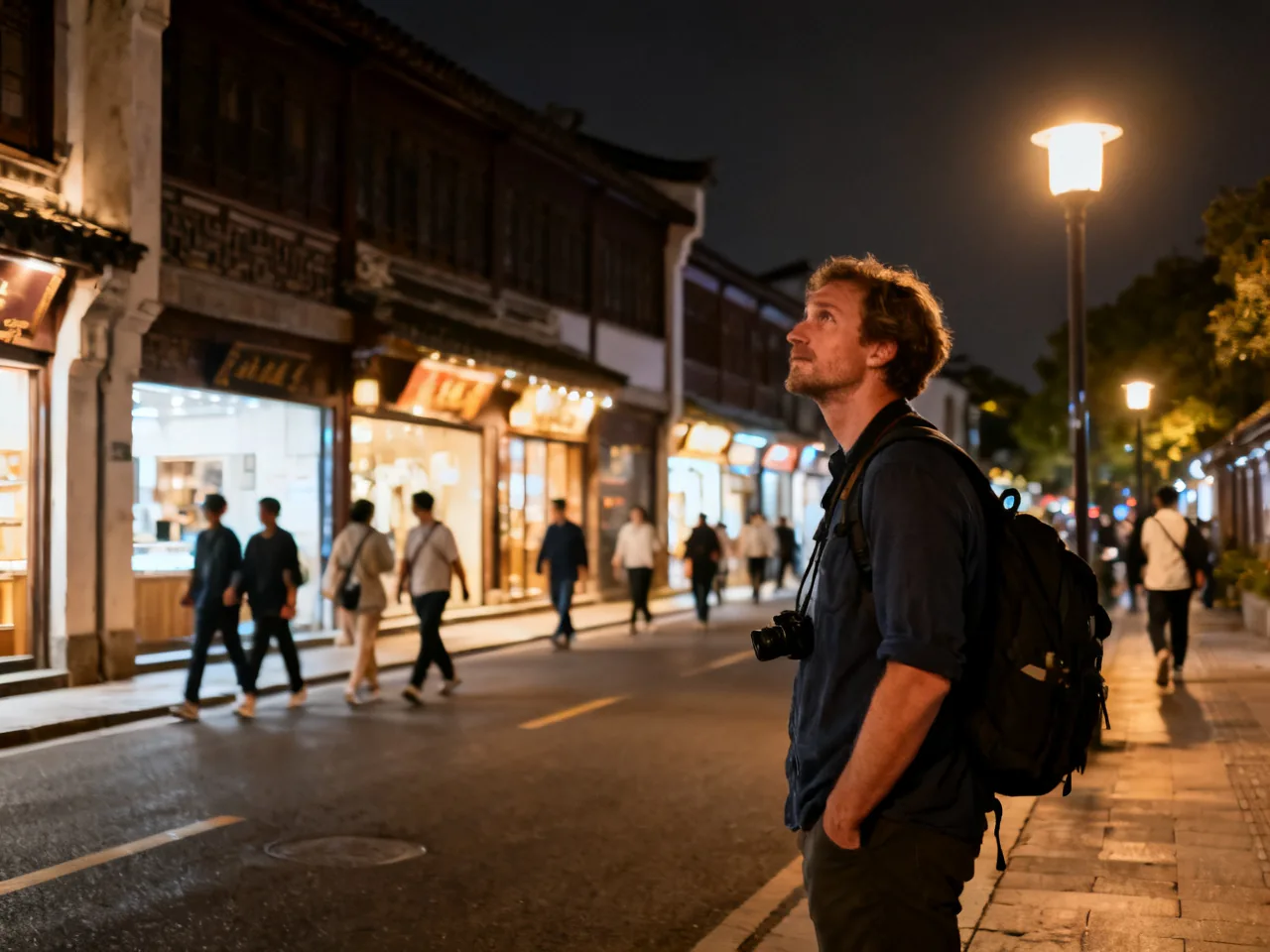
For payments, I prepare two layers: first I confirm whether my bank card can be linked to common payment apps, then I keep some cash and a physical card as backup. Many places rely heavily on QR codes, but Chengdu is not hostile to foreigners who need an extra moment. If I stay calm and communicate clearly, staff usually help me finish the payment. For ordering food, I save a small set of translated phrases like “not too spicy,” “less ice,” “takeaway,” and “no cilantro.” That alone saves a lot of friction. If you want to get used to the broader logic of transport and payments in China, it also helps to read a guide to high-speed rail and real-name travel and practical mobile payment tips for foreign visitors.
Chengdu suits a rhythm of getting things done by day and eating or strolling by night. On workdays I prefer cafés inside larger malls because the bathrooms, air conditioning, and internet are more predictable. Independent cafés often have better character, but they are not always ideal for long laptop sessions. At lunch I skip the most famous hotpot places and eat rice bowls, noodles, wontons, or maocai instead. That saves time and makes spice levels easier to control. Then in the evening I can enjoy a full Sichuan dinner properly. If your stomach is still adapting, my rule is simple: do not challenge heavy spice three meals in a row. Chengdu is delicious, but no meal is worth losing two travel days to stomach trouble.
In terms of safety, Chengdu usually feels relaxed rather than tense, but relaxed should not mean careless. Central areas stay lively into the evening, and walking back to my hotel is normally fine, yet I still avoid staring at my phone while crossing unfamiliar alleys late at night. Shared bikes are useful, but roads get slick after rain, so I slow down at corners and intersections. Weather deserves respect too. Summers are humid, winters feel damp and penetrating, and getting sick quickly reduces the quality of a trip. I keep tissues, hand sanitizer, a light outer layer, and basic stomach medicine in my bag. In Chengdu, those items have far more practical value than fashionable travel accessories.
I also recommend building in some low-stimulation time. I might walk near People’s Park in the morning or stroll slowly along the Jin River instead of packing every hour. Chinese big cities carry a high information load, and even though Chengdu feels relatively easygoing, a first-time visitor still processes language, payments, menus, navigation, and noise all at once. If I leave buffer time, I notice more of the city’s texture: older residents drinking tea, young people walking dogs, convenience stores restocking shelves, office workers taking lunch breaks. Those scenes help me understand a place far more than pure sightseeing does.
If you want to use Chengdu as a gateway to Southwest China rather than an isolated stop, save your station names, airport details, hotel address, and next destination in both Chinese and English. I screenshot important locations, store them offline, and also keep them in plain text so I am not dependent on a map icon when the signal is weak. On the night before leaving Chengdu, I recheck my documents, chargers, power bank, and breakfast plan for the next morning. It sounds minor, but those small habits are exactly what let me move between Chinese cities with confidence instead of restarting from confusion every time.