A 2-Week China Itinerary That Actually Makes Sense
Before You Go
Two weeks sounds like a lot until you factor in arrival day, departure day, and the time spent moving between cities. You’re realistically looking at 9–10 full days of actual sightseeing. That’s enough to do 4 cities well — not 7.
Days 1–3: Beijing
Arrival day: Take the subway from the airport — it’s direct, cheap, and avoids the notorious Beijing traffic. Don’t over-schedule your first day; jet lag will hit you hard around 3pm.
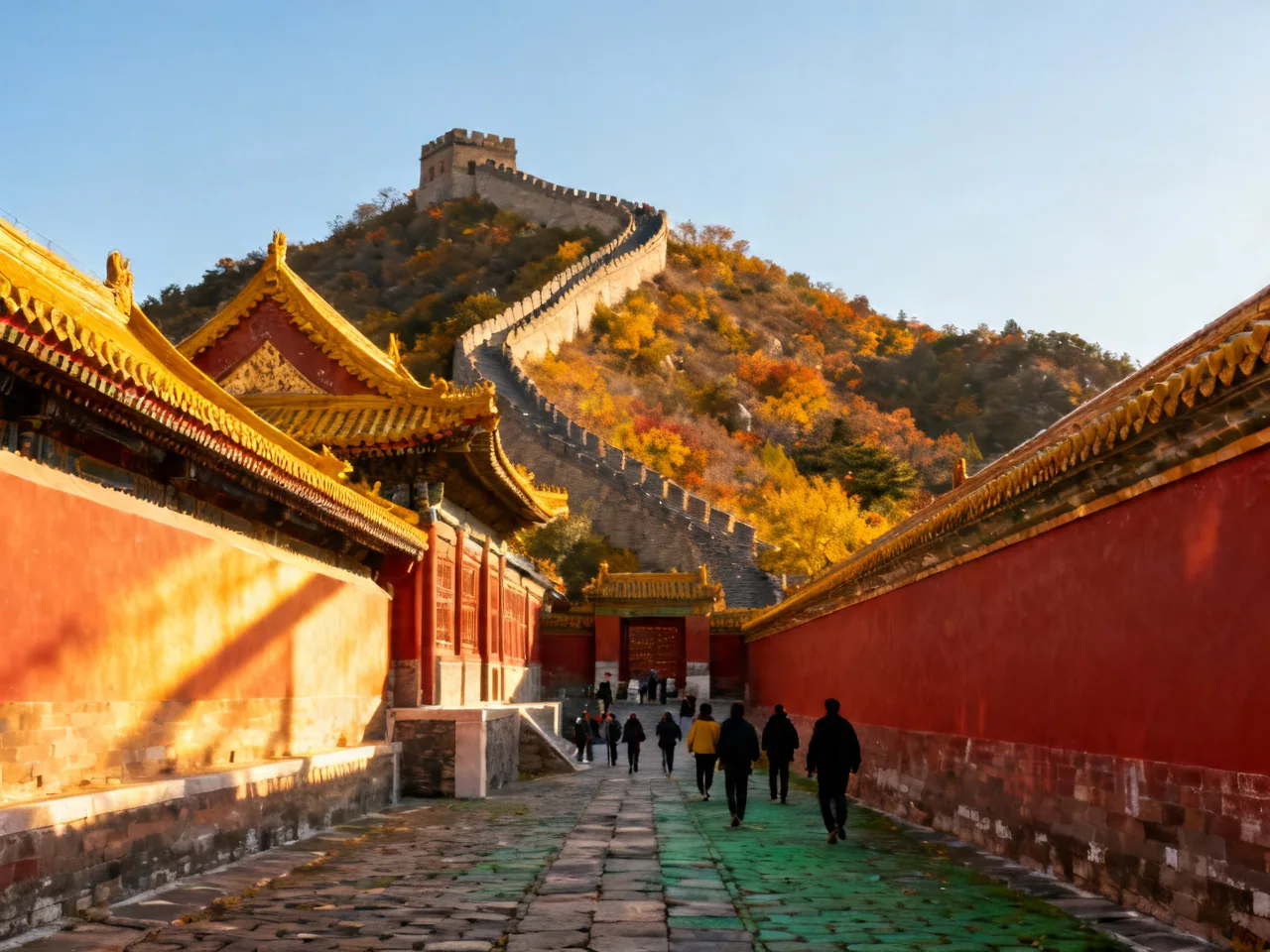
Day 2 (Forbidden City + Jingshan): Book tickets online in advance — no walk-ins allowed. Don’t just walk the central axis; the Treasure Gallery and Clock Museum on the sides are worth the extra time. Finish at Jingshan Park for the rooftop view over the palace.
Day 3 (Great Wall): Go to Mutianyu, not Badaling. It’s less crowded, better preserved, and has a cable car. Leave before 8am to beat the tour groups.
Days 4–5: Xi’an
Getting there: High-speed train from Beijing takes about 4.5 hours. Leave in the morning, arrive by early afternoon.
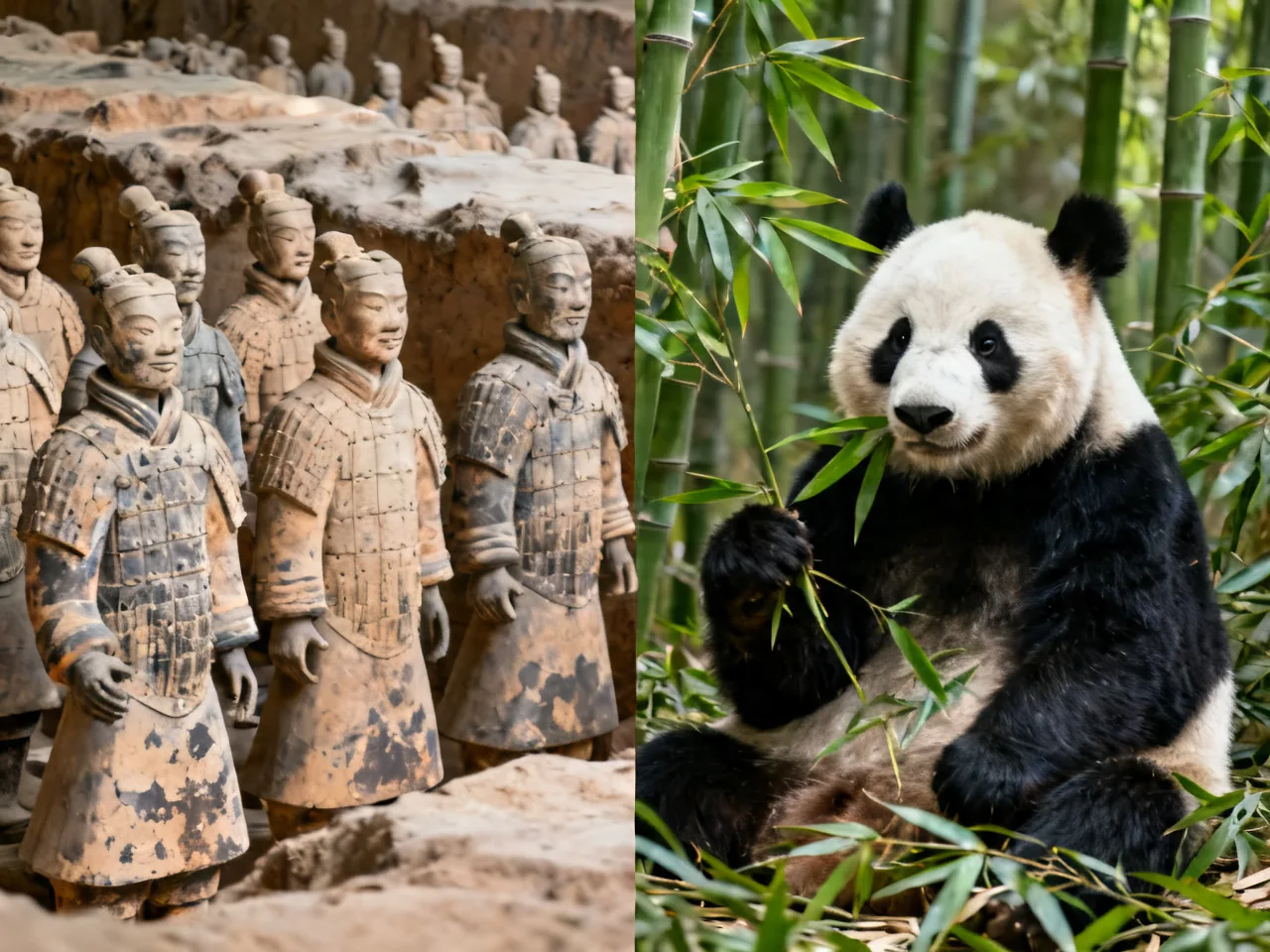
Day 4 (Terracotta Army): It’s 40km east of the city center — take a tourist bus or taxi. Pit 1 is the most dramatic, but Pit 3 (the command center) tells a more interesting story. Combine with Huaqing Palace on the way back.
Day 5 (City Wall + Muslim Quarter): Rent a bike and ride the full 14km loop on top of the ancient city wall — one of the best things you can do in Xi’an. Afternoon in the Muslim Quarter for lamb soup, roujiamo (Chinese “hamburger”), and cold noodles.
Days 6–8: Chengdu
Day 6 (Giant Panda Base): Arrive before 8am — pandas are most active in the morning and basically asleep by 10am. Afternoon at Kuanzhai Alley for a taste of old Chengdu architecture.
Day 7 (Leshan Giant Buddha): 40-minute high-speed train from Chengdu South Station. The Buddha is 71 meters tall, carved into a cliff face at the confluence of three rivers. Take the boat for the best view — looking up from the water is genuinely awe-inspiring.
Day 8 (Slow day in Chengdu): Pick one or two from Jinli Street, Wuhou Shrine, or Du Fu Thatched Cottage. Save your energy for dinner — a proper Chengdu hotpot, not a chain restaurant.
Days 9–11: Shanghai
Getting there: Fly from Chengdu — it’s 2.5 hours versus 11 hours by train.
Day 9 (The Bund + Lujiazui): Walk the Bund in the afternoon, then cross to Lujiazui for the skyline view at night. The contrast between the colonial-era buildings on one side and the skyscrapers on the other is the defining image of modern China.
Day 10 (French Concession + Tianzifang): Spend the morning wandering Wukang Road and Anfu Road — tree-lined streets, art deco buildings, good coffee. Afternoon in Tianzifang, a maze of shikumen alleyways converted into galleries and cafes.
Day 11 (Yu Garden + departure): Yu Garden is a well-preserved Ming dynasty garden in the old city — go early before the crowds. Leave the afternoon free for the airport. Shanghai has two airports (Hongqiao and Pudong) — double-check which one your flight uses.
Practical Notes
Transportation: All intercity travel by high-speed rail except the Chengdu–Shanghai leg (fly). Book train tickets on the 12306 app with your passport details.
Payment: Both WeChat Pay and Alipay now support foreign bank cards. Set them up before you arrive — you’ll need them for almost everything.
Visa: Most nationalities need a visa in advance. Some countries have visa-free access or visa-on-arrival — check your country’s current status before booking flights.
Best time to visit: April–May and September–October are ideal nationwide. Summer (July–August) is hot and humid in most cities, though Chengdu is manageable year-round.
Alternative Routes
If you prefer nature: Swap Xi’an for Zhangjiajie (Hunan), or replace Shanghai with Guilin and Yangshuo.
If you want more history: Add a day in Xi’an and make a side trip to Luoyang’s Longmen Grottoes (2 hours by high-speed rail).
If food is your priority: Spend an extra day in Chengdu and take a day trip to Chongqing (1.5 hours by train) — the two cities have distinct hotpot cultures worth comparing.
Two weeks isn’t long. But if you spend it in the right places, you’ll come back with a clearer picture of China than most people who spent a month there — because you were paying attention, not just collecting stamps.