After Ten Minutes in a Weekday Lunch Line, I Finally Understood the Rhythm of China’s Noon Rush
The first time I had weekday lunch in a mall food court near Shenzhen’s technology park, I completely underestimated the force of noon. The elevator doors opened and I was hit first by sound: the crisp clatter of trays, the cashier counters repeating “please show your payment code,” cooks behind the windows calling out numbers, and above all the layered smells from different stalls colliding in the same air—the oily fragrance of freshly stir-fried beef, the sharp spice from mala tang broth, the humid sweetness of newly steamed rice, and the lightly honeyed char on roasted chicken legs. Office workers seemed to be released by the same invisible signal and flooded in within minutes. Some wore company badges around their necks. Some were replying to voice messages while walking. Some had already ordered on their phones and moved so quickly they barely looked up. I paused at the top of the escalator and understood at once that lunch here was never a leisurely stroll. It was a highly precise collective rhythm.
At first I made a very typical beginner’s mistake: I focused only on which stall looked delicious and did not first understand how the line worked. I stood in front of a rice-bowl counter for a long time before realizing the people ahead of me were not all waiting to order. Some were waiting to collect food, some were only pausing to study the menu, and some had already scanned to pay and were simply waiting for their names to be called. I was holding a tray, leaning forward slightly, too embarrassed to ask questions, and could only shuffle with the crowd. A man behind me in a dark blue shirt saw my confusion and quietly told me, “Ordering is on the left. Pickup is on the right.” That one sentence relaxed me immediately. I understood that the first skill in a Chinese weekday lunch rush is not choosing what to eat. It is reading the flow.
On later visits I deliberately arrived five minutes early and stood to the side to observe. That was when I realized the lines were much more orderly than they first appeared. Even when every stall looked crowded, most people were following a very clear rhythm: decide what to order from a position where the menu can be seen quickly; when your turn comes, speak clearly at once instead of debating at the window about adding an egg, changing the rice, or making it less spicy; after paying, step aside immediately and leave the center open for the next person; people waiting for pickup do not cling to the counter either, but retreat half a step, watching the numbers and listening for names while trying not to pressure others physically. At the busiest moments, a queue may look compressed from the outside, but inside it, everyone is cooperating by shrinking their hesitation time.
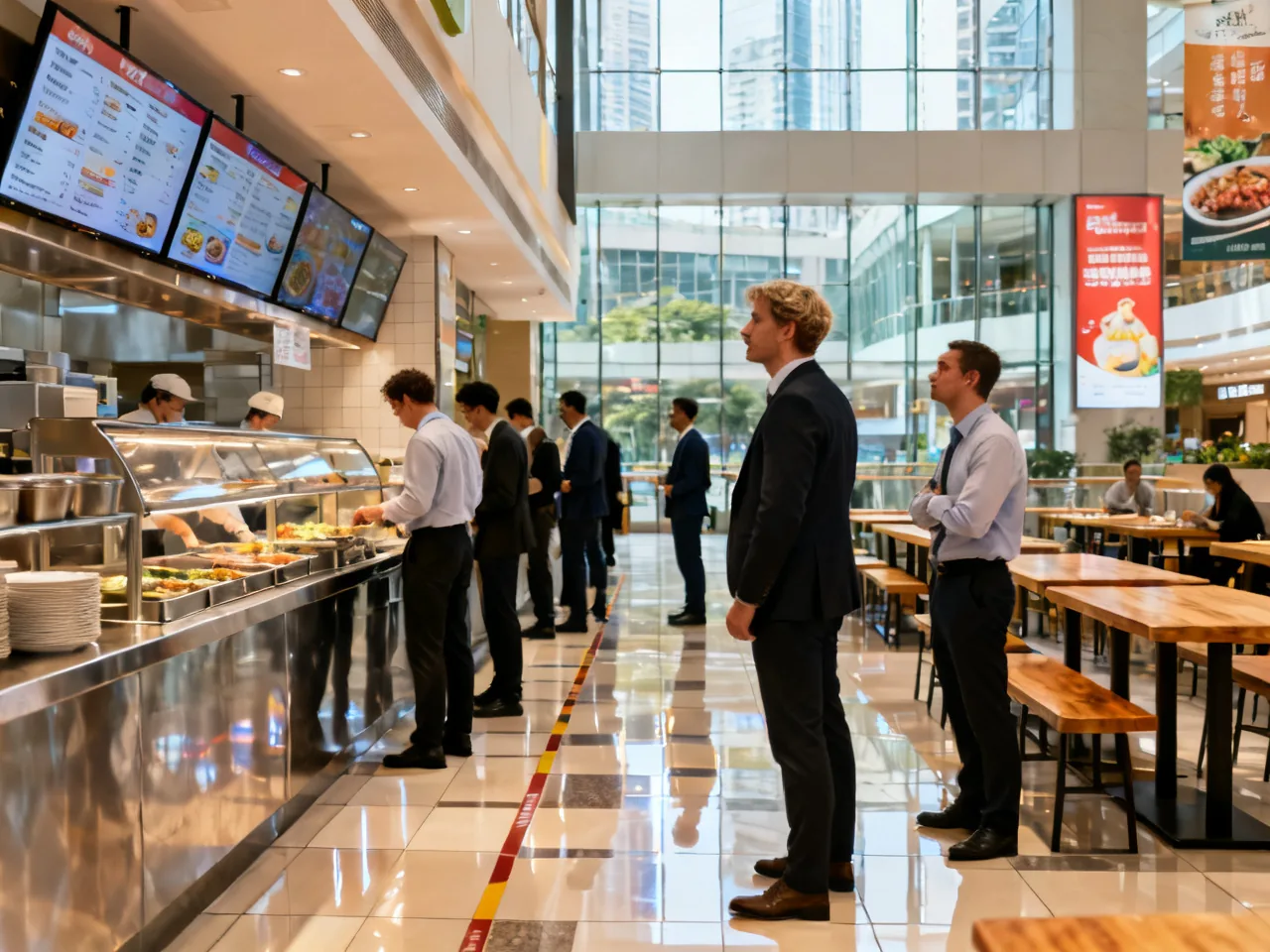
What I most enjoy watching are the people who are obviously fluent in this lunch rhythm. As soon as they approach a stall, they already know what they want. Their phone brightness is adjusted and the payment code is open. At places they visit often, a single phrase like “the usual, less rice” or “no cilantro today” is enough for the staff to understand. Some people pull out tissues while they are still in line and place them at the edge of the tray. Some, when waiting for colleagues, secure a small corner table first but never spread their bags over four seats. Other tiny gestures say even more: when a cleaner pushes over a cart and bucket, people tuck in their legs automatically; when someone behind is carrying a bowl of noodle soup that has just come out, the person in front shifts slightly aside to make room; if two people come together, one may look for seats while the other finalizes the order so that the line does not jam at their turn. Nobody announces these rules, yet such details keep the whole lunch rush tense but not chaotic.
I was not able to keep up immediately either. The first time I ordered mala xiang guo by myself during the peak rush, I lingered too long in front of the ingredient section, and five or six people had already formed behind me. I had still been comparing lotus root slices and potato slices when I noticed that everyone beside me was moving differently: they swept the options with one quick glance, picked a few familiar items, weighed them, paid, and left. That was the moment I understood that in this kind of setting, choice is still free, but it works best when built on respect for other people’s time. Later I learned a very practical habit: if it is my first time somewhere and I truly cannot decide, I should stand back to study the menu or let the person behind me go first instead of occupying the most important spot while I think. Taking that small step back is not embarrassing. It actually fits the larger rhythm perfectly.
Another thing that impressed me about weekday lunch lines in China is that people are indeed busy, yet that busyness rarely turns directly into rudeness. The line moves quickly, but not necessarily noisily. Someone may point out where to scan a code. Someone else may say, “You go first, I haven’t decided yet.” If a person notices they ordered the wrong thing, they usually step aside before fixing it rather than blocking the whole counter. Even the invisible pressure of waiting for tables is often kept within a fairly restrained range. You can absolutely feel that everyone wants things to move faster, but that urgency is expressed more through efficient motion than through emotional display. To me, this restraint is fascinating. It suggests that high-density urban life does not have to function only by shouting and pushing. It can also run on a rhythm silently accepted by most people.
By the second week, I had learned either to avoid the fiercest twelve o’clock surge or simply go downstairs at 11:50. And if I did get caught in the peak, I knew what to do: identify which line is for ordering and which is for pickup; decide before stepping into place; prepare my phone in advance; and once I receive my meal, turn away immediately to find a seat rather than lingering at the counter to figure out where the chopsticks and spoon are. Once I went to lunch with a foreign colleague who had just started an internship. He stood at the counter staring blankly at the menu. Without thinking, I said, “Step out first and look, don’t block the line here.” Then I laughed, because that was the exact moment I realized I had changed from the person dazed at the top of the escalator into someone capable of explaining the lunch rhythm to another newcomer.
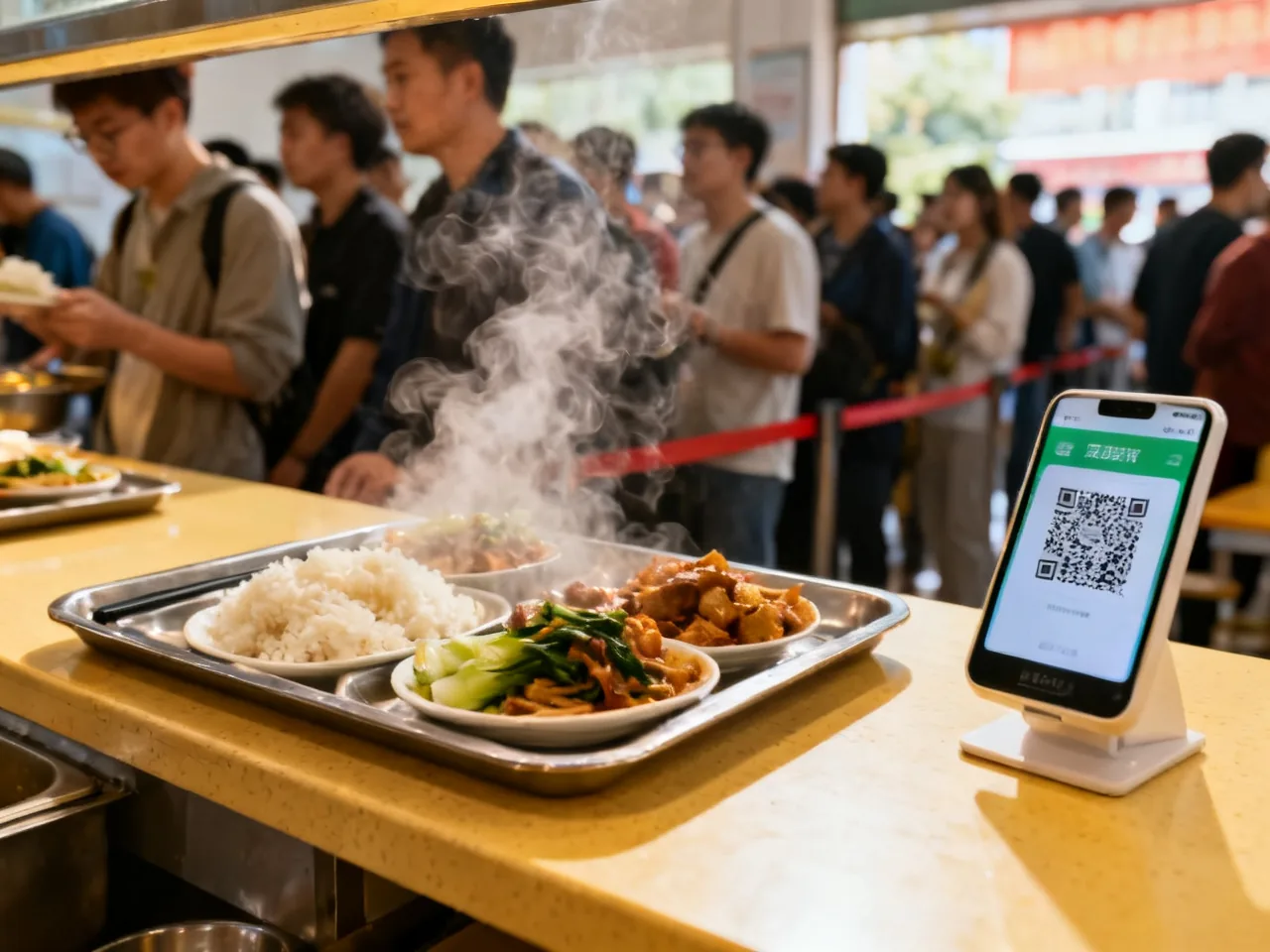
Now, if someone asks me what is most worth observing in the weekday lunch rush of a Chinese office district or mall food court, I would say it is not only what people eat, but how they make a little room for one another within limited time. Some people keep their indecision outside the line. Some prepare payment in advance. Some hold just the right distance while waiting for pickup. Some stand up quickly after finishing so the seat can return to the next wave of diners. All of those small actions combine into the city’s noon rhythm. It is fast, undeniably fast. It is crowded too. But if you first learn to hear the beat and then place yourself inside it, you realize that those ten minutes in line are not only about waiting for food. They are also about learning how to live inside China’s dense, efficient daily life without slowing the whole pattern down.