In a Chinese Park at Dusk, I Learned to Sit Alone Without Rushing to Fill the Silence
When I first arrived in China, I was uneasy about sitting alone in a park, especially at dusk. Daytime felt easier because everyone seemed to be in motion: walking, walking dogs, bringing children, taking photos. But when the light began to sink, staying on a bench became more visible. You were no longer merely passing through. You were giving yourself over to a stretch of time with no task inside it. Back then, that felt exposed and slightly unsettling to me. I kept thinking that if I sat alone, I should at least be doing something—checking my phone, drinking something, replying to messages—or else I had no reason to be there.
What first changed me was an entirely ordinary evening. The park was small, with a few old benches under the trees. Nearby, someone was gently kicking a shuttlecock, and farther off a group of aunties had a portable speaker set at a level that was enough for dancing but not so loud that it erased the birds or the children’s voices. I had only meant to pass through. My feet were tired, so I sat for five minutes. Once I sat down, I noticed that nobody looked at me twice for being alone. Someone crossed the gate carrying vegetables, someone power-walked around the path, someone placed a thermos beside the bench and simply stared ahead. In that moment, I realized for the first time that in many Chinese parks, sitting alone is itself a completely normal way to exist.
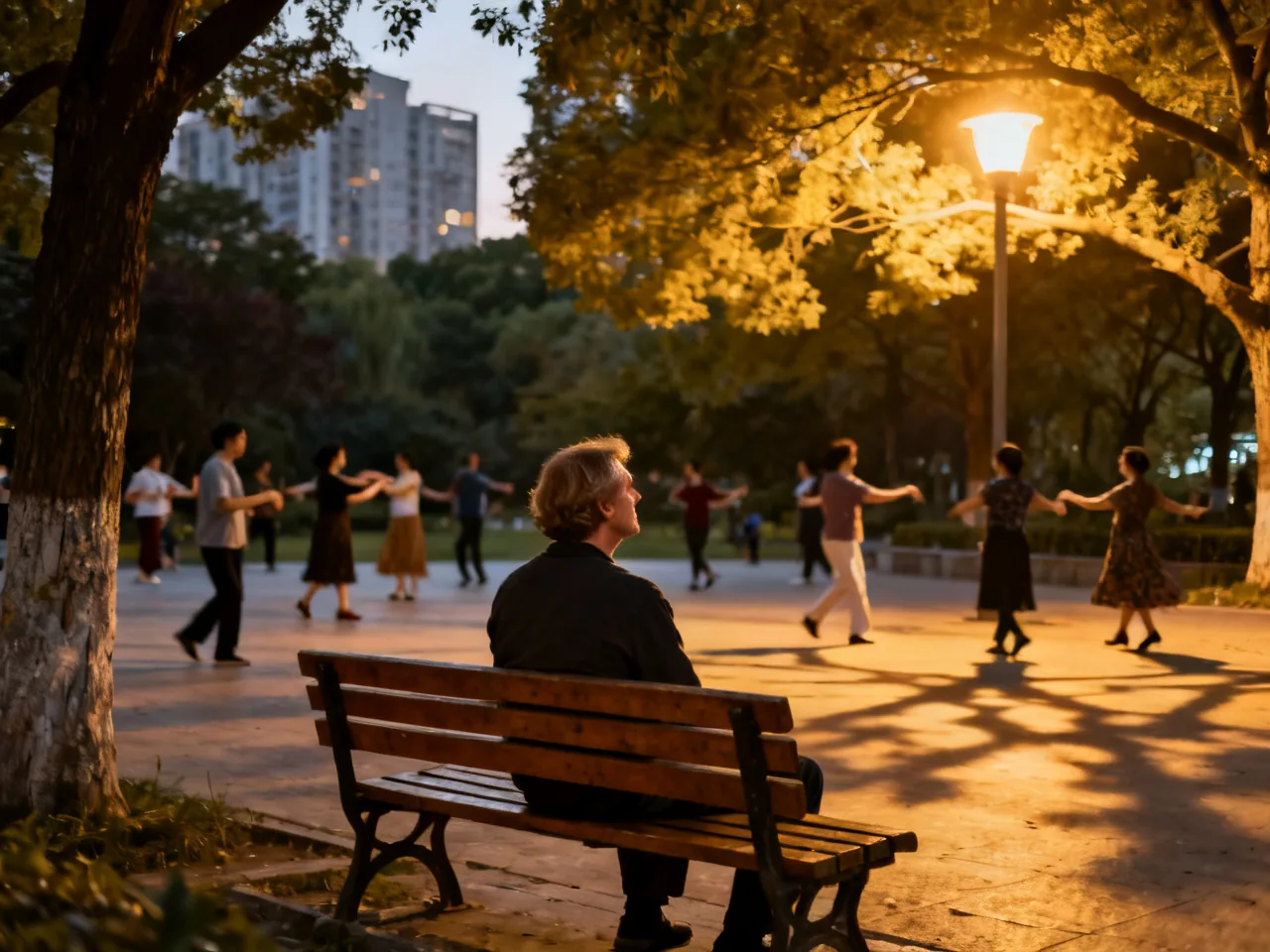
Later I slowly learned the rhythm of that hour. It was not really “killing time.” It felt more like taking part of the day off my shoulders. The sky was not fully dark yet, but the tree shadows deepened first, and the voices around the benches softened. Someone completed a final round of tai chi, someone pushed a stroller toward the exit, someone simply sat and watched the streetlights come on one by one. For foreigners, this kind of scene helps a great deal, because it shows that entering life in China does not always require active speaking, active movement, or active planning. Sometimes you just place yourself quietly inside a shared public rhythm, and a lot of tension loosens on its own.
I also gradually understood that the most precious thing about a park at dusk is that it allows you to produce nothing. You do not need to consume, explain yourself, or prove that you are using time efficiently. Unlike a mall, a café, or a station, a park asks very little from a person. You can sit for ten minutes or for half an hour. You can watch people play cards or simply listen to the leaves. This experience made me believe even more in the value of entering Chinese daily life through small actions, because often the most useful first step is not doing more. It is learning how to stay somewhere naturally.
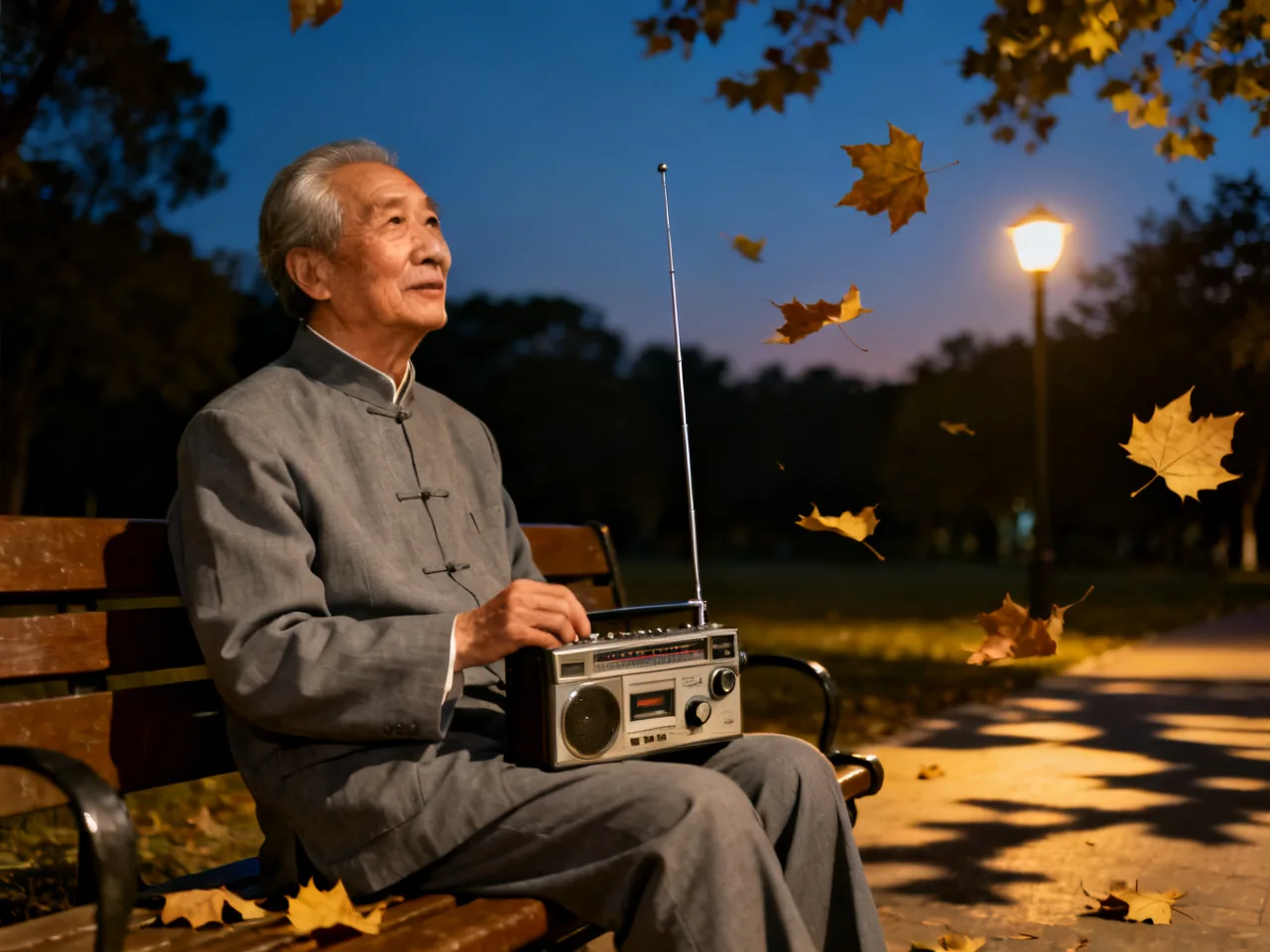
Later, I spent three evenings in a row in a small park in a southern city. On the first day, I kept reaching for my phone automatically. On the second, I started leaving it in my bag. By the third, I could simply look up and watch the light turn gray by degrees. I remembered that an elderly man always appeared on time nearby, carrying a small radio and sitting in the same place without talking much to anyone. The steadiness of that was subtle, but strong. I suddenly realized that the problem had never been that I could not be alone. It was that I did not yet know how to be peacefully alone in public. What Chinese parks at dusk taught me was exactly that ability—the ability not to treat solitude as a problem that needs immediate explanation.
If someone asks me now where I learned the gentlest form of being alone in China, I would probably say: go sit in a park at dusk for a while. Do not rush to take photos, do not rush to turn the moment into a checklist, and do not rush to make every minute into a task. Sit down first. Listen to other people’s footsteps and the wind. Watch how the light changes from bright to dim. Slowly, you may find that being alone does not mean being dropped by the world. It can feel more like finally matching your breathing to the city’s. For me, that has been one of the quietest and most important lessons in everyday China.