Peking Opera & Kunqu: Tickets, Seats & How to Watch
Beginner’s Guide to Peking Opera and Kunqu
Peking Opera and Kunqu are China’s most representative traditional operas, both listed as UNESCO Intangible Cultural Heritage. Even without understanding the lyrics, the visual and musical experience is worth every penny.
Peking Opera Basics
Four role types — Sheng (male), Dan (female), Jing (painted face, strong characters), Chou (comic). Facial paint reveals character: red = loyal (Guan Yu), white = treacherous (Cao Cao), black = righteous (Bao Zheng).
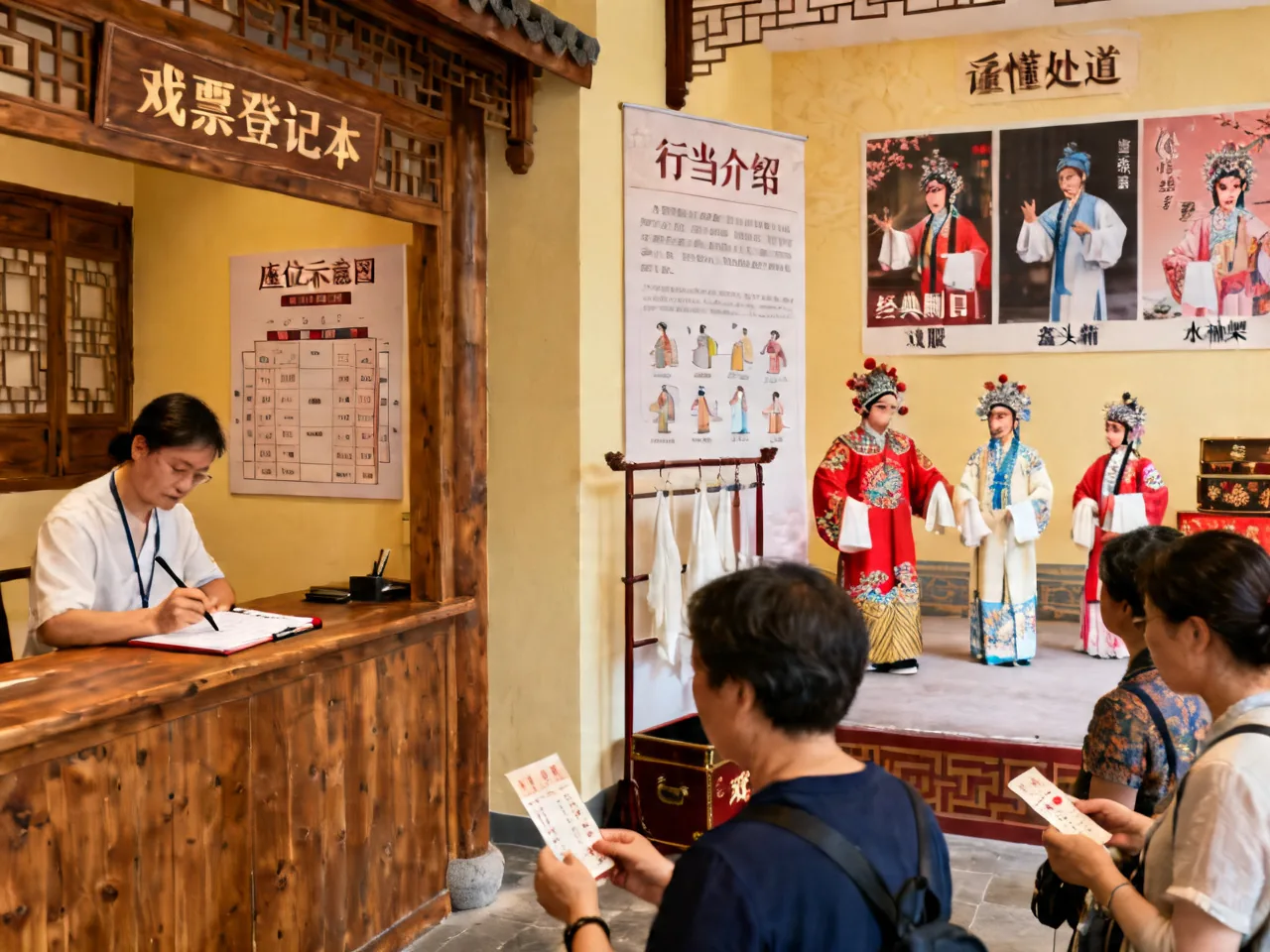
Recommended for first-timers: martial plays are most exciting — “Crossroads” (fighting in the dark, no lyrics needed), “Havoc in Heaven” (Monkey King battles celestial soldiers). For vocal drama, try “The Drunken Concubine.”
Kunqu Basics
Kunqu is older than Peking Opera (600 years) and called “the mother of all Chinese opera.” Slower-paced than Peking Opera, with more lyrical singing and exquisitely refined libretto. The most famous work is Tang Xianzu’s “The Peony Pavilion” — a love story that transcends life and death.
Where to Watch
| City | Venue | Feature | Price |
|---|---|---|---|
| Beijing | Pro Peking Opera | ¥100-680 | |
| Beijing | Premium Kunqu | ¥80-500 | |
| Shanghai | Mixed Opera | ¥60-380 | |
| Suzhou | Garden Kunqu | ¥80-300 |
Audience Etiquette
Chinese opera audiences aren’t quiet like Western ones — shout “Hao!” (bravo) at impressive moments, the highest praise for performers. But silence your phone. Arrive early and avoid frequent exits during the performance.
Tips: Many theaters have Chinese-English subtitle screens above the seats. Front rows let you catch actors’ eye expressions and hand gesture details.
Related Reads
- Spring Bloom Map: China’s Most Beautiful Flower Fields
- Summer Escapes: Plateaus & Islands
- Huangshan Sea of Clouds & Welcome Pine: Beautiful in All Seasons
- Best Autumn Foliage Spots in China
- 10-Day East China Five-City Loop